
Your Hospital Stay
Information about your hospital stay from admission to discharge.
It is important to us that you feel cared for.
Our priorities are for you to:
- be provided with high quality, safe and well-coordinated care,
- connect with us so we can better understand your needs and concerns,
be well informed and confident about managing your care and recovery after discharge.
Here is some useful information to help you prepare for your stay.
Documents to bring
Identification:
- Singapore NRIC
- Patients below 15 years old: Birth certificate
- Non-Singaporeans: Passport, Entry Permit, Employment Pass, Work Permit or other valid ID issued by Singapore Ministry of Manpower
Medical benefit documents, if applicable:
- Civil Service Card
- Insurance Car
- Insurer’s or employer’s guarantee letter (if your employer is paying the bill)
- Blood donor card
- Financial assistance card / memo (e.g. PA, MediFund, SMTA, MFEC)
- SAF Identity Card (11B)
Things to pack
- Samples of medication you are currently taking, or a list of your medications with their names and dosages
- Underwear
- Personal items such as spectacles and hearing aids along with their protective cases (if any), toothbrush, comb and dentures
- Comfort items such as a jacket or pillow
- Comfortable, non-slip, covered shoes
- A fresh set of clothes for discharge
A bedside cabinet is provided to store your belongings.
We strongly encourage you to leave your valuables at home. Woodlands Hospital will not be accountable for any valuables that you store in the cabinet.
What not to bring
Please do not bring valuables or excessive cash. If you have these items at admission, please arrange for them to be taken home. A fee will be charged to have your belongings safe-kept by hospital security.
Appointed spokesperson
An appointed spokesperson is someone your care team can speak with about your condition. He or she is a person you trust to help relay information about your health to your family or friends.
As your doctor will not be able to update all family members who visit at different times, we request that you choose one spokesperson to speak with your doctor. You may also inform your care team about who your medical information can or cannot be shared with.
If your appointed spokesperson has questions or wishes to know more about your condition, they may speak with a ward nurse.
Charges and Payments
For information about your daily ward charges or how to pay for your hospital stay, please visit Charges & Payments.
Our Ward Types
There are four ward types that you can choose from for your stay with us.
Amenities
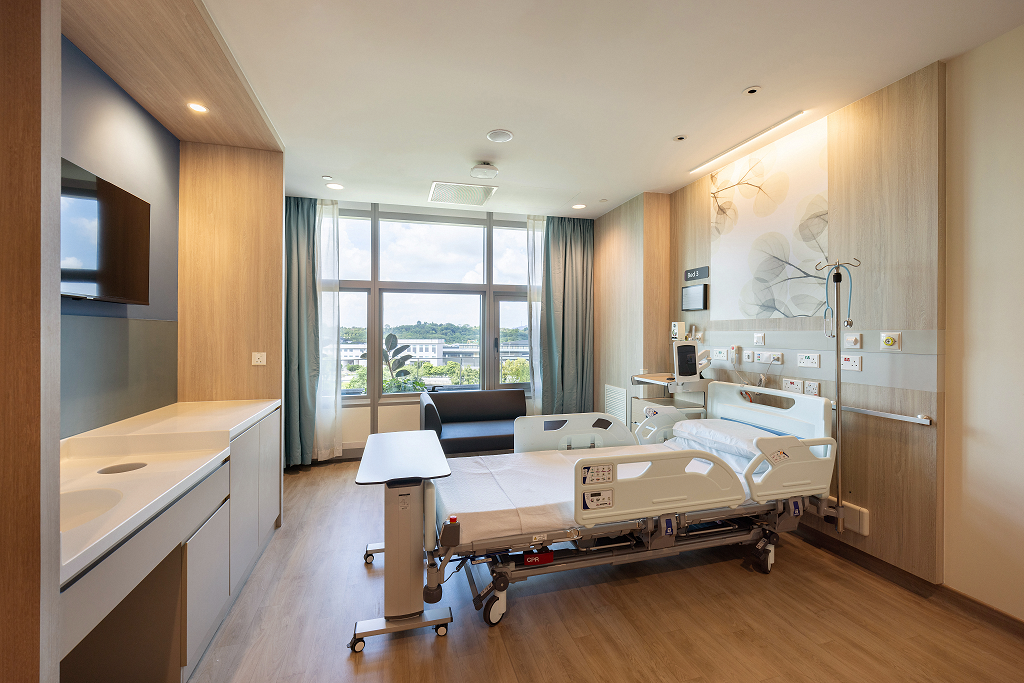
Air-conditioned single room with attached bathroom. The room is fully furnished with:
In-room safe
Adjustable overbed table
Bedside cabinet with lock
Sofa bed, wardrobe, fridge
Television with local channels
Desk phone for local calls
Patient Bedside Terminal (PBT)
Complimentary toiletry set
The PBT is a touchscreen tablet mounted at the bedside. You may choose your meals, view your health information and daily schedule, and access games and entertainment.
Meals
We have a range of Chinese, Malay, Indian and vegetarian cuisine for you to choose from:
Up to 8 breakfast options
Up to 16 lunch/ dinner options
Please note that your options may differ if you are on a special diet.
Meals can be provided for your caregiver. Fees will be charged separately.
Daily Ward Charges
Singapore Citizen / Permanent Resident:
$660
Foreigner:
$858
Subsidies are not applicable for this ward type.
Note:
All charges are rounded to the nearest dollar and include GST.
Fees for all other services such as investigations, medication and procedures will be charged separately.
If you are a Singapore Citizen or Permanent Resident and need to see our Specialist after your ward discharge, you can choose to visit our Specialist Clinic as a subsidised or non-subsidised patient.
Amenities
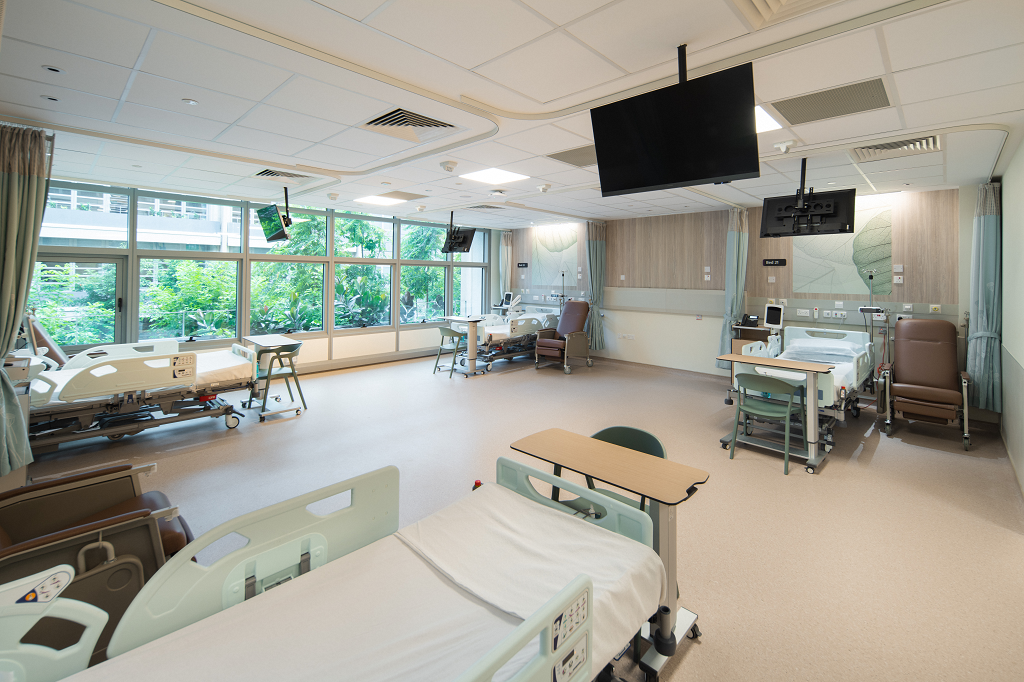
Air-conditioned, 4-bedded ward with shared bathroom. Each bed is equipped with:
Adjustable overbed table
Bedside cabinet with lock
Television with local channels
Desk phone for local calls
Patient Bedside Terminal (PBT)
Complimentary toiletry set
The PBT is a touchscreen tablet mounted at the bedside. You may choose your meals, view your health information and daily schedule, and access games and entertainment.
Meals
We have a range of Chinese, Malay, Indian and vegetarian cuisine for you to choose from:
Up to 8 breakfast options
Up to 16 lunch/ dinner options
Please note that your options may differ if you are on a special diet.
Meals can be provided for your caregiver. Fees will be charged separately.
Daily Ward Charges
Singapore Citizen:
$330
Permanent Resident:
$371
Foreigner:
$536
Note:
All charges are rounded to the nearest dollar and include GST.
Fees for all other services such as investigations, medication and procedures will be charged separately.
If you are a Singapore Citizen or Permanent Resident and need to see our Specialist after your ward discharge, you can choose to visit our Specialist Clinic as a subsidised or non-subsidised patient.
Amenities
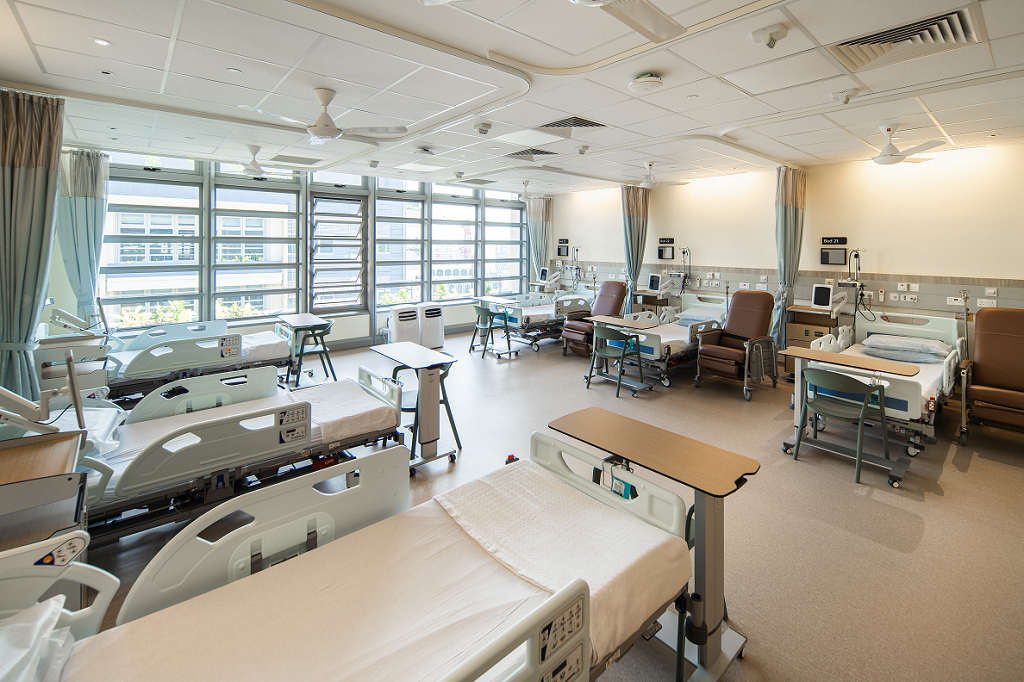
Fan-ventilated, 6-bedded ward with shared bathroom. Each bed is equipped with:
Adjustable overbed table
Bedside cabinet with lock
Patient Bedside Terminal (PBT)
Complimentary toiletry set
The PBT is a touchscreen tablet mounted at the bedside. You may choose your meals, view your health information and daily schedule, and access games and entertainment.
Meals
We have a range of Chinese, Malay, Indian and vegetarian cuisine for you to choose from:
Up to 6 breakfast options
Up to 14 lunch/ dinner options
Please note that your options may differ if you are on a special diet.
Daily Ward Charges
Singapore Citizen:
$64
Permanent Resident:
$159
Foreigner:
$451
Subsidies are available for Singapore Citizens and Permanent Residents. The amount of subsidy may vary depending on each patient’s eligibility.
Note:
All charges are rounded to the nearest dollar.
The daily ward charges shown above for Singapore Citizens and Permanent Residents are based on maximum subsidy, with GST absorbed by the hospital.
For non-subsidised patients, charges include GST.
Fees for all other services such as investigations, medication and procedures will be charged separately.
If you are a Singapore Citizen or Permanent Resident and need to see our Specialist after your ward discharge, you can choose to visit our Specialist Clinic as a subsidised or non-subsidised patient.
Patients of B2 and C ward types may be placed in the same ward.
Amenities
Fan-ventilated, 6-bedded ward with shared bathroom. Each bed is equipped with:
Adjustable overbed table
Bedside cabinet with lock
Patient Bedside Terminal (PBT)
The PBT is a touchscreen tablet mounted at the bedside. You may choose your meals, view your health information and daily schedule, and access games and entertainment.
Meals
We have a range of Chinese, Malay, Indian and vegetarian cuisine for you to choose from:
Up to 6 breakfast options
Up to 10 lunch/ dinner options
Please note that your options may differ if you are on a special diet.
Daily Ward Charges
Singapore Citizen:
$53
Permanent Resident:
$133
Foreigner:
$376
Subsidies are available for Singapore Citizens and Permanent Residents. The amount of subsidy may vary depending on each patient’s eligibility.
Note:
All charges are rounded to the nearest dollar.
The daily ward charges shown above for Singapore Citizens and Permanent Residents are based on maximum subsidy, with GST absorbed by the hospital.
For non-subsidised patients, charges include GST.
Fees for all other services such as investigations, medication and procedures will be charged separately.
If you are a Singapore Citizen or Permanent Resident and need to see our Specialist after your ward discharge, you can choose to visit our Specialist Clinic as a subsidised or non-subsidised patient.
Patients of B2 and C ward types may be placed in the same ward.
On Arrival
When you arrive at your ward, a nurse will orientate you to the ward and facilities available. Your condition will also be assessed by a nurse and doctor.
You will be given a wrist band to wear upon admission. It will contain information such as your name, NRIC number, date of birth and address, to enable our staff to identify you. The band will also come with a waterproof electronic tag.
For your safety, please wear the wrist band at all times. A fee will be charged for loss of the electronic tag.
During your stay, you may expect the following daily activities:
Ward round in the morning
Medication rounds in the morning, afternoon and evening
Serving of meals (breakfast, lunch, afternoon tea and dinner)
The ward round will be led by your care team, which usually includes your doctor, nurse and other health professionals. The purpose of the ward round is to check in on how you are doing. It is a good time for you to ask questions about your care.
Meals are served at these times:
Breakfast: 7.30am to 8.30am
Lunch: 11.30am to 1.00pm
Dinner: 5.30pm to 7.00pm
We offer a selection of Chinese, Indian, Malay and Western meals, specially planned to meet your medical and nutritional needs. You may choose your meals from the food menu available on the Patient Bedside Terminal. Special diets are also available for patients with certain medical needs.
Ordering of food delivery is strongly discouraged as our dietitians have prepared a wide selection of healthy meals for your stay.
Please approach your doctor or ward nurse if you need assistance, would like to order meals for your caregiver or visitors, or consult one of our dietitians.
For information about visitor registration and visiting hours, please visit Your Ward Visit.
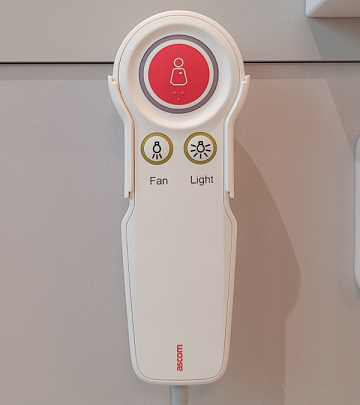
A patient handset is located at your bedside. Please press the nurse call button in red if you need assistance.
You will be looked after by our team of health professionals and ancillary staff. Here are some members of a care team and how they might support you.
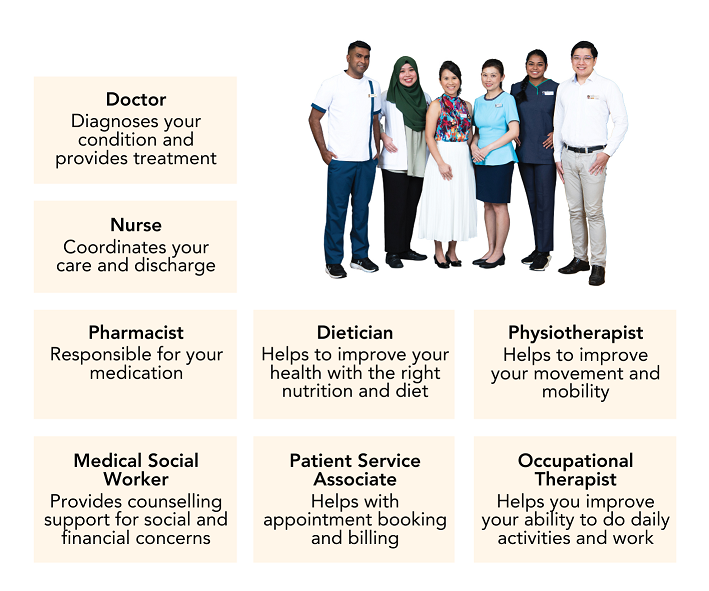
If you have any questions or concerns during your stay, please speak with your care team.
We are committed to providing you with reliable and best-value care. We respect you as a patient and want you to be engaged and empowered in your care. We also seek for you to understand your rights and responsibilities as a patient so that we can better care for you.
Please visit Your Rights & Responsibilities to learn more.
Medication Safety
Medication safety is an important aspect of patient care. It can help reduce or even prevent the risk of harm to you.
Here are some tips for safe use of medication:
Tell your doctor or nurse if you are allergic to any medication. You will need to wear a special identification wristband if you have any known drug allergy.
Do not consume any of your own medication during your stay. Please discuss your existing medications with your care team.
Check with your nurse if you are unsure of the medication served to you.
Take your medication on time when served.
If you are taking new medication for the first time and experience any of the following symptoms, please tell your nurse immediately.
Rash or itch on your face or body
Constipation or diarrhoea
Dizziness
Headache
Inability to sleep
It is important for you and your caregiver to know your medications well. This includes learning their names, how much to take and how often, why you are taking them, and what possible side effects there may be.
Leaving the Hospital Premises
Your safety and wellbeing are important to us. Please do not leave the hospital premises until your doctor has informed you that you are ready for discharge.
If you need to leave the hospital, such as for medical appointments or personal commitments, you may request to do so by speaking with your doctor. Please arrange and pay for your own transport, and return to the hospital on time.
If you insist on being discharged from the hospital against your doctor’s advice, your discharge will be documented as ‘Against Medical Advice’.
Respect for Our Staff and Patients
At Woodlands Hospital, we care about you and our staff.
Please treat our staff with respect and courtesy at all times. Any threatening behaviour or violence towards our staff will not be tolerated.
Our staff and patients have a right to privacy. Taking photographs and making video or audio recordings of our staff and patients are not allowed.
Personal Data
We value your privacy rights and strive to keep your personal data safe. We will only share information about your medical records and condition with you and your appointed spokesperson. For more information on our commitment to data protection, please visit Personal Data Protection Notification.
Discharge
Your doctor will advise when it is time for you to be discharged. It may take a couple of hours for the discharge process to be completed. For your safety, we encourage you to be accompanied by a family member or friend on your trip home.
Before you leave, you may receive the following:
- An After Visit Summary and Medical Certificate
- Referrals for follow-up care
- An appointment at our Specialist Clinic or another healthcare institution
- Medication prescribed by your doctor and dispensed by pharmacy staff
Discharge time is 11am. Additional fees may apply if you occupy your bed past 1pm.
For non-residents, if you and your family or caregiver intend to return to your country after discharge, we seek your understanding to pay the bill before leaving the hospital. Please approach our Patient Billing Financing Advisers or visit the Patient Services Centre at Tower B, Basement 1.
We wish you good health and a quick, safe recovery.
Medical Reports
If you need to make a medical claim from your insurance company, you may request a medical report by:
- Visiting the Patient Services Centre located at Tower B, Basement 1 (visit Getting Around Campus for details), or
- Submitting a request using this online form.
For other medical report related enquiries, please email wh.his@nhghealth.com.sg. For more information, please view Medical Reports.
Charges may apply for the issue of medical reports.
Caregiver Information
A caregiver is someone who has taken on the responsibility of looking after a person with a health condition.
Caregivers provide a range of support. These include:
helping with day-to-day tasks such as dressing, bathing and supermarket shopping,
providing health and medical support, such as helping with exercise, giving medication and going along to medical appointments,
offering emotional and social support, such as providing a listening ear.

