
Services
NCID Cares, previously known as Patient Care Centre (PCC), is the community arm of NCID within the Infectious Disease Research & Training Office (IDRTO). It is a community space on Level 1 of NCID and comprises a creative zone for patient volunteers to do their handicraft, a large dining area and a recreation zone ("Great Minds") for volunteer-facilitated activities, training and programme events. Works are in place to create an education and exhibition zone for information on infectious diseases.
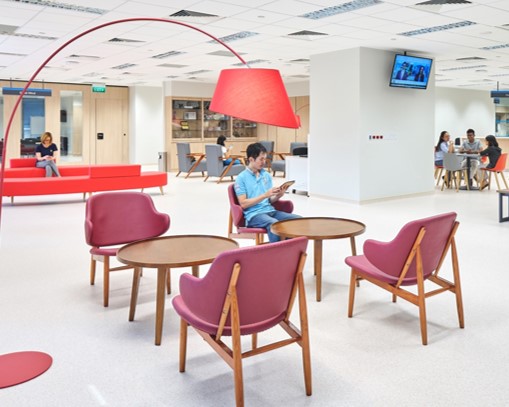
NCID Cares will take on a larger role in:
Community engagement through our centre-based care and;
Public education and community engagement to prepare Singapore and her people for infectious disease outbreaks via greater awareness of infectious diseases and outbreak response.
NCID Cares will provide activities and services to support ID patients to maximise positive social impact through building self-confidence, opportunities to learn and engage the public, and de-stigmatising infectious diseases such as HIV and tuberculosis. The programmes from PCC will continue to help needy patients living with HIV at NCID Cares. These programmes are administered under the TTSH Community Fund.
NCID Cares – PCC Programmes
Patient rehabilitation and support programmes
Red Ribbon Project
The Red Ribbon Project initiated in 1999 has the mission to help rebuild self-confidence and self-esteem of patients living with HIV (PLHIV) and integrate them into society.
The Red Ribbon Project focuses mainly on handicraft work as part of diversional therapy to provide social support to patients with the help of volunteers. The programme equips our patients with life skills through interacting with others from different cultures and environment and helps them cope with psychosocial needs. By providing hope and acceptance we can walk with them in practical ways, help them cope effectively in the different stages of their life and enhance their quality of life.
Patients are referred by medical social workers to the programme. In return, they receive a monthly stipend to cover their time at the centre (each patient volunteer spends about 4 to 8 hours per day from Monday to Friday and occasionally Saturday).
Since its inception, this programme is funded through:
The sale of handicrafts made by patients
Donations from individuals and organisations
Their daily activities include:
Making handicrafts
Cooking lunch
Assisting in sales of the handicrafts at a pushcart in Tan Tock Seng Hospital
Performing simple administrative tasks such as reception duties and stock-taking
Nutritional Programme
This programme provides basic food items (e.g. rice, cooking oil, canned food, instant noodles, dietary milk) for needy patients with HIV ensuring their basic nutritional needs are taken care of through monthly food rations. Patients are referred by medical social workers.
The programme is supported by regular sponsorship of dry food rations by religious organisations and individuals. There are currently about 180 families who benefit from this monthly food ration programme. The food rations are packed and distributed by volunteers on a monthly basis.
This programme offers free lunch to patients (inpatient/outpatient) and patient volunteers of the Red Ribbon Project from Monday to Friday.
Medication subsidies
Medications
This programme provides financial subsidies defray the cost of long-term medication for HIV and hepatitis C beyond the scope of public funding. It had benefitted more than a thousand patients since its inception.
Non-standard drug subsidy programme
This programme subsidises expensive, non-standard, non-HIV medications and blood tests such as HIV viral load and genotypic resistance to determine the effectiveness of the HIV medications. The programme benefits about 250 to 300 patients annually.
Education and volunteer training programmes
Volunteer training programme
NCID Cares has a strong team of regular volunteers from a wide spectrum of organisations including religious groups and non-governmental organisations. The annual volunteer training programme equips new volunteers with theoretical and practical knowledge in caring for patients living with HIV. This programme enhances and supplements services provided by professional staff.
Peer leaders are trained under this programme to expand their knowledge on HIV-related issues to help other PLHIV.
Women's support group
The women's support group was established in 2000 by the Department of Care & Counselling and NCID Cares to encourage female patients living with HIV to engage in social activities facilitated by medical social workers. It aims to combat stigma and isolation experienced by HIV women via mutual support, group sharing and social activities. It reaches out to women who are newly diagnosed with HIV.
HIV orientation programme (HOP)
HOP is a peer-led support group for patients who are newly diagnosed with HIV. The programme provides mutual support for patients via enhancing their knowledge on HIV, emotional support and sharing on issues related to HIV. It empowers individuals and improve their support network to increase their ability to live with HIV.
Agape support group
The Agape support group was established in 2010 to serve as a peer support programme for mutual support among male patients through workshops or meaningful structured activities where participants can learn new skill or knowledge for self-development and enhance their quality of life. The Agape provides a safe avenue for men living with HIV to improve their acceptance of the diagnosis and a safe avenue to meet other men with HIV to share experiences for mutual support,
How you can help?
Support the NCID Cares – PCC programmes through monetary donations
Please make your cheque out to "TTSH Community Fund" and indicate behind the cheque "NCID Cares – PCC Programmes",with your name, NRIC/FIN/UEN and address. Mail the cheque to:
NCID Cares, Level 1
National Centre for Infectious Diseases
16 Jalan Tan Tock Seng
Singapore 308442
Donations will be channeled to the programmes listed above. All donations will enjoy 2.5 times tax-deductions.
Purchasing our handicrafts
As gifts for special occasion (Birthday/Christmas/Father's Day/Mother's Day/Teachers' Day/Children's' Day)
As gfts for events of your organisation, department or school
As wedding favours
For orders or e-catalogue, please email us at ncidcares@ncid.sg or visit our pushcart outside TTSH Level 1 Kopitiam.
Conduct skill training for our patients (e.g. handicraft classes, customer service and retail training)
Provide employment opportunities for our patients
Donate dry food rations
Join us as a befriender volunteer
Contact us
Tel: 6357 7949, Email: ncidcares@ncid.sg
Address: NCID Cares, Level 1, National Centre for Infectious Diseases, Singapore 308442
NCID undertakes public education via community engagement and partnership to raise greater awareness of ID and outbreaks, hence providing the foundation to prevent the spread of ID and building community preparedness for outbreaks. Through NCID Cares, NCID provides onsite opportunities for public education activities such as educational talks and interactive digital exhibitions. In addition, educational tours on NCID facilities can be arranged for comprehensive learning experiences, including further discussions at NCID Cares after the tours.
For enquiries or partnership, please send your request to training@ncid.sg.
Established by a multidisciplinary team, the Enhanced HIV Programme (EHIVP) provides high-quality, evidence-based clinical care for people living with HIV in Singapore. The team cares for the country's largest cohort of people living with HIV. In line with the UNAIDS 90-90-90 targets to end the HIV epidemic, the EHIVP aims to achieve:]
90% or more of all people living with HIV will know their diagnosis;
90% or more of all people diagnosed with HIV infection will receive antiretroviral therapy (ART); and
90% or more of all people receiving ART will achieve durable viral suppression.
Our Team
Core Team
Head: Dr Choy Chiaw Yee
Deputy Head: Dr Lee Pei Hua
Programme Manager: Mr P Arun Kumar
The Human Immunodeficiency Virus (HIV) attacks and destroys CD4 cells, which are part of the immune system. With a weakened immune system, persons living with HIV are more susceptible to other infections and are more likely to develop other complications. HIV treatment is highly effective, allowing persons living with HIV to live long, healthy lives. The EHIVP follows the steps of HIV care continuum model to provide a variety of comprehensive care to both persons living with HIV and those at risk of HIV infection.

HIV Treatment
Patients who have been diagnosed with HIV and referred to NCID will be given an appointment to consult our physicians within 7 days. After a holistic assessment, patients will start on antiretroviral therapy (ART) to keep the disease under control by reducing the amount of HIV in the body. ART will be initiated as early as possible, with some patients starting on the same day as their first visit (where it is safe and appropriate). After that, patients are seen by their primary physicians regularly to ensure that they respond well to the treatment.
Please click here for more information about our outpatient services.
HIV Co-morbidity Clinics
If required, patients will be referred to doctors from other disciplines to help manage their conditions and minimise the chances of further complications associated with HIV infections. These conditions may include ophthalmology for HIV-related eye conditions, endocrinology for chronic diseases such as diabetes and osteoporosis, psychiatry for mood disorders, and dermatology for HIV-related skin conditions.
Pre-Exposure Prophylaxis (PrEP) Care Clinic
Pre-exposure prophylaxis (PrEP) is a risk-reduction treatment against HIV, which involves the use of ART to prevent HIV transmission. PrEP will be prescribed to HIV-negative individuals who are considered at high risk of acquiring HIV infection. At the initial visit, our PrEP physicians will discuss the eligibility criteria for receiving PrEP, perform HIV/STI testing, and assess kidney function. A PrEP prescription will be issued after that. Patients taking PrEP will also receive sexual health services and counselling.
When taken as prescribed, PrEP is effective in preventing HIV. Since PrEP only protects against HIV, condom use is still important to prevent other sexually transmitted infections (STIs).
If you are considering starting PrEP, please contact the NCID HIV PrEP Clinic at (65) 6357 7000 or email ncid.prepcare@nhghealth.com.sg. More information about PrEP can be found here.
Post-Exposure Prophylaxis (PEP) Treatment
Post-exposure prophylaxis (PEP) is the use of ART to reduce the risk of HIV transmission following a recent high-risk exposure. It should only be used in an emergency and must be started within 72 hours of a possible HIV exposure. One should consider pre-exposure prophylaxis (PrEP) instead if there is repeated exposure to HIV (see PrEP above).
A high-risk exposure to HIV includes:
- any unprotected anal or vaginal sex with multiple sexual partners, or a partner who is HIV positive with an unsuppressed viral load or a person with unknown HIV status,
- sharing of or exposure to contaminated needles or blades, particularly needle-stick injuries, or
- victims of sexual assault.
Should you require PEP, please visit the TTSH Emergency Department.
Data Management Programme
The Data Management Programme, helmed by a team comprising of a clinician-scientist and data analysts to improve the health and well-being of patients with HIV, serves to monitor and evaluate HIV Clinical Programme services by maintaining a comprehensive clinical database to guide its continuous development and improvement.
The EHIVP provides holistic allied health services for patients who require specific care. These include care and counselling, HIV specialist pharmacy, inpatient and outpatient nursing, dietetics and nutrition, physiotherapy, occupational therapy and psychological wellness services. If you are a patient seeking care at our centre and have more queries regarding these allied health services, please speak to your physician.
Positive Prevention Programme (PPP)
The PPP offers emotional, social, and financial support to patients and education on safe sexual behaviour. Our MSWs are experienced and specially trained in providing care and support to persons living with HIV. They also assist with spousal notification for newly diagnosed HIV patients.
Defaulter Programme
The Defaulter Programme works closely with physicians and patients to help patients remain engaged in care. HIV care is highly dependent on adherence not only to treatment but also continued engagement with care. The defaulter coordinator plays an essential role in triaging, contacting, and re-engaging with patients who have missed clinic appointments, and in so doing, ensuring that they continue to receive essential care.
Outpatient Nursing
NCID outpatient nurses support NCID's comprehensive HIV care services, which include HIV diagnosis and testing, initial management of newly diagnosed HIV infection, initiation and maintenance of highly active antiretroviral therapy (HAART), and monitoring for long-term HIV complications. They also offer nurse-led vaccinations and immunisations, as well as screening for other chronic diseases.
Inpatient Nursing
NCID inpatient nurses will look after persons living with HIV who require admission for further investigations and treatment throughout their inpatient stay at NCID. They also advocate on behalf of the patients and educate their loved ones about HIV and co-morbidities. Our multidisciplinary HIV care remains seamless from the patient's point of admission to discharge and return to routine outpatient care.
Drug Adherence Programme
The Drug Adherence Programme is led by pharmacists, and aims to prevent HIV treatment failure by providing counselling and care for patients with HIV who have:
- recently started on antiretroviral therapy (ART);
- changed ART regimen; and/or
- experienced difficulties with ART adherence.
Antiretroviral Therapy-Directly Observed Therapy (ART-DOT)
The ART-DOT aims to improve patients' adherence to ART by ensuring that patients who face challenges with ART adherence (as evidenced by persistently unsuppressed viral load) receive their ARTs under the supervision of a pharmacist.
Psychological Wellness Programme
The Psychological Wellness Programme is a service provided by NCID and the Department of Psychological Medicine at TTSH. The programme screens patients for anxiety and depressive symptoms and provides treatment services if needed.
For more information about the Psychological Wellness Programme, please click here.
NCID Cares
NCID's community engagement and outreach arm looks after the medical needs and emotional well-being of patients with HIV/AIDS by providing help through patient rehabilitation and support programmes. Diagnostic test subsidies and financial support to cover medication costs are also provided to needy patients living with HIV. NCID Cares also coordinates volunteer engagement to conduct handicraft workshops, and other volunteer facilitated activities for patients.
For more information on NCID cares, please click here.
The EHIVP conducts regular training and educational programmes for infectious diseases trainees, healthcare professionals, people living with HIV and the general public to raise HIV awareness and knowledge.
HIV Grand Rounds
HIV Grand Rounds is a regular, structured meeting that discusses standardised HIV care in the local setting. It brings interesting, challenging HIV-based cases for discussion, with the goal of combining learning and edification. The most recent HIV guidelines, local publications influencing practices or policies, and local HIV research findings are shared during this meeting. Clinicians (physicians, trainees, and nurses), pharmacists, medical social workers, laboratory staff, and community partners are all invited to attend the Grand Rounds.
Healthcare Worker HIV Education Series
The Healthcare Worker HIV Education Series is jointly organised by the HIV Programme at National University Hospital (NUH) and NCID. The Education Series is a modular education initiative that runs quarterly. The Education Series aim to improve the HIV knowledge and skills of healthcare workers in Singapore.
Nursing HIV Education Series
The Nursing HIV Education Series is organised by the nursing team at NCID. HIV has progressed from an acute to a highly treatable chronic condition. This series aims to educate nurses and other healthcare workers on the fundamentals of HIV care, such as ART administration, psychological support, and the management of elderly with HIV.
HIV Healthcare Education Posters
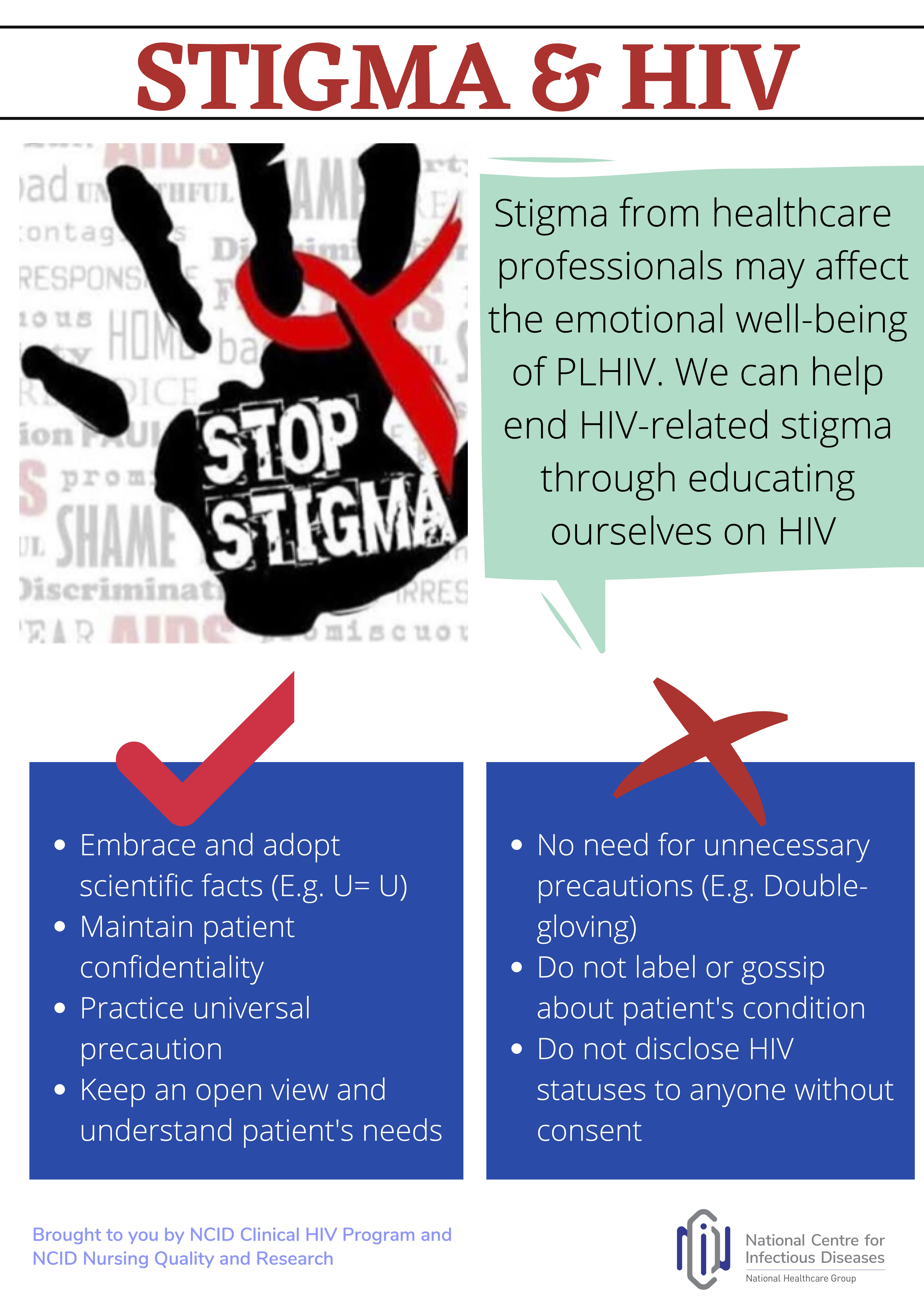
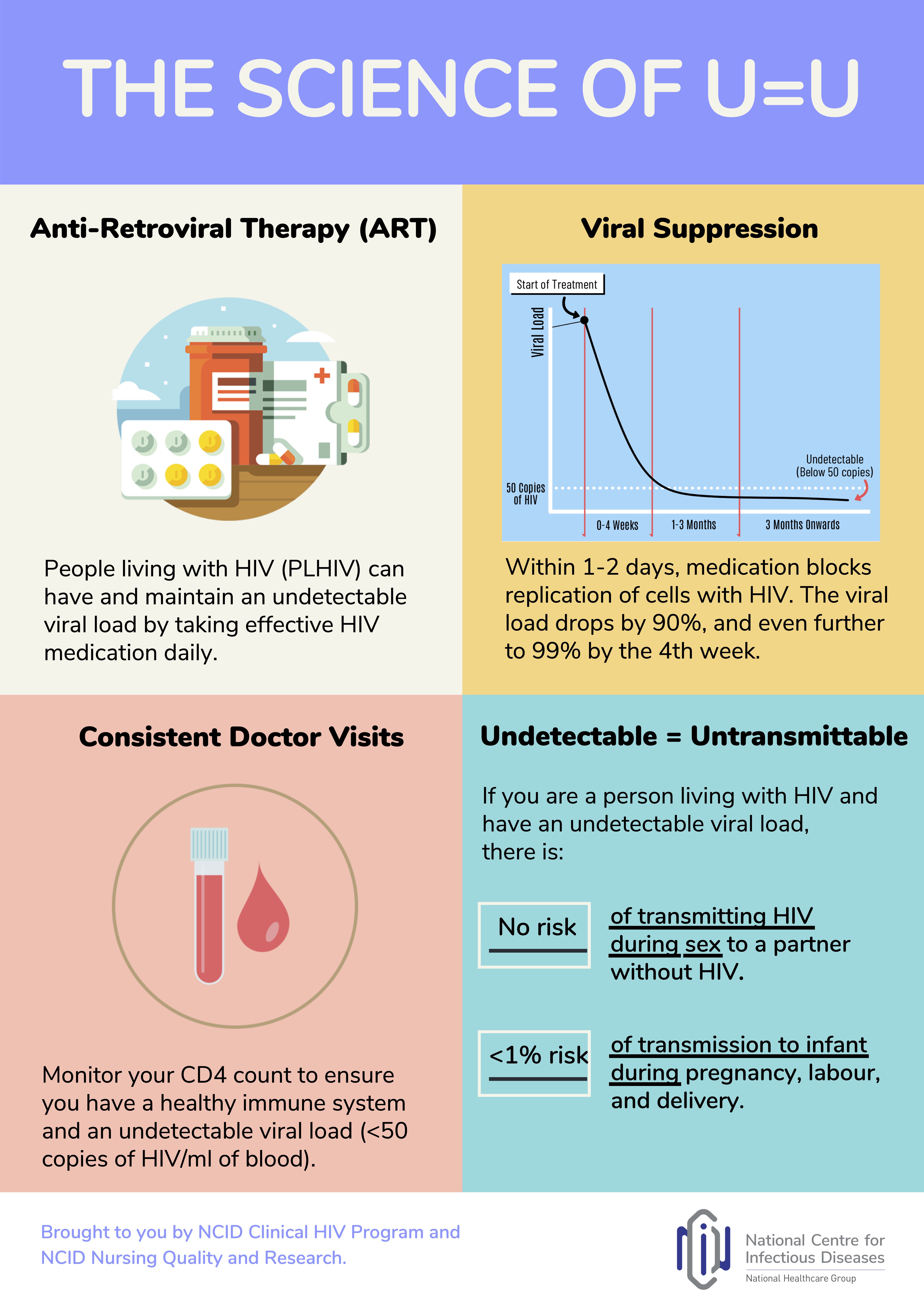
The HIV Healthcare Education Posters are designed to educate nurses on the science of undetectable = untransmittable (U=U), avoiding stigmatising people living with HIV, managing needle-stick injuries, and how nurses can support persons living with HIV by connecting them to various support services in Singapore. It aims to empower nurses to embrace science, dispel myths, and be patient advocates.
World AIDS Day (WAD) Event
World AIDS Day started in 1988 and takes place on 1 December each year. It is an international day for people worldwide to unite in the fight against HIV, to show support for people living with HIV, and to commemorate those who have died from an AIDS-related illness. Every year, EHIVP commemorates WAD through activities to raise awareness about HIV, challenge misconceptions about HIV transmission and infection, and develop empathy and solidarity between people living with HIV and healthcare workers.
For more information on our World AIDS Day events, please click the links below:
2020: We are in this together
Publications
Ang LW, Choy CY, Ng OT, Leo YS, Wong CS "Hepatitis C virus infection in HIV-infected men in Singapore, 2006–2018: incidence and associated factors." Sexual Health 2021: 18, 221-231.
Ang LW, Ng OT, Boudville IC, Leo YS, Wong CS. "An observational study of the prevalence of metabolic syndrome in treatment-experienced people living with HIV in Singapore." PLoS One. 2021 Jun 2;16(6): e0252320.
Tan YR, Kaur N, Ye AJ, Zhang Y, Lim JXZ, Tan RKJ, Ho LP, Chen MI, Wong ML, Wong CS, Yap P. "Perceptions of an HIV self-testing intervention and its potential role in addressing the barriers to HIV testing among at-risk heterosexual men: a qualitative analysis." Sex Transm Infect. 2021 Jan 15; sextrans-2020-054773. Doi: 10.1136/sextrans-2020-054773.
Choy CY, Wong CS. "SARS-CoV-2 and Advanced HIV Infection." Annals Acad Med Singapore. 2020;49(12):1042-1043.
Agrawal R, Gunasekeran DV, Xu Y, Leo YS, Ng OT, Wong CS, Testi I, Ding J, Banu I, Teoh SC. "Clinical Features and CD4+ T Cells Count in AIDS Patients with CMV Retinitis: Correlation with Mortality." Ocul Immunol Inflamm. 2020 Jul 9:1-6.
S Ho, JG Wong, OT Ng, CC Lee, YS Leo, DCB Lye, CS Wong. "Efficacy and safety of abacavir/lamivudine plus rilpivirine as a first-line regimen in treatment-naïve HIV-1 infected adults." AIDS Res Ther. 2020 May 21;17(1):23.
CY Choy, CS Wong. "It's not all about COVID‐19: Pneumocystis pneumonia in the era of a respiratory outbreak." J Int AIDS Soc. 2020 Jun;23(6): e25533
Tan RKJ, Wong CS. "Mobilising civil society for the HIV treatment cascade: measures of democracy and its impact on diagnosis rates among PLHIV." J Int AIDS Soc. 2019, 22(8), e25374
Tan RKJ, Kaur N, Chen MI, Wong CS. "Developing a typology of HIV/STI testing patterns among gay, bisexual, and queer men: a framework to guide interventions." Qual Health Res. 2020 Mar;30(4):610-621
Ang LW, Wong CS, Ng OT, Leo YS. "Incidence of syphilis among HIV-infected men in Singapore, 2006–2017: Temporal trends and associated risk factors." Sex Transm Infect. 2019, sextrans-2019-054163
Choy CY, Ang LW, Ng OT, Leo YS, Wong CS. "Factors associated with hepatitis B and C co-infection among HIV-infected patients in Singapore, 2006-2017." Trop Med Infect Dis. 2019 May 27;4(2). pii: E87.
Chan LG, Ho MJ, Lin YC, Ong Y, Wong CS. "Development of a neurocognitive test battery for HIV-associated neurocognitive disorder (HAND) screening: suggested solutions for resource-limited clinical settings." AIDS Res Ther. 2019 Apr 15;16(1):9.
Wong CS, Kumar PA, Wong CM, Choong CH, Lim O, Chan YY, Ibrahin MA, Chio MT, Tan RKJ, Chen MI. "Acceptability of HIV Pre-Exposure Prophylaxis (PrEP) and Opinions on PrEP Service Delivery Among Men who have Sex with Men in Singapore: A Qualitative Study." AIDS Educ Prev. 2019 Apr;31(2):152-162.
Tan RKJ, Teo AKJ, Kaur N, Harrison-Quintana J, Wong CS, Chen MI. "Extent and selectivity of sexual orientation disclosure and its association with HIV and other STI testing patterns among gay, bisexual and other men who have sex with men." Sex Transm Infect. 2019 Mar 27. pii: sextrans-2018-053866. doi: 10.1136/sextrans-2018-053866.
Tan RKJ, Teo AKJ, Kaur N, Harrison-Quintana J, Chen MI, Wong CS. "Cost and anonymity as factors for the effective implementation of PrEP: an observational study among gay, bisexual, and other men who have sex with men in Singapore." Sex Health. 2018 Sep 25. doi: 10.1071/SH18059
Wong CS. "HIV Prevention: The Promise of Pre-Exposure Prophylaxis in Singapore." Annals of the Academy of Medicine of Singapore. 2017 July;46(7):265-66.
Chan LG, Wong CS. "HIV-associated neurocognitive disorders – an issue of growing importance." Annals of the Academy of Medicine of Singapore. 2013 Oct; 42(10):527-34.
Wong CS, Lo FA, Cavailler P, Ng OT, Lee CC, Leo YS, Chua AC. "Causes of death in hospitalised HIV-infected patients at a national referral centre in Singapore: a retrospective review from 2008 – 2010." Annals of the Academy of Medicine of Singapore. 2012 Dec; 41(12):571-6.
Wong CS, Lye DC, Lee CC, Leo YS. "Acute HIV Infection in Singapore: predominance of men who have sex with men." Singapore Medical Journal. 2011 Dec;52(12):860-3.
Resources for Healthcare Workers
- NCID HIV Clinical Handbook for Infectious Diseases Residents
- HIV Healthcare Education Poster: Stigma & HIV
- HIV Healthcare Education Poster: The Science of U=U
 |  |
Resources for Patients and General Population
- 3 Decades of HIV Treatment and Care at the Communicable Disease Centre
- Holistic HIV Care Services: What You Need To Know

