
Our Clinics & Services
| Location | Phone Number | |
| National Centre for Infectious Diseases, Level 1 16 Jalan Tan Tock Seng Singapore 308442 | 6357 7000 | |
| Operating Hours | Fax | |
| Mondays to Fridays: 8:00 am to 4:30 pm Saturdays: 8:30am to 11:30am Sundays and Public Holidays: Closed | 6357 7910 |
Clinic J, located at Level 1 of the National Centre for Infectious Diseases, is purpose-built and designed to provide specialist outpatient consultation to patients with proven or suspected infections, and to respond to potential infectious disease threats.
Conditions treated at Clinic J may be bacterial, viral, fungal or parasitic in origin, and may be acquired locally from the community, during travel, through occupational exposure or from contact within healthcare settings.
Clinic J serves as a one-stop solution for patients with chronic infectious conditions, providing multi-disciplinary specialist care, counselling, pharmacy, radiology and X-ray services. Some of the features within Clinic J include:
A pre-screening consult area
A special precaution area which caters to high-risk patients
Three specialist outpatient clusters, each with 7 consult rooms
Two X-ray units
An outpatient pharmacy
Day Treatment Centre
The Day Treatment Centre at NCID is an extension of Clinic J and offers the following services:
Phlebotomy (blood taking)
Lumbar puncture
Sputum induction
Pentamidine puff
PAP smear
Eye consultation services to manage and treat eye complications which occur as a result of patients’ infectious conditions. There are also treatment rooms for visual acuity tests, eye injections and eye photography
| Location | |
| National Centre for Infectious Diseases, Level 1 16 Jalan Tan Tock Seng Singapore 308442 | |
| Contact Information | |
| 6357 7000 (NCID Clinic J) |
About HIV
Human Immunodeficiency Virus (HIV) attacks and destroys a person's CD4 cells, which make-up part of the immune system. With a weakened immune system, an HIV infected person is more susceptible to other types of infections, and is also at risk of developing other complications. HIV treatment is highly effective, and enables people living with HIV to lead healthy lives.
At the National Centre for Infectious Diseases (NCID), we provide comprehensive care for patients. |
| NCID Outpatient HIV Services | |
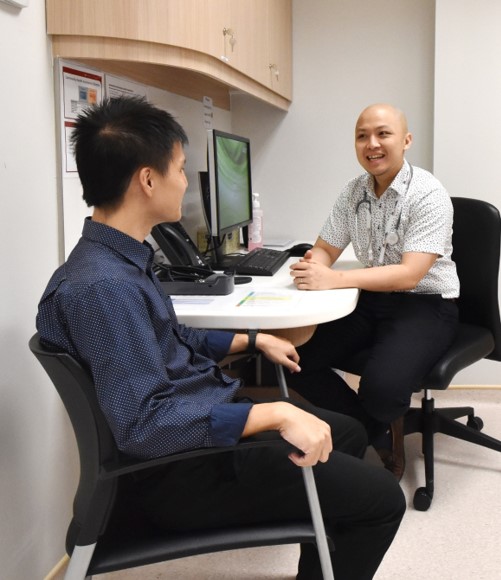 | Treatment for HIV Patients who are diagnosed with HIV infection and referred to NCID will be given an appointment date to see our doctors within 7 days. After a holistic assessment, patients will start on Anti-Retroviral Therapy (ART) to keep the disease under control by reducing the amount of HIV in the body. ART will be initiated as early as possible, with some patients starting on the same day as their first visit (where it is safe and appropriate to do so). Thereafter, patients are seen by their primary physician regularly to ensure that they are doing well on treatment. Patients will also see doctors from other disciplines, if required, to manage their conditions and minimise the chances of developing other complications often associated with HIV infections. This includes ophthalmology for HIV-related eye conditions, endocrinology for chronic conditions like diabetes and osteoporosis, psychiatry for mood disorders, and dermatology for HIV-related skin conditions.
Pre-Exposure Prophylaxis (PrEP)
Post-Exposure Prophylaxis (PEP) treatment
NCID Inpatient HIV Services HIV positive patients who require admission for further investigations and treatment will be looked after by our team of doctors and nurses in NCID inpatient wards throughout their inpatient stay. Our multidisciplinary HIV care remain seamless from the patient’s point of admission to discharge and return to routine outpatient care. |
| HIV Support Programmes | |
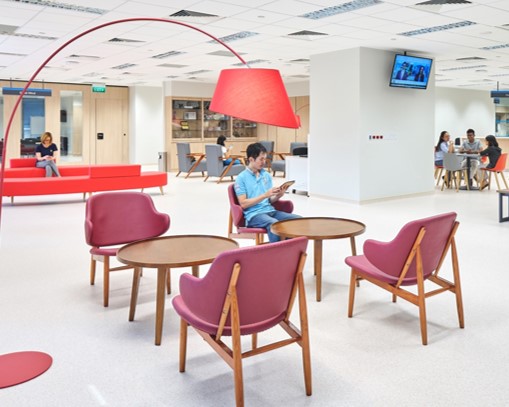 | Positive Prevention Programme
Drug Adherence Programme
NCID Cares |
Better Outcomes With early detection and treatment, and robust support programmes, patients receiving treatment at NCID can continue to lead healthy and fulfilling lives with near-normal life expectancy. | |
Fees and Financial Support Patients need to bring along referral letters from Polyclinics/ CHAS GPs to enjoy subsidised medical care. Patients referred by Action for AIDS, Singapore Anonymous Testing Service would also receive a subsidy of up to S$200 on their first visit. Please note that bill sizes vary based on treatment. | |
| Click here for the Holistic HIV Care Services brochure. | |
Our Specialists
Dr Wong Chen Seong
Senior Consultant
MBBS, MRCP (UK), FAMS
Dr Choy Chiaw Yee
Consultant
MBBS, MRCP (UK)
Dr Lee Pei Hua
Consultant
MBChB, MRCP
| Location | ||
| National Centre for Infectious Diseases, Level 1 16 Jalan Tan Tock Seng Singapore 308442 | ncid.prepcare@nhghealth.com.sg | |
| Operating Hours | Contact Information | |
| Every Friday: 2 pm to 4:30 pm | (+65) 6357 7000 |
Pre-Exposure Prophylaxis (PrEP)
PrEP is a risk-reduction treatment against HIV which involves the daily consumption of HIV preventive medication. PrEP will be prescribed to HIV-negative patients who are at high risk of acquiring HIV infection after a review by our doctors. In addition, patients on PrEP will be provided with comprehensive sexual health services such as screening for sexually transmitted infections (STIs), and safer sex counselling.
Currently, PrEP is a combination of two anti-viral medications Tenofovir and Emtricitabine (TDF & FTC). These drugs are approved by both U.S. Food and Drug Administration and Singapore's Health Sciences Authority, and are highly effective inreducingthe chances of an HIV-negative person contracting HIV infection.
PrEP may be useful for someone who is HIV-negative and if the person:
- Has a partner with HIV who is not on suppressive antiretroviral therap
- Is at risk of getting HIV through vaginal/ anal sex with multiple partners without the consistent use of condoms in the last 6 months
- Have sexually transmitted infections in the last 6 months
- Is a drug user who shares equipment and needles with others to inject drugs
PrEP is meant to reduce risk before exposure and only suited for people with constant ongoing high risk of acquiring HIV infection. If you have never started PrEP and are recently exposed to HIV, you should considerPost-Exposure Prophylaxis (PEP) within 72 hours after exposure to potential HIV infection. Do discuss further with our doctor on PEP.
Daily PrEP
PrEP is very effective if taken daily. Studies have shown that daily dosing of co-formulated TDF/FTC can reduce the risk of getting HIV by about 99% from sex. This needs to be taken for 7 days before high levels of protection are achieved for both vaginal and rectal exposure to HIV.
PrEP does not protect against other STIs, responsible safe sex and use of barrier contraception should be practised.
On-Demand PrEPRecommended in cis-gender men who have sex with men. A double dose (two tablets) of co-formulated TDF/FTC to be taken 2-24 hoursbeforepotential sexual exposure, to be followed by single doses 24 and 48 hoursafterthe initial dose.
When potential exposure is sustained for more than a 24-hour period, 1 tablet per day should be taken until the last exposure followed by the 2 post exposure tablets.
Safety & Adverse Side Effects
PrEP does not cause any serious side effects. The common side effects include upset stomach and nausea but the symptoms are mild and improve over time. You should tell your doctor if these or other symptoms become severe or do not go away.
Starting PrEP
First Doctor Consultation
You can discuss with our experienced infectious diseases doctor on HIV and sexual health to decide whether PrEP is right for you. Regular follow up visits with the doctor are required when you are on PrEP. Blood tests for HIV, STIs and baseline renal and liver functions will be offered by the doctor during first consultation.
Counselling will also be carried out to ensure medication is taken as prescribed, assess for side effects to medication, as well as to obtain new prescription so that PrEP is not interrupted. Sexual health counselling will also be provided to educate on the ways to reduce the risk of acquiring HIV. HIV tests will also be done regularly at 3 to 6month intervals.
PrEP does not protect one against other sexually transmitted infections. Condoms provide the most effective barrier to HIV and are also the best way of reducing one's chances of picking up or passing on other STIs.
Subsequent Visits and ReviewsHIV blood tests, and STD screening, will be done every 3 to 6 months, with additional treatment depending on patient-reported sexual risk behaviour. Other age-dependent test for serum creatinine will be offered every 6 to 12 months.
The need for continued PrEP will be assessed by the doctor and determined based on assessment of the patient's risk of HIV infection within the past 12 months.
Stopping PrEP
HIV testing and other relevant tests will be carried out to determine the HIV status and medical conditions such as Hepatitis B status of the patient. Patient will also be counselled to reconsider reinitiation of PrEP if the risk of HIV infection should become present again.

