
At the National Centre for Infectious Diseases, sustainability and infectious diseases are not separate concerns but are in fact deeply connected. The effects of climate change impact human health and the incidence of infectious diseases, including the emergence of novel pathogens and the re-emergence of known ones, particularly climate-sensitive infectious diseases. Rising temperatures, shifting rainfall patterns, and habitat disruption expand the range of disease vectors, accelerate zoonotic spillover, and create conditions that favour outbreaks. Meanwhile, the healthcare sector carries significant carbon and environmental footprint, making it both a contributor to and a stakeholder in the climate crisis.
Why Sustainable Healthcare?
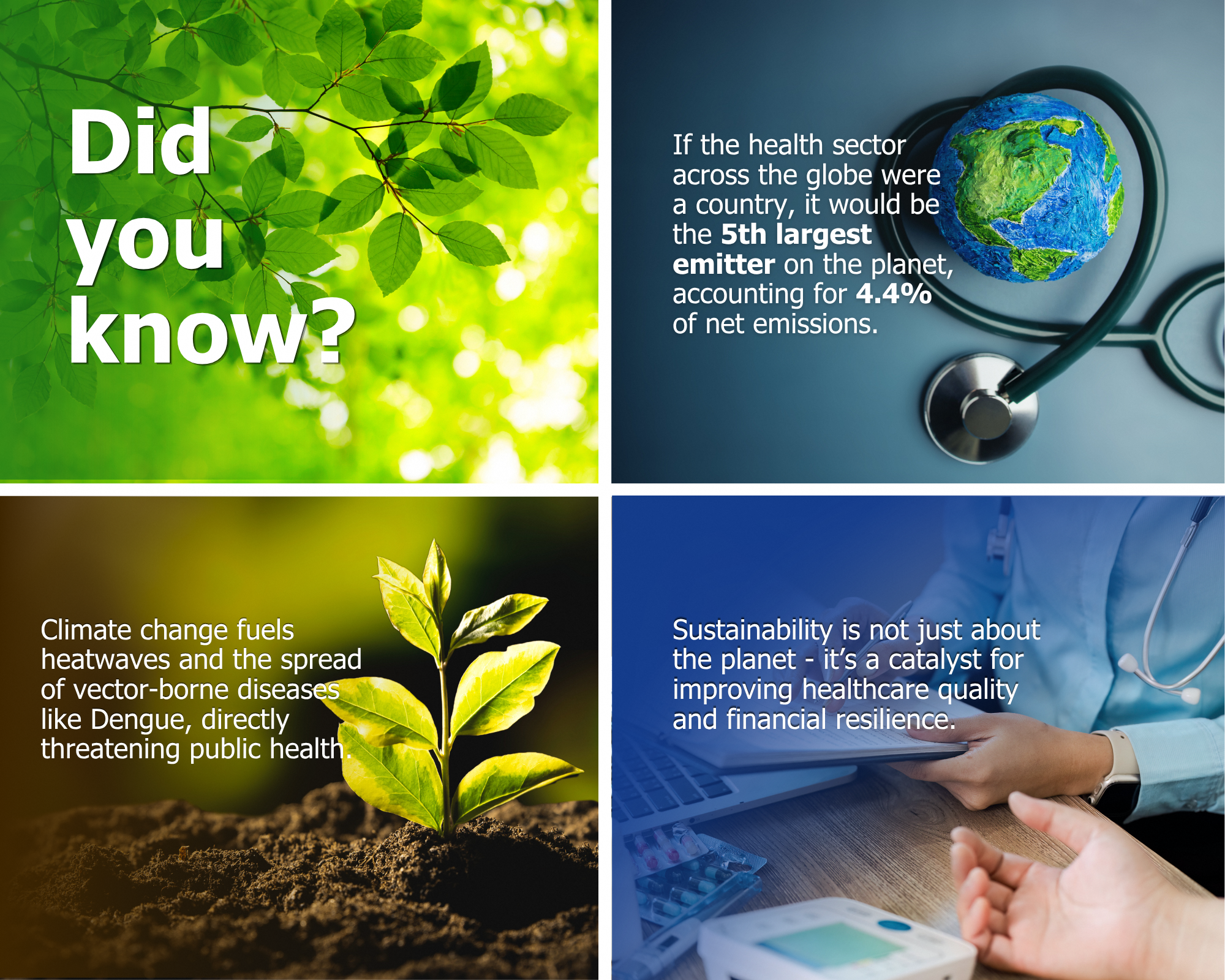
As a healthcare institution, we recognise our delivery of healthcare can contribute to the problem of climate change that in turn impacts human health. Single-use plastics, energy consumption, and waste generation contribute significantly to carbon emissions. At NCID, we believe that the fight against infectious disease must also occur concurrently with protecting the environment, and that starts with how we run our own house.
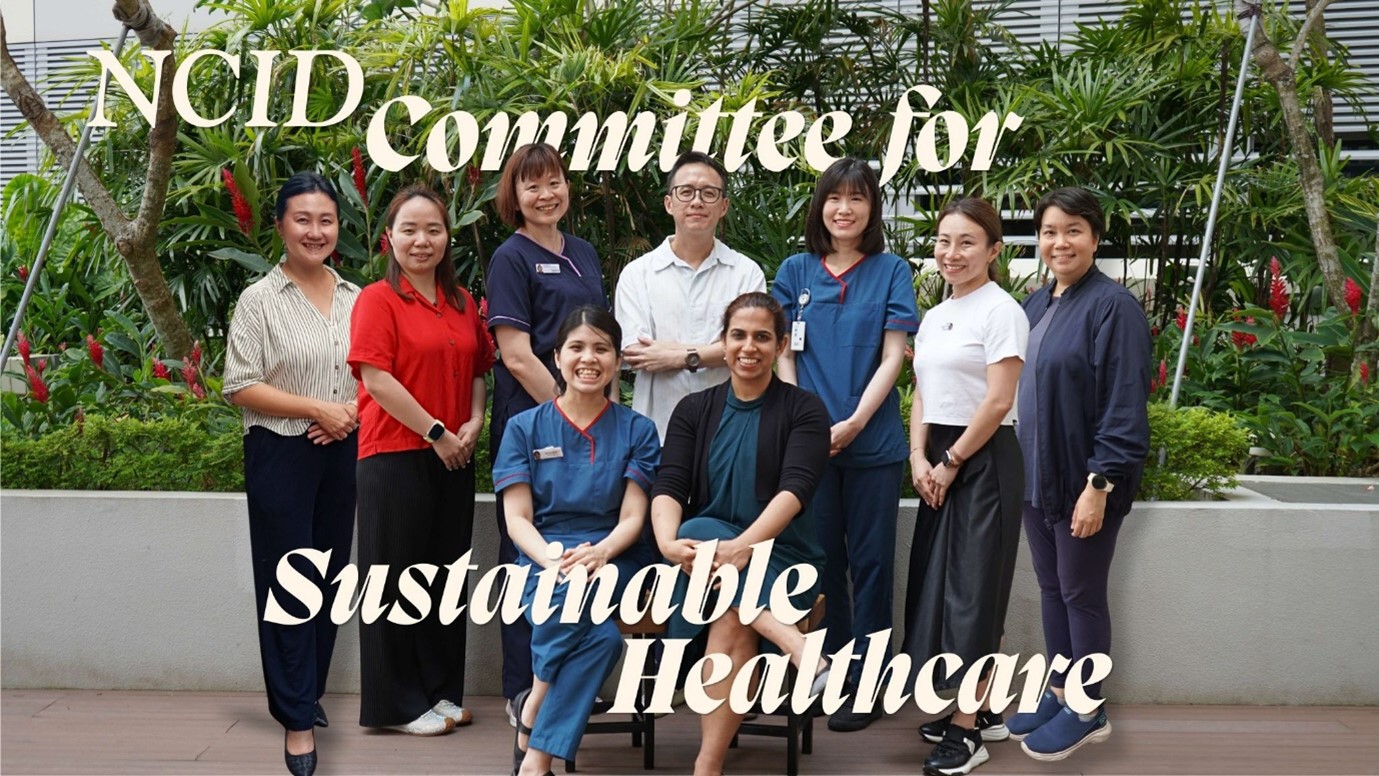
NCSH Members (from left to right):
Back: Dr. Stephanie Sutjipto, Ms. Lee Pei Lin, Ms. Law Hwa Lin, Mr. Julian Ng, Ms Phoon Yan Ling, Ms. Janice Lim, Ms. Joy Khoo
Front: Ms. Tan Yun Hann (Co-Chair), Dr. Sapna Sadarangani (Co-Chair)
Established in 2025, the NCID Committee for Sustainable Healthcare (NCSH) oversees organisation-wide strategies to position NCID as a leader in sustainable healthcare practices, aligned with NCID’s leadership in the field of Infectious Diseases. We are a multidisciplinary committee comprising Infectious Diseases physicians, leaders in Nursing, Pharmacy, Operations, Training & Education and Corporate Development. NCSH collaborates with colleagues in many specialties, committees and work areas for engagement and impact.
Our Strategic Goals
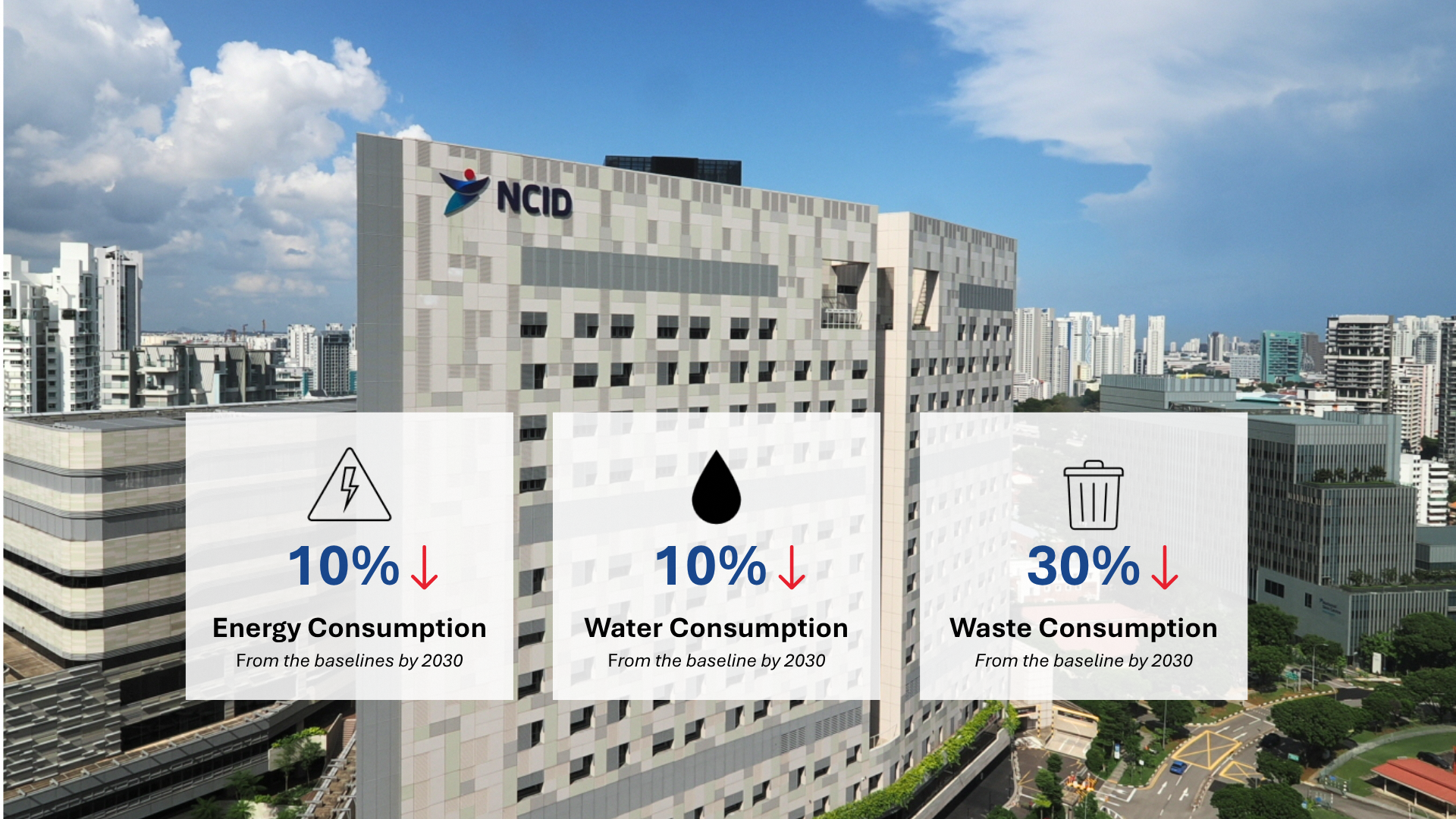
As part of NHG Health's commitment to sustainable development, we align with the GreenGov.SG initiatives to reduce energy use intensity by 10% by 2030 against 2018-2020.
The Enablers
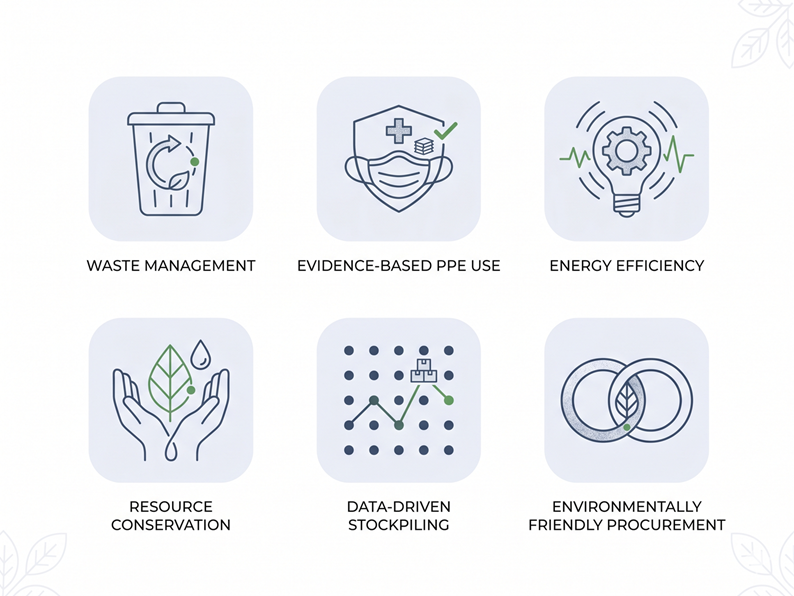
NCID is committed to reduce energy use intensity and carbon emissions through sustainability in clinical practices, through six key enablers that we will develop through multidisciplinary teams. Change needs system-wide solutions while maintaining patient safety and responsiveness to NCID’s mission.
Sustainability in Practice
At NCID, sustainability is part of how we care for our people, patients and partners. From reducing our environmental footprint to adopting more sustainable practices in daily operations, these initiatives reflect our commitment to making a positive difference - today and for the future. The projects featured here highlight some of our key efforts, alongside many other initiatives across NCID that contribute to a more sustainable healthcare environment.
Review of Climate Change and Its Impact on Infectious Diseases in Asia
In 2024, Dr Sapna P. Sadarangani and Adj A/Prof Shawn Vasoo from the National Centre for Infectious Diseases, and Dr Amanda Zain and Lynette Pei-Chi Shek from the Centre for Sustainable Medicine, Yong Loo Lin School of Medicine, jointly published a narrative review examining the impact of climate change on infectious diseases in Asia.
The review employed a detailed search strategy encompassing English‑language peer‑ and non‑peer‑reviewed articles from 1 January 2000 to 30 June 2023, with the aim to elucidate the link between climate change and infectious diseases that are the most relevant to Asia, drawing on PubMed and Google Scholar databases. Additional references were sourced from article citations, and the review also incorporated data from publicly available governmental epidemiological and surveillance sources, including guidance from the Ministry of Health, Singapore.
Key Insights:
Climate change, mediated through increasing temperature, changes in rainfall, extreme weather events and changes in vector ecology, impacts the transmission of many climate-sensitive infectious diseases. This includes vector-borne diseases, food- and water-borne diseases, antimicrobial resistance and other infectious diseases.
Asia, as the world's most populous, rapidly evolving and diverse continent, is already experiencing these effects, with climate change intersecting with population, sociodemographic and geographical factors to amplify the public health impact and potentially widen existing health disparities.
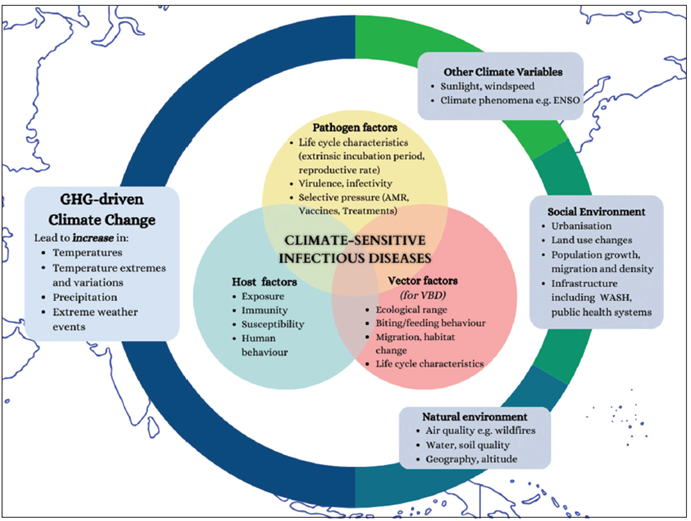
Figure 1: A framework of how climate change interacts with other natural and human variables that may amplify the risk of infectious diseases.
AMR: antimicrobial resistance, ENSO: El Niño–Southern Oscillation, WASH: water, sanitation and hygiene, VBD: vector‑borne disease
Implications for the Healthcare Sector:
- It is critical for the Healthcare Sector to strengthen its adaptive strategies to handle climate-sensitive emerging and endemic diseases, including robust public health preparedness and disease prediction systems.
Equally, the Healthcare Sector must take responsibility for its role in global emissions and mitigate its own greenhouse gas emissions. This is a challenge that requires strategic change at a systemic level and sustainable healthcare delivery.
Read the full article here: Climate change and its impact on infectious... : Singapore Medical Journal
Rethinking Waste from a Clinical Processes' Perspective in NCID’s ICU
At the National Centre for Infectious Diseases (NCID), caring for patients safely while remaining prepared for infectious disease outbreaks is part of our everyday work. In such a fast-paced clinical environment, much of the focus is naturally placed on infection control, patient safety, and operational readiness. But a multi-disciplinary team spanning Nursing, Hospitality & Environmental Services and Housekeeping from the NCID Outbreak Intensive Care Unit (ICU) saw an opportunity to also rethink how waste is managed in everyday care.
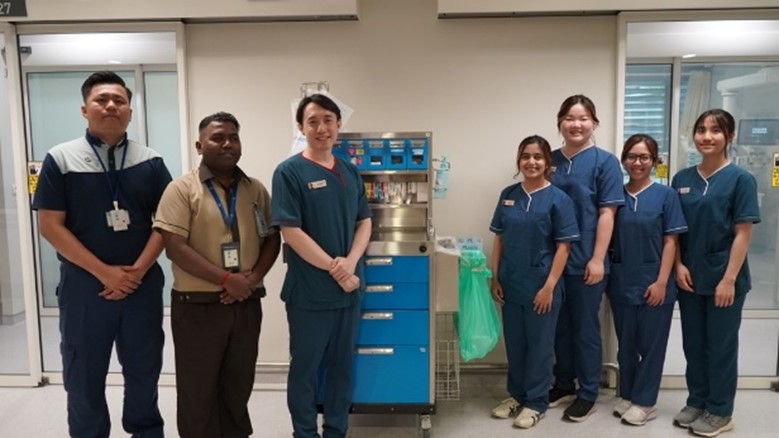
Figure 1: Project I-HEAL Team Members
(From left to right: Muhammad Hisyam Bin Darwin, Magenderan Munsamy, Joel Quek Wee Teck, Haymar, Janice Wong Ying En, Lai Yi Wei, Tan Jia Yi. Not pictured: Cha Pei Pei Eileen, Lim Kewei Daryl James, Ramakrishnan Nadarajah, Lorraine Tan Yee Ching, Dr Sim Wen Yuan, Dr Ng Che Yee Vicky, Tan Ghim Meng)
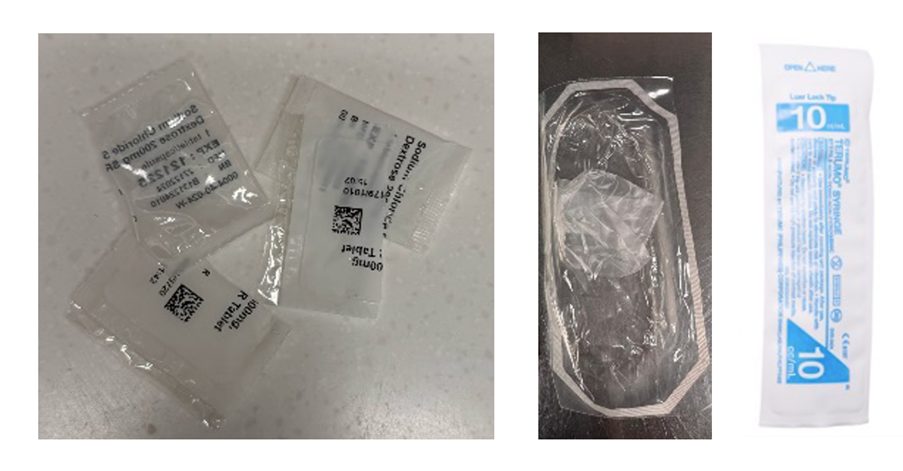
The project began with a simple observation. During medication preparation, large amounts of plastic waste are generated from items such as wrappers, syringes, intravenous (IV) consumables, and medication packaging. Although some of these materials could potentially be recycled, almost all of them were being disposed of as general waste. The challenge was not a lack of willingness from staff. Instead, recycling was simply not built into the workflow within the ICU.
In healthcare, waste that has come into contact with patients or the patient environment is treated as potentially contaminated and cannot be safely recycled. However, much of the plastic waste generated during medication preparation is produced before items ever reach the patient. These “clean” materials represent an opportunity for safe recycling, if proper systems could be put in place.
To better understand the issue, the team studied the medication administration workflow in detail. This included mapping out staff movement, identifying where waste was generated, and reviewing which materials could be safely recycled. The team also engaged nurses and healthcare workers to better understand the practical challenges faced during busy clinical shifts. What became clear was that recycling needed to be made easier and more intuitive within the existing workflow.
Figure 2: Examples of common recyclable waste from medication administration
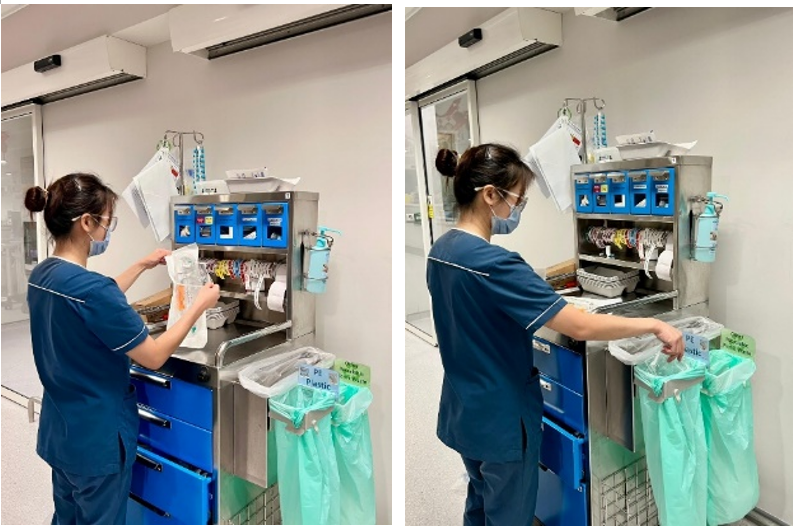
The team introduced dedicated recycling bins directly onto medication preparation carts, allowing recyclable plastic waste to be segregated at the point where it was generated. Staff also received education and guidance on sustainable practices and recyclable materials, whilst recyclable waste was tracked regularly to monitor progress.
Figure 3: A nurse utilising the plastic recycling bins
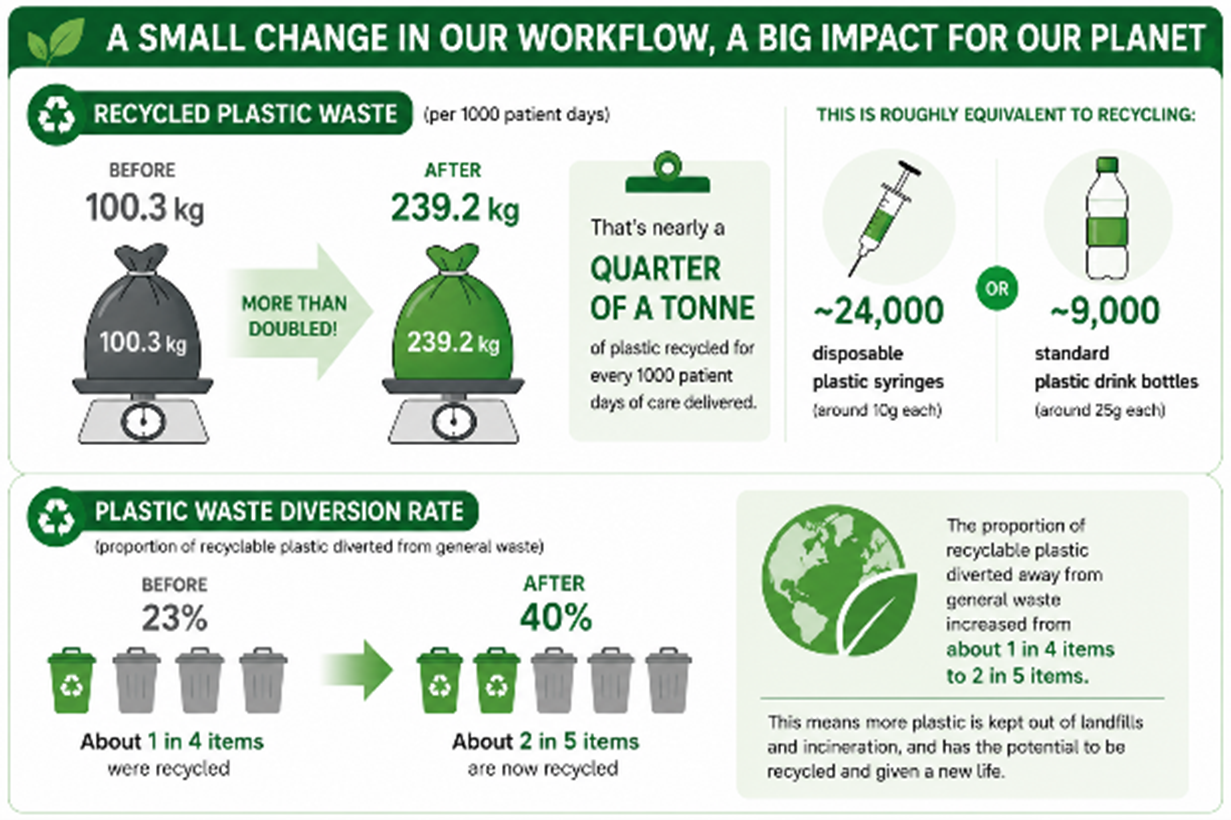
Over a nine-month period, the amount of recycled plastic waste more than doubled, from 100.3 to 239.2 kilograms per 1000 patient days. This is roughly equivalent to recycling the weight of over 9000 standard plastic drink bottles. Before the project, only about 1 in 4 pieces of recyclable plastic waste were being diverted away from general disposal. After the intervention, this improved to about 2 in 5.
Importantly, these improvements were achieved without compromising infection control or workflow efficiency. In fact, medication administration process time improved by more than one minute per episode due to easier and more accessible waste disposal processes.
Figure 4: Results Summary
As healthcare systems continue to evolve, projects like this highlight how practical, ground-up innovation can contribute towards a more sustainable future for healthcare.
Written by: Nurse Clinician Joel Quek
For Project I-HEAL
Transforming plastic wastes into rehabilitation blocks
Since March 2025, the nursing team at NCID has collaborated with PLASTIFY to convert non-contaminated medical plastic waste from the NCID Infectious Diseases Research Laboratory (IDRL) and other clinical areas to produce playing blocks. We now have two sets of playing blocks ready for our patients to utilise in their healing and rehabilitation.

We believe that small changes like these make a huge impact in our patients' care.
Read more: 三医院环保新尝试 将医疗塑料垃圾化为新用品 | 联合早报
Study on Plastic Waste and COVID-19 Incidence Among Hospital Staff After De-escalation in PPE Use
In 2025, a paper led by Dr Stephanie Sutjipto (Consultant, Department of Infectious Diseases, NCID/TTSH) evaluating the impact of Singapore's national personal protective equipment (PPE) de-escalation guidelines on staff COVID-19 incidence and environmental sustainability in NCID and TTSH was published. It was subsequently recognised as one of the prominent papers of the year in infection control at the European Society of Clinical Microbiology and Infectious Diseases (ESCMID) congress in 2026.
The study provided timely, evidence-based insights into system-level factors and measurable outcomes that are directly applicable to real-world quality improvement initiatives. Its findings stimulated meaningful discussion on how robust data and thoughtful implementation - especially around PPE use and infection prevention workflows - can translate into safer, more reliable healthcare practices.
It was concluded that the national PPE de-escalation guidelines corresponded with the reductions in protective gown use, associated costs, carbon footprint, and plastic waste generation with no apparent compromise to staff safety and health. PPE de-escalation was not associated with an increase in monthly COVID-19 infections among hospital staff, with the trends aligning with population infection rates, in NCID. An estimated 4 gowns per patient-day were saved, totalling 440,532 gowns over 12 months. This equated to an estimated reduction in health care costs by SGD 453,748 (approximately USD 333,970) and reductions of 398,681.46 kg carbon dioxide equivalent in carbon emissions and 66,080 kg of plastic waste.
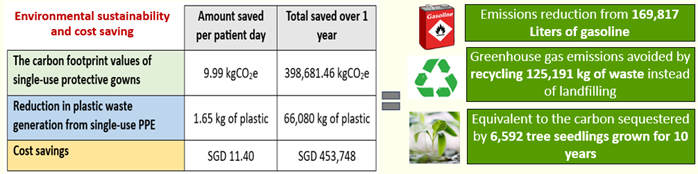
Figure 1: Impact on Environmental Sustainability and Cost Saving
Read the full paper here: Plastic Waste and COVID-19 Incidence Among Hospital Staff After Deescalation in PPE Use | Infectious Diseases | JAMA Network Open | JAMA Network
Sustainability Hackathon 2025
In September 2025 as part of the inaugural NCID Symposium 2025, the NCID Committee for Sustainable Healthcare (NCSH) organised a fun-filled sustainability hackathon. Five participating teams (Reduce, Reuse, Recycle, Replace and Rethink) with more than 100 participants across multi-disciplines were posed the challenge statement:
"How might we reduce the environmental impact of personal protective equipment (PPE) in healthcare without compromising safety or quality of care?"
and presented their innovative solutions to address this challenge.
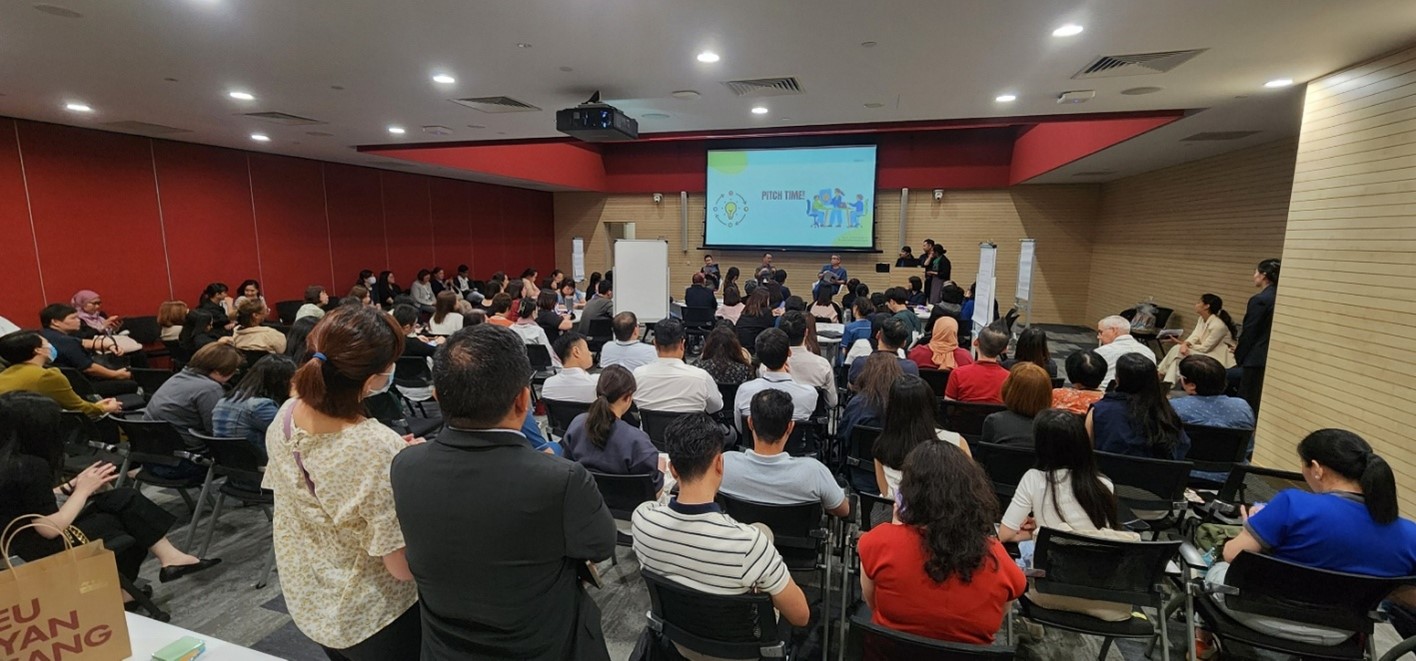
The workshop proceedings were presented as a poster presentation at the European Society of Clinical Microbiology and Infectious Diseases (ESCMID) congress in 2026.

