
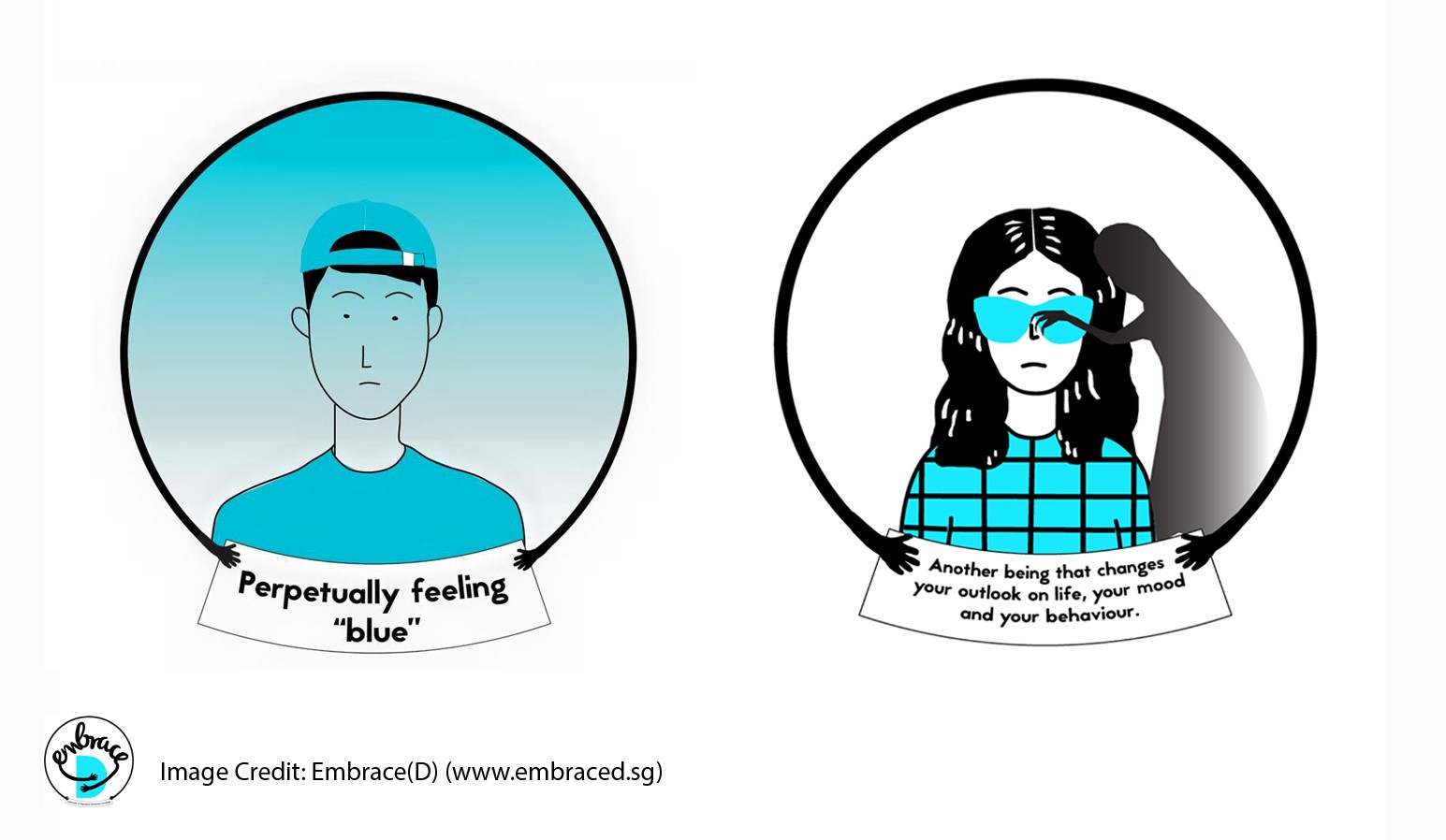
A person with a mood disorder may experience extremely low mood (dysphoria) or unusually high mood (mania) or both. This is different from “having the blues” or “feeling excitable and happy”.
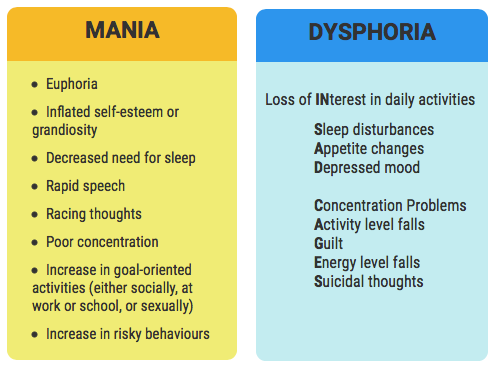
Bipolar Disorder
Depression
Getting Help
If you or someone you know is experiencing symptoms of a mood disorder, or are feeling unsure, seek professional help by contacting CHAT for a mental health assessment.
Practical tips for managing mood disorders
As you consider where to seek help, you could try:
- Have regular sleep
Irregular sleep patterns can trigger a manic or depressive episode. Set an alarm and get up at the same time every day.
- Build structure in your life
Developing and sticking to a daily routine, where there is a regular pattern of activities, can help stabilise mood. Include set times for eating, working, socialising, relaxing and sleeping into your routine
- Eat your Omega-3
Omega-3 fatty acids may improve mood and decrease mood swings in bipolar disorder. You can get Omega-3 supplements or eat foods rich in Omega-3, such as, salmon, sardines, soybeans, pumpkin seeds and walnuts.
- Get Moving!
Doing an activity, no matter how small it is, helps in breaking the vicious cycle of your depressive moods. It may seem counter-intuitive, but increasing your activity level by going for a walk, improves your energy and motivation levels. As you feel more hopeful, you will engage in more activities, which will further improve your mood.
