Alcohol Use
More Than Just Social Drinking
Drinking too much can affect your health, relationships, or performance at work or school.
When your body becomes dependent on alcohol, you end up drinking too much. Drinking excessively can damage your liver, cause stomach cancer, and harm your brain and nervous system.
- Men shouldn't have more than two standard drinks per day.
- Women shouldn't have more than one standard drink per day.
- Pregnant women shouldn't drink as alcohol can affect the development of the baby.
Help is available
You're not being weak when you ask for help to overcome your drinking problem. Treatment is available at NAMS to help you recover and get your life back on track. The sooner you get treated, the easier it will be to overcome your addiction problem.
Our multi-disciplinary team of specialists provides comprehensive assessment and treatment for those addicted to alcohol.
Alcoholism is a disease like any other. For family members, instead of fighting with a loved one who is suffering from alcoholism, help him fight the disease and get professional help to overcome his drinking problem. And the good news is that alcoholism is treatable – the earlier you seek treatment, the easier it is to treat it.
Signs and symptoms of alcohol dependence
- You can't control your drinking;
- When you don't drink, you feel anxious, nauseous and start sweating.
- You crave alcohol;
- You get annoyed when people criticise you about your drinking;
- You regularly drink more than you planned;
- You need alcohol to steady your nerves;
- You feel bad or guilty about drinking.
Consequences of excessive drinking
Alcohol affects your behaviour, judgment, coordination, concentration and emotions. If you drink compulsively, you might:
- Have an accident;
- Become a victim of crime;
- Strain your relationship with your family, friends or colleagues;
- Lose your job;
- Get involved in anti-social or criminal behaviour;
- Develop chronic diseases;
- Contract sexually transmitted diseases; and
- Have long-term health damaging effects.
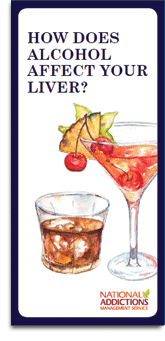
To learn more, you may download our educational brochures.
 |  |
Tools for Adults
If you are concerned about your alcohol use, take a few minutes to complete this resource to find out more about your drinking. The AUDIT was developed in 1980's by the World Health Organization to help individuals identify their hazardous and harmful drinking patterns.

Tools for Adolescents
It is recommended that these screening tools be administered under the guidance of a youth worker.
|  | |
| CRAFFT Screening Tool This tool is used to screen for the presence of substance use. | The AUDIT Alcoholism Test* This tool is used to screen for the severity of alcohol abuse. |