Overview
What is Tuberculosis (TB)?
TB is caused by the bacterium Mycobacterium tuberculosis.
Although TB is a serious illness, please be assured that TB germs can be effectively destroyed by antibiotics.
However, if left untreated, there is a 50 percent chance of dying from TB within five years.
TB germs usually attack the lungs, but they can also affect any other part of the body.
Causes
How did I get TB?
When a person with TB coughs or sneezes, TB bacteria are released into the air. They can remain suspended for several hours and enter the body via breathing.
This is how TB germs came into your body.
TB usually spreads to household members and others who live or work closely with the affected person (including friends, coworkers and schoolmates).
Myth: TB germs can spread through food or touching the body and belongings of a person with TB.
Only airborne TB germs breathed into the lungs create the risk of infection.
It is safe to eat food that has been prepared or partially eaten by a person with TB.
You will also not get TB from touching TB germs. There is no need to avoid touching a person with TB, their belongings, or shared items like utensils.
Can I spread TB to other people after starting treatment?
People who start TB treatment become much less likely to spread the disease. Thus, the best way to minimise the spread of TB is to take your TB medicines without lapses.
During the first two weeks after starting treatment, it is still possible to spread the disease, so for these two weeks:
- Cover your mouth when coughing or sneezing.
- Avoid crowded places.
- Stay masked in public places.
- Ensure good ventilation in your home.
- Stay at home, except for visits to NTBCC and the polyclinic.
- Avoid close contact with children under five years of age, the elderly, pregnant women and other persons with weaker immune systems. (Close contact includes sleeping in the same room.)
Generally, after two weeks of treatment, you are no longer able to spread TB to anyone, unless you become irregular with or stop taking the medicines. You are free to resume your work and social life.
I am worried about my family. Do they need to be tested for TB?
A Public Health Officer will contact you regarding contact tracing if your test results indicate the need to do so.
Close contacts will be requested to visit the National Tuberculosis Screening Centre (NTBSC). The screening is fully sponsored by the Communicable Diseases Agency (CDA).
Should you have enquiries on contact tracing, the contact tracing team can be contacted from Monday to Friday, 8 am to 5.30 pm, at ntbp@cda.gov.sg or 9836 1082.
If a household member or close contact is exhibiting symptoms of TB, get them to see a doctor immediately.
Common symptoms include:
- Coughing (more than 3 weeks)
- Blood-stained phlegm or coughing blood
- Chest pain
- Cold sweats at night
- Fever
- Unusual and persistent fatigue
- Loss of appetite
- Unexplained weight loss
In cases where TB germs affect other parts of the body, the symptoms will vary depending on the part(s) affected.
Myth: If I do not have TB symptoms, I do not have TB.
TB germs grow slowly, so at the early stage you may not have any symptoms.
It is wise to start early treatment to preserve your body's healthy functioning now and in the future.
Detection & Treatment
TB is treated with a combination of antibiotics, generally lasting six to nine months. The treatment is longer for patients with certain chronic conditions, side effects or drug resistance.
For the first two months, you are likely to take these four antibiotics: rifampicin, isoniazid, ethambutol and pyrazinamide.
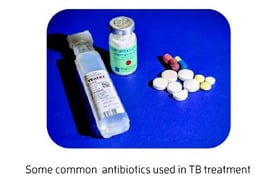
If your treatment progresses normally, the number of antibiotics may be reduced after 2 months.
Myth: Once I feel better, I can stop taking TB medicines.
This is not true. Even when you feel better after the first few weeks of treatment, there are still germs left in your body. If they are not destroyed, they can lead to the
- relapse of TB disease, and/or the
- development of drug-resistant TB, which is more dangerous.
If you develop drug-resistant TB, the TB germs you spread to your loved ones and other people you interact with regularly are the drug-resistant type.
Complete the entire course of treatment as directed by your physician to ensure your complete recovery from TB and the safety of the people around you.
What is drug resistance?
Germs have powerful strategies to survive.
When you miss taking your medicine, the TB germs in your body get a chance to start growing again. The more germs produced, the higher the chances are that some of these new germs have special mutated genes protecting them from the antibiotics you are eating.
These drug-resistant germs can now freely multiply in your body because the most effective TB medicines you take cannot kill them.
The second line drugs prescribed for drug-resistant TB have three disadvantages:
- They may require a longer duration of treatment, sometimes up to 20 months.
- They are more complex and may cause more side effects.
- Chances of recovery are reduced.
Why do I need to come to appointments so often?
This is so that the doctor can assess your treatment progress and well-being.
At every visit, your weight is taken to ensure you continue to receive optimal drug doses. Your visual acuity is also checked so early action can be taken if your vision is affected.
Can I skip the medicines if I am not feeling well?
Do not skip a dose on your own. Seek the advice of your healthcare provider if you are unwell, so you do not miss doses unnecessarily and increase your risk of drug resistance.
Directly Observed Therapy (DOT) - Ensuring Your Full Recovery
DOT involves taking TB medications while being observed by a healthcare worker at public health polyclinics nationwide.
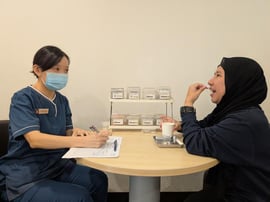
Why is DOT Necessary?
DOT improves treatment adherence, reduces relapse and prevents drug-resistant TB. It
- ensures patients take the correct dose of medication regularly to prevent relapses and drug-resistant TB, and
- enables nurses to act promptly if side effects are experienced to ensure the safety of patients.
Care Management
Are there any precautions I need to take while on TB medications?
- Avoid alcohol. Taking alcohol while taking rifampicin, isoniazid and pyrazinamide increases your risk of liver inflammation.
- If you smoke, do consider quitting for the sake of your health.
- Avoid traditional / herbal remedies as they may interact with the TB medicines.
- Please inform your doctor in NTBCC about the medications you are currently taking as some of them may interact with TB drugs.
- Consult your doctor before starting any supplements and vitamins.
Specialties & Services

