Overview
Tennis Elbow (lateral epicondylitis) is a condition where you experience pain and sometimes swelling on the outer area of your elbow. This condition was first described in tennis players, hence the name. It can also be caused by other racquet sports, repetitive activities or forceful exertion.
Forceful grasping or repetitive flicking movements of the wrist may lead to small tears and inflammation of the tendons moving the wrist that are attached at the elbow. The most commonly affected tendon is the Extensor Carpi Radials Brevis (ECRB).
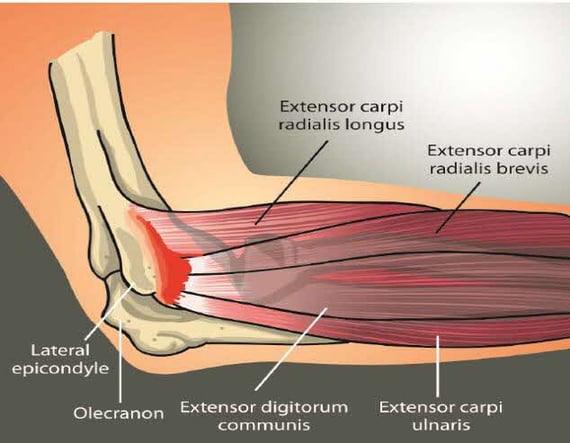
Complications
With prolonged symptoms, irreversible changes may develop in the extensor tendon, such as:
- Rupture of ECRB tendon
- Secondary changes such as fibrosis or calcification of the ECRB tendon
- Elbow stiffness
This lowers the likelihood of success of nonsurgical treatments.
The muscles may also gradually weaken due to disuse. This increases the risk of recurrence even if treatment was initially successful.
- Pain at the outer region of the elbow:
This predominant symptom usually happens during activities that require extension of the wrist (e.g. gripping a cup or doorknob).
The pain worsens if the elbow is kept straight but will subside at rest.
- Swelling around the outer region of the elbow:
You may observe swelling around the elbow and also stiffness in severe cases.
Detection & Treatment
How is Tennis Elbow Diagnosed?
- X-rays
X-Rays will help to exclude other diagnosis (e.g. arthritis or fractures)
- Ultrasound Scan
This is useful in severe cases to look for bigger tears in the extensor tendons
- Magnetic Resonance Imaging (MRI)
MRI is usually more costly and may not be required if other clinical signs are present
Treatments
1. Physical Therapy
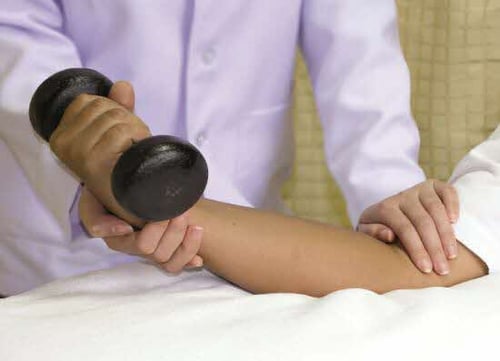
Physical therapy consists of stretching and strengthening exercises. It will help you reduce pain, increase strength and improve muscle endurance. Mild cases can often recover with physical therapy and the chances of recurrence are minimised.
2. Bracing / Splinting
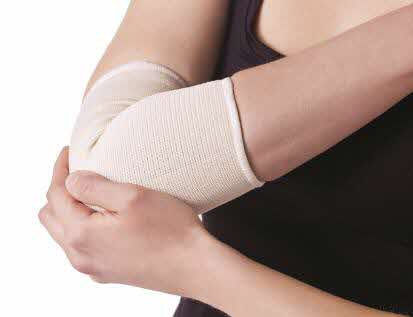
Your doctor may prescribe a tennis elbow strap to be applied across the forearm to reduce force exerted on the injured tendon. A wrist splint or brace will help you to reduce the over-usage of the injured tendons.
3. Medications
Your doctor may prescribe oral anti-inflammatory medication to reduce your pain. For severe cases, some doctors may also administer a steroid injection at the elbow to relieve pain.
4. Platelet-rich Plasma Injection
In recent years, there have been some success in using platelet-rich plasma injection during the early stages of the disease. However, the long term outcome of the injection is still not known.
5. Extra-corporeal Shockwave Therapy (ESWT)
Your doctor may discuss this treatment process with you if medications and physical therapy are unable to provide satisfactory recovery. Success of this treatment depends on the severity of your condition.
6. Surgery
Surgery involves debriding (removal of damaged tissues) the injured tendon to promote healing. This can be done with a three to five centimeters incision over the lateral aspect of your elbow or through 'key-hole' surgery. If your doctor recommends surgery, he will discuss the risks and benefits of the surgery with you.
Care Management
How to Prevent Worsening of My Tennis Elbow?
- Prevent overusing your wrist and elbow or reduce the playing time when you encounter pain at your elbow.
- Strengthen your forearm muscles using light weights to improve muscular power and endurance.
- Use appropriate equipment based on your ability, size and strength during sporting activities.
Specialties & Services

