Overview
What is Systemic Sclerosis?
Systemic sclerosis (SSc) is an autoimmune disease that affects the skin and internal organs. It is caused by chronic inflammation with collagen (a type of protein) accumulation in affected tissues and the collapse of small blood vessels in our hands, feet and internal organs. SSc is identified by the presence of "hard skin" due to excessive collagen deposited in the skin.
Causes
The cause of SSc is unknown.
Who Gets SSc?
SSc is uncommon. It is estimated that between 100 and 300 in every 1 million people are affected worldwide. Symptoms usually start occuring between the age of 30 to 50 years old, and women are three to seven times more likely to develop this condition than men.
What are the Symptoms and Signs of SSc?
The main symptom and sign of SSc is skin thickening. Areas commonly affected are the fingers and toes, face, neck, arms, legs, and trunk. Patients may experience pain and skin itch resulting from skin inflammation.
Other symptoms and signs of SSc are:
- Joint pain and swelling (arthritis),
- Raynaud's phenomenon (fingers turning white or blue easily due to cold temperature and emotional stress),
- Ulcers on the fingertips and/or toes,
- Shortness of breath or persistent dry cough,
- Swallowing difficulty, heartburn and change in bowel habits (constipation and/or diarrhoea),
- Fatigue and weight loss,
- Others: telangiectasia (small red spots on the body due to dilated small blood vessels), calcinosis (calcium deposits under the skin).
There are two types of SSc - limited (less extensive skin thickening across the body) and diffuse (more extensive spread across the body).
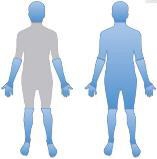
Distribution of skin thickening in limited(left) vs diffuse SSc(right)
Photos retrieved from Kelly & Firestein's Textbook of Rheumatology
Limited Cutaneous SSc:
The areas of skin hardening is limited to the fingers, hands, forearms, lower legs, and face. Limited SSc generally progresses slowly over decades and patients may develop pulmonary arterial hypertension (increased blood pressure in the artery that carries blood from the heart to the lungs) over time.
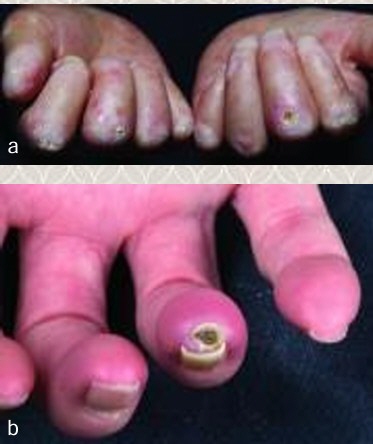
(a) severe skin thightening of fingers resulting in contractures
(b) fingertips ulcer
Photos retrieved from JDDG
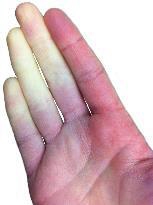
Raynaud's Phenonmenon
Photo retrieved from Lupus UK
Diffuse Cutaneous SSc:
Patients with diffuse SSc experience more widespread skin thickening and affected internal organs. The extended skin thickening covers the arms, thighs, chest and abdomen. Major internal organs affected include the intestines, lungs, kidneys and heart. This form of SSc also progresses more rapidly than the limited type.
Detection & Treatment
Although there is currently no cure for SSc, treatment is available to control the condition and limit its damage to internal organs.
Medications used to control symptoms include:
- Immunosuppressive drugs: these suppress the immune system and inflammation, limit fibrosis and prevent permanent damage to internal organs.
- Non-steroidal anti-inflammatory drugs (NSAIDs): may be used for arthritis
- Corticosteroids: often used in low to moderate doses to achieve rapid control of SSc.
- Biologics: these are medications that are extracted or produced from biological sources. They are expensive and reserved for disease that is not controlled despite conventional immunosuppressive drugs.
For specific symptoms and affected organs, the following treatments may be prescribed:
Raynaud's Phenomenon:
- Keep limbs warm and stop smoking
- Medication to improve blood flow
Gastrointestinal System:
- To decrease symptoms of reflux, you should avoid acidic food, eat smaller and more frequent meals and elevate the head of the bed and avoid lying down for at least three hours after meals.
- Medications to reduce gastric acidity and improve bowel movement.
Kidneys:
- Medications to reduce blood pressure and prevent further damage to kidneys.
Lungs and Pulmonary Arterial Hypertension:
- Oxygen therapy
- Medications to reduce pulmonary (lung) blood pressure and prevent further damage
- In severe cases, lung transplants and stem cell transplants may be considered
Medications used to control symptoms include:
- Immunosuppressive drugs: these suppress the immune system and inflammation, limit fibrosis and prevent permanent damage to internal organs.
- Non-steroidal anti-inflammatory drugs (NSAIDs): may be used for arthritis.
- Corticosteroids: often used in low to moderate doses to achieve rapid control of SSc.
- Biologics: these are medications that are extracted or produced from biological sources. They are expensive and reserved for disease that is not controlled despite conventional immunosuppressive drugs.
Care Management
What is the Outlook for SSc?
SSc is a slow progressive disease. There are effective treatments available to control SSc and many people with SSc continue to lead relatively meaningful and productive lives. Early treatment should be sought to prevent permanent damage to internal organs.
Specialties & Services

