Spinal Cord Injury
Overview
What is Spinal Cord Injury (SCI)?
The spinal cord is a bundle of nerves that runs from the base of your brain down to the lower part of your back. It carries messages between the brain and the body.
Damage to the spinal cord after a spinal cord injury can affect your bodily functions in the following ways:
- how we move (mobility and body positions)
- how we feel the environment (sensation of temperature)
- how our body systems function (breathing and toileting)
Spinal cord rehabilitation aims to empower/teach you how to manage these complications in order to achieve the highest level of function and independence possible.
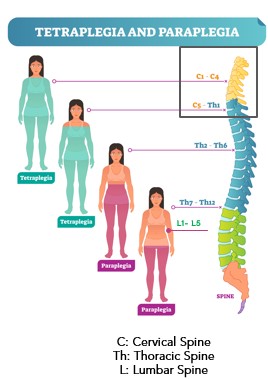
Injuries may occur at different locations of your spine, which will affect you differently, and in turn influence your treatment plan.
* Consult your doctor about the level of your injury.
- Tetraplegia: Injury at cervical spine level may cause paralysis of all 4 limbs to varying degrees.
- Paraplegia: Injury at thoracic spine and below (lumbar spine) area may result in paralysis of both lower limbs to varying degrees.
- Cervical Spine: Injury at cervical spine level may cause paralysis of all 4 limbs to varying degrees (tetraplegia).
- Thoracic & Lumbar Spine: Injury at thoracic and lumbar spine area may result in paralysis of both lower limbs to varying degrees (paraplegia).
Additional Resources
Specialties & Services

