Overview
What is Psoriatic Arthritis?
Psoriatic Arthritis (PsA) is a chronic inflammatory joint condition that affects patients with psoriasis. Psoriasis is a chronic autoimmune skin condition that causes red, scaly, flaky patches, which usually appear on the scalp, elbows, knees and lower back.
People with PsA experience painful, warm, and swollen joints with morning stiffness in the limbs and/or the spine. Patients usually develop psoriasis first and experience joint symptoms later. However, the arthritis can sometimes occur before rashes appear.
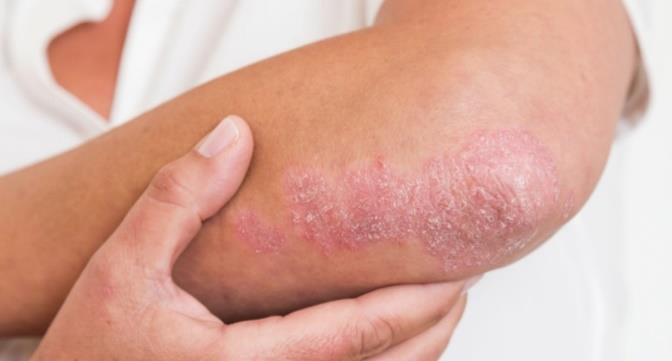
Plaque psoriasis on elbow
Photo retrieved from Psoriasis Speaks
Causes
The exact cause of PsA is unknown. As PsA is an autoimmune disease, it is caused by a combination of genetic and environmental factors.
Autoimmune diseases cause the immune system to attack its own internal organs, including the joints like in PsA.
Who are at Risk of PsA?
PsA may affect people of any age and gender but adults between age 30 and 50 are at higher risk. About 7% of patients with psoriasis have PsA and patients with more severe psoriasis are at higher risk of PsA.
PsA mainly affects:
- Arm and leg (peripheral) joints.
- Spinal joints, including the sacroiliac (pelvic) joint.
The key characteristics of PsA are:
- Two to three joints of the limbs or spine are affected at the same time.
- Usually affects joints on one side of the body (i.e. asymmetrical).
- Last joints of the fingers (nearest to the fingernails) are usually affected.
- Soft tissues around fingers and toe joints may be affected.
- Involvement of entheses (where tendons and ligaments attach to your bones) e.g. Achilles tendonitis (back of heel), plantar fasciitis (sole of foot).
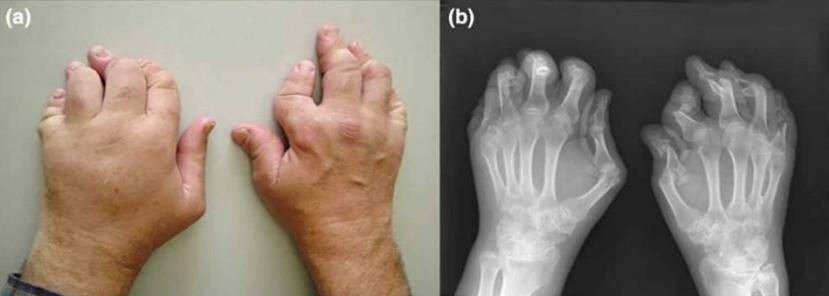
Left: PsA affected hands,causing severely damaged and deformed joints, Right: XRay of affected hands
Photos retrieved from Health Jade
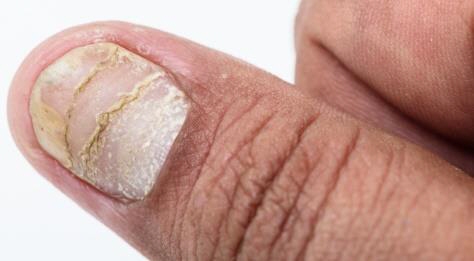
Below:psoriatic nail changes
Photo retrieved from Psoriasis Speaks
In addition, PsA patients may occasionally develop inflammation in other organs unrelated to the affected joints, such as inflammation in the eye (e.g. uveitis).
Detection & Treatment
Although PsA cannot be cured, effective treatments include:
1. Patient Education:
- Empower yourself with knowledge about PsA and take charge of your health.
2. Lifestyle Modification:
- Quit smoking and have adequate rest.
3. Medication:
- Patients with PsA often require medications to control their symptoms.
4. Physiotherapy (PT) and Occupational Therapy (OT):
- Improve pain control using non-pharmacological methods (e.g. heat and cold therapy).
- Explore ways of improving mobility of affected joints and muscles (e.g. application of splints).
5. Surgery:
- Patients with severely damaged joints may be recommended to undergo surgical treatment (e.g. prosthetic joint replacement) if necessary.
6. Non-steroidal anti-inflammatory drugs (NSAIDs):
- Used to reduce joint swelling, pain and stiffness.
- Disease modifying anti-rheumatic drugs (DMARDs): Aim to suppress inflammation so that joint pain and swelling are controlled, and damage to joints is minimised.
- Corticosteroids:Often used in low doses in combination with NSAIDs and DMARDs to enable quick control of inflammation. For selected cases, steroid injection can also be given for targeted treatment of affected joints.
- Biologics: Medical products that are extracted or produced from biological sources. These agents are expensive and reserved for arthritis that is not controlled by conventional therapy.
Care Management
Can this Condition be Cured?
PsA can be mild, moderate or severe. Most patients can improve with early treatment in the early stages of disease and can lead a normal life.
A small percentage of patients may have permanent joint damage and deformities due to severe disease or negligence. This may be prevented with early medical help and following closely to the treatment prescribed by the doctor.
Specialties & Services

