Overview
Postural hypotension is a sustained drop in blood pressure that can happen to some people when they sit up or stand up.
Postural hypotension is a common cause of falls in older adults. This can lead to:
- Broken bones
- Head injuries
Causes
There are several causes of postural hypotension, including:
- Problems related to nervous system
- Heart condition
- Problems related to volume depletion
- Effects of medication
Please check with your doctor for your specific cause.
- Lightheadedness / Giddiness
- Feeling faint/ Passing out
- Weakness
- Blurred vision
Care Management
Postural hypotension is a common condition. It can be managed with simple lifestyle measures and occasionally, medications.
Simple Ways to Reduce Postural Hypotension
Please discuss with your doctor before attempting any of these.
Things you can avoid:
- Alcohol
- Large meals
- Prolonged rest in bed
- Heat exposure, hot baths
Things you can do:
- Give your body time to adapt when changing positions.
- Sit up and stand up slowly.
- Drink enough fluids. Check with your doctor for the recommended volume.
- Sleep with your head/ upper body elevated using pillows for support.
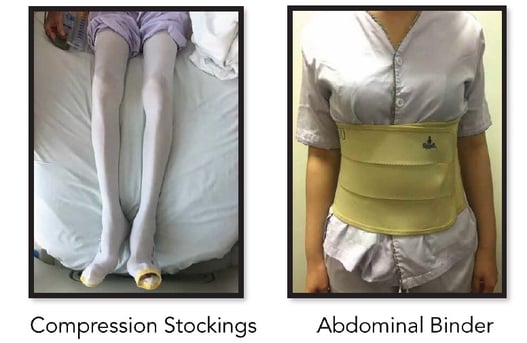
- Wear compression stockings and abdominal binder.
- If you are found suitable to wear either one or both of the following, remember to wear them as often as you can.
- Remove them when you sleep.
Exercises and Counter Maneuvers
Postural Hypotension
There are some common exercises that can help reduce postural hypotension. Do these exercises before getting up after prolonged periods of sitting or lying. Please consult your doctor/ physiotherapist before attempting any of these exercises.
a. Cross your legs
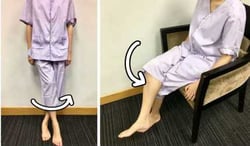
In the sitting or standing position, cross your legs.
b. Ankle pumps
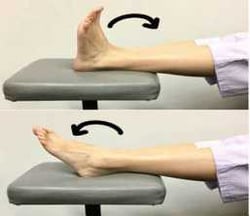
Before sitting or standing up, perform ankle pumps by bending your ankles forwards and backwards or upwards and downwards.
c. March on the spot
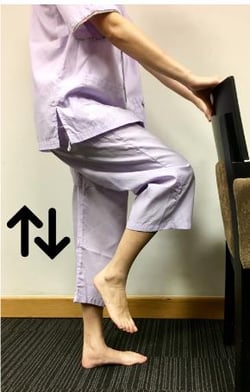
In a standing position, hold onto a stable object and march on the spot.
d. Calf raises
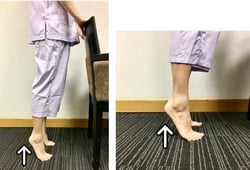
In a standing position, hold onto a stable object, raise your heels off the floor and lower them back down.
e. Prop up your legs
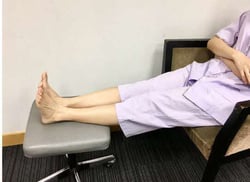
When sitting out, keep your legs raised on a stool.
Specialties & Services

