Overview
Osteoarthritis (OA) is a common form of arthritis that occurs when the protective cartilage that cushions the ends of your bones wears down over time. This causes changes to the bone and deterioration of surrounding structures such as ligaments and muscles, leading to symptoms like joint pain and deformity. It is also known as "degenerative joint disease". OA may develop at any age, but it tends to be more common in people aged over 40 years old or those who have had joint injuries in the past.
Although OA may occur in any joint, it commonly affects joints in the hands (especially the thumbs and joints closest to the nails), knees, hips and spine.
Causes
The risk factors for OA are:
- Older age
- Gender. Females are more likely to develop OA.
- Obesity
- Previous joint injuries and prior bone deformities
- Coughing and shortness of breath due to lung inflammation
- Genetics
- Certain metabolic diseases (e.g. diabetes mellitus and haemochromatosis)
- OA symptoms tend to progress slowly over months or even years. The main symptom of OA is joint pain that is worsened by physical activity and relieved by rest. There may also be a short period of stiffness in the morning. Occasionally, there is swelling when there is inflammation around the joint. Bony deformities may develop on hand and knee joints.
- For OA that occurs in the knee, a grating or clicking sensation, locking or giving way may occur when walking.
- In cases of more severe OA that occurs in the spine, nerve roots in the spine may be impinged (pressed upon), resulting in tingling, numbness or weakness down the arm or leg.
Detection & Treatment
How is OA Diagnosed?
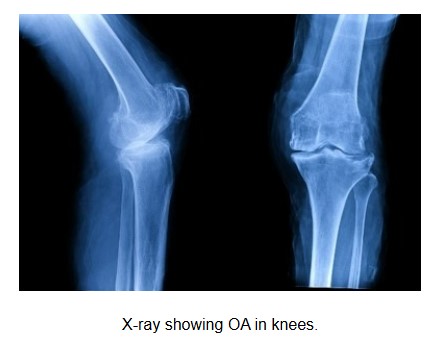
OA is often diagnosed through taking history and physical examination. X-rays of the affected joints may be taken to support or confirm the diagnosis. When the diagnosis is less certain or complications (e.g. nerve impingement) are suspected, additional tests like MRI (e.g. spine) may be performed.
How Can OA be Treated?
OA is a chronic condition that gradually worsens over time. Although there is no cure, effective treatments are available to treat symptoms and progression, improve mobility, function, patients' quality of life.
1. Physical Therapy and Lifestyle Changes:
Weight Control
This is especially important for joints that support large weight, such as the hips and knees. There is no need for specific dietary adjustments but a balanced meal with regular exercise would help to achieve an optimal body mass index (BMI).
Exercise
Exercise is important to improve flexibility and maintain strength of the surrounding muscles that support the affected joint, allowing the affected joint to be subjected to less stress and strain. Walking aids and supportive devices (e.g. braces) may be used to reduce stress on the affected joints.
Swimming and low-impact strength training are recommended.
Vigorous sports should be avoided as they may worsen arthritis symptoms. A physiotherapist and/or occupational therapist can advise on appropriate exercise regimens for those with OA.

Physiotherapy helps to treat early OA.
Appropriate Footwear
Shoes should be comfortable and of a good fit. They should provide good support and distribute weight evenly to reduce stress on the joints of the spine and legs. Sports shoes usually fulfil most requirements of a good shoe. High heeled shoes should be avoided.
Acupuncture and Massage
Acupuncture and other traditional medication may relieve symptoms in some patients but there is no scientific evidence on the usefulness of these therapies.
2. Drug Therapy
Painkillers
Simple painkillers (e.g. paracetamol) can be very helpful in treating mild to moderate arthritis pain. Medications like analgesic patches, gel and sprays may also be applied to the affected joints.
When the joint becomes inflamed or when the pain worsens, non-steroidal anti-inflammatory drugs (NSAIDs), selective cyclooxygenase (COX-2) inhibitors (coxibs) or injection of corticosteroids into the joint can provide relief. However, these should not be taken on a long-term basis because of their potential side-effects (e.g. stomach ulcers, abnormal kidney function, risk of strokes and heart attacks).
Joint Supplements
Most studies have not shown that glucosamine and chondroitin supplements prevent further joint damage.
Joint Injection Therapies
Viscosupplementation: Injection of "artificial joint fluid" (hyaluronic acid) may offer pain relief by providing some cushioning in the knee. This is usually reserved for patients who either cannot take painkillers or do not get relief from them.
Corticosteroids: Corticosteroid injections may be useful in acute pain and swelling of the knees in knee OA. However, these should not be done more than three times a year.
Platelet-rich Plasma: This is a new therapy that has been used for some OA patients. However, present studies have not proven its usefulness in the treatment of OA.
Surgery
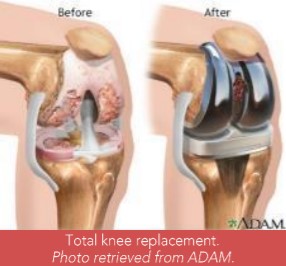
In advanced OA with severe symptoms and impaired function, replacement of a damaged joint with an artificial one can produce very good results in some patients.
Specialties & Services

