Overview
The diagnosis of cancer in a patient is often accompanied by disbelief and feelings of helplessness. The feeling of helplessness may be partly due to a lack of knowledge and awareness of the many treatment options available.
This series of brochures will provide you information on common head and neck cancers, focusing on the following:
- Common causes and symptoms
- Investigations required
- Treatment options available
For more information about the condition and treatment options, please consult a head and neck cancer specialist.
Causes
- Smoking
- Excessive alcohol consumption
- Betel nut chewing
- Trauma from sharp teeth
However, patients with no previous history of smoking or excessive alcohol intake may also be diagnosed with this cancer.
- Tongue ulcer
- Growth on the tongue
- Bleeding from the growth or ulcer
- Pain in the tongue
- Difficulty in eating
- Lymph gland enlargement in the neck
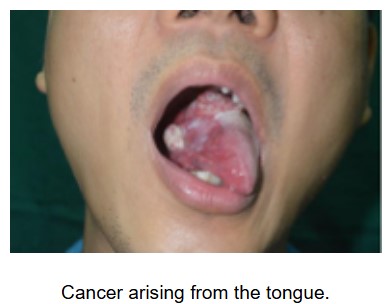
Detection & Treatment
Examinations and Tests
Your doctor will examine the growth / ulcer on the tongue and check if the adjacent structures (e.g. floor of the mouth and the jaw bone) are affected.
Two types of investigations are required:
- Biopsy of the lump on the tongue to determine the presence of cancer
- Scans to determine the spread of the disease to the tongue, neck and other organs. Commonly-performed scans include:
- Magnetic Resonance Imaging (MRI) scan of the tongue and neck
- Positron Emission Tomography (PET) scan of the whole body
Treatment
The treatment of tongue cancers depends on the stage of disease:
- Early stage: Surgical removal of the tongue tumour and in certain cases, removal of lymph glands from the neck.
- Advanced stage: Surgery and radiotherapy OR chemoradiotherapy
Surgical removal of a tongue tumour will affect your speech and eating. The degree of impairment depends on the size of the tumour and the amount of tongue that is surgically removed.Your doctors may recommend reconstruction of the tongue when necessary, and refer you for speech and swallowing rehabilitation.
Care Management
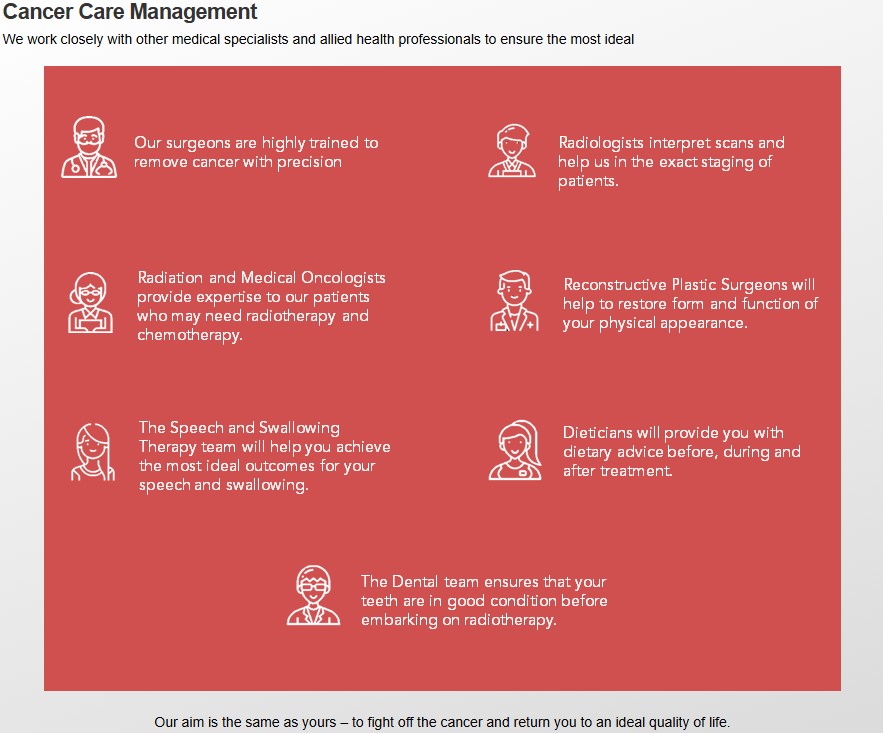
Specialties & Services

