Overview
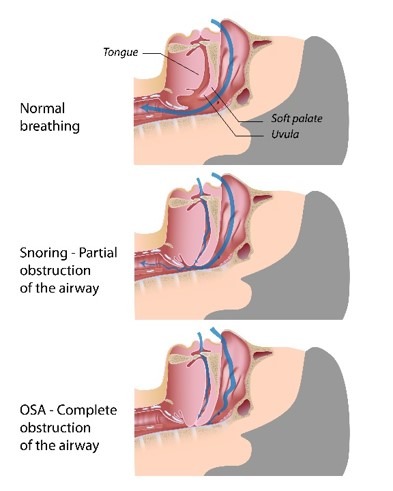
Snoring refers to noisy breathing during sleep. This happens because when you breathe:
- Your upper airway becomes narrower, which slows down air flow
- Different soft tissues in your throat, like soft palate, uvula and base of tongue, vibrate
- Snoring may be a warning sign of another medical problem if you also have other symptoms (shown on next page). This condition is known as Obstructive Sleep Apnoea.
Obstructive Sleep Apnoea (OSA)
OSA is a sleep disorder, where the upper airway is repeatedly blocked (obstruction). This causes:
- Pauses in breathing (apnoeas)
- Drop in blood oxygen level
Complications
If OSA is left untreated, it could contribute to medical problems such as:
- High blood pressure
- Irregular heart beat
- Heart attack
- Stroke
- Diabetes mellitus
Daytime
- Excessive sleepiness
- Poor concentration
- Dry mouth and throat when waking up
Night-time
- Excessive snoring
- Choking episodes
- Waking up many times throughout the night
- Observed by bed partner to 'stop breathing'
Detection & Treatment
Diagnosis
To know if you have OSA, you need to go for:
- Detailed clinical assessment Flexible nasoendoscopy – this is a procedure where a thin flexible camera is passed through your nose and throat for examination
- Overnight sleep study
- Home sleep study
Is OSA Common?
Based on a local study, almost one in three Singaporean adults (31%) have OSA. However, majority were previously undiagnosed.
Measuring the Severity of OSA
The Apnea Hypopnoea Index (AHI) is used to measure the severity of OSA. Based on every hour that you sleep at night, the AHI can measure:
- Number of times your airflow is reduced (hypopnoeas)
- Number of times your airflow is blocked (apneas)
There are four categories under the AHI:
- Normal: Less than 5 times
- Mild OSA: 5 to 15 times
- Moderate OSA: 15 to 30 times
- Severe OSA: 30 or more times
How are Snoring and OSA treated?
Lifestyle Modifications and Weight Management
Adopting a healthy lifestyle and good sleep habits are recommended. Those who are overweight should also keep their weight in check.
Positive Airway Pressure (PAP) Therapy
By using a face mask throughout the night, this method eases the pressure in your airways. It is the most effective therapy for OSA, but discuss with your doctor first to see if this is suitable for you.
Oral Appliance
You are required to wear a mouthpiece during sleep to keep your airway open. The mouthpiece helps to change the position of your tongue or move your jaw forward.
Positional Therapy
This helps you to avoid sleeping on your back and may be effective for some OSA patients.
Upper Airway Surgery
You could also consider surgery if you are unable to tolerate Positive Airway Pressure (PAP) therapy and if surgery is recommended by your doctor.
Specialties & Services

