Overview
What is Microvascular Cranial Nerve Palsy?
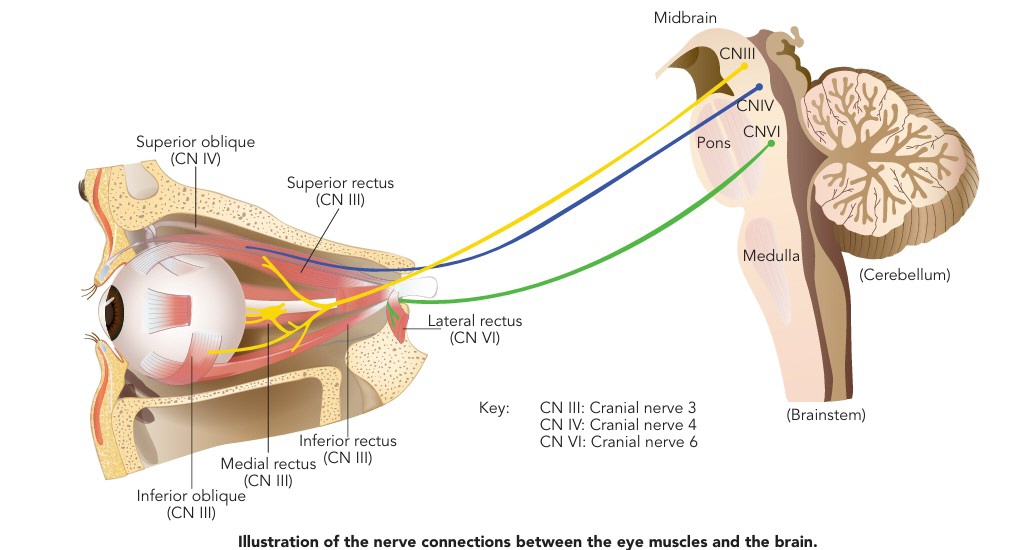
It is the most common cause of double vision in persons older than 50 years of age.
Movement of our eyes is controlled by 6 muscles. These muscles receive signals from nerves called cranial nerves (CN) III, IV and VI. These tiny nerves have a blood supply (in the form of small arteries) running on their surface.
When the blood supply is compromised, it results in weakness or paralysis of the muscles such that the 2 eyes now do not work together simultaneously. This is called a microvascular cranial nerve palsy, and results in double vision.
Causes
It is believed that as we get older, we are more prone to blockage of the small arteries because of hardening of the arteries (called atherosclerosis). Atherosclerosis is associated with:
- Increasing age
- Diabetes mellitus
- Hypertension
- High cholesterol
1. Binocular double vision
This means that the patient will see double if both eyes are used together. If he or she covers either eye, there will not be any double vision.
In CN III palsy:
- patients will complain of a droopy eyelid and double vision that is oblique (one in a diagonal position away from the second image).
- If the droopy lid covers the eye so that it is not able to see, then the patient will not have double vision unless he lifts the lid up.
In CN IV palsy:
- patients will complain of double vision which is oblique or vertical (one image higher than the second image)
- This may be better if they tilt their head at a certain angle.
In CN VI palsy:
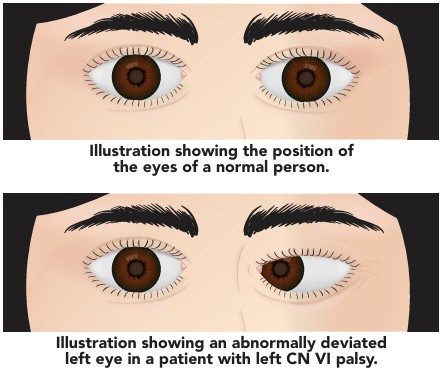
- patients will complain of double vision that is horizontal (one image side by side with the second image).

2. Pain
- Sometimes there is pain in or around the eye at the onset of the condition.
- This should improve within a few days.
- This is due to the lack of blood affecting the pain fibres to the eye.
What are the signs?
When observing the 2 eyes, you may notice that the affected eye is unable to move in one or more directions in severe cases. In milder cases, there will be incomplete movement or slowing of the eye movement.
Detection & Treatment
What can I do about it?
The majority of microvascular cranial nerve palsies recover on their own within 4 – 12 weeks without any residual double vision. Presently, there is no known medication or treatment to hasten the recovery process.
However, the main problem is to diagnose it correctly and not to miss more serious problems, such as tumours and a brain stroke which may be life-threatening and require urgent treatment.
What can be done to relieve the double vision?
1. Patching
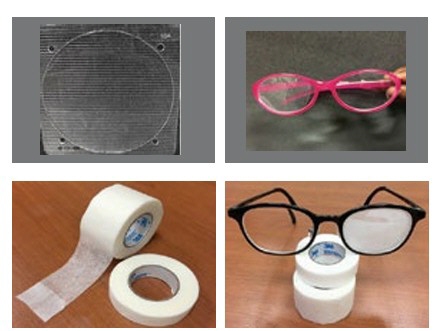
- Initially, patching one of your eyes (usually the one that is affected) can help to relieve the double vision.
- This can be done with an eye patch, or by taping up one side of a pair of glasses.
- This will result in you using one eye only and your perception of depth may be compromised. However, this is temporary.
2. Prisms
- When your doctor has a better idea of your progress, you may be given a stick-on prism which has to be worn with a pair of glasses.
Care Management
What is the outlook for this condition?
The outlook for this condition is excellent with the majority of patients experiencing a complete recovery. Occasionally the condition may recur in the same eye or the other eye.
Specialties & Services

