Overview
What is Hyperthyroidism?
Hyperthyroidism is a condition in which the thyroid gland produces too much thyroid hormone. When this occurs, the body's metabolism is abnormally increased, which can cause a variety of symptoms.
What is the Thyroid Gland?
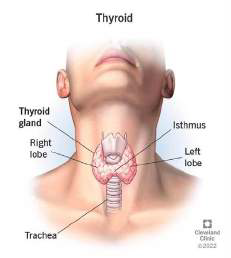
The thyroid is a butterfly-shaped gland in the front of the neck, located below the larynx (voice box) and above the clavicles (collarbones). It produces thyroid hormone, which regulates how the body uses and stores energy.
Causes
Graves' Disease
This the most common cause. In Graves' disease, the immune system produces antibodies that stimulate the thyroid gland to produce excessive thyroid hormone. This usually affects young and middle-aged women but can also occur at any age or gender. The eyes may be affected, with redness, dryness or irritation. In severe cases, there may be double vision and bulging of the eyes.
Toxic Nodule
One or more thyroid nodules (small non-cancerous growths or lumps in the thyroid gland) can produce too much thyroid hormone.
Thyroiditis
The thyroid gland may become temporarily inflamed and release excessive thyroid hormone into the bloodstream. This may occur after a viral infection.
Drug-induced (iatrogenic) hyperthyroidism
Taking too much thyroid hormone supplements (e.g. for treatment of hypothyroidism).
- Anxiety and irritability
- Weakness of the upper arms and thighs
- Hand tremors
- Perspiring and feeling hotter more than usual
- Rapid or irregular heartbeat
- Fatigue
- Weight loss despite a normal or increased appetite
- Frequent bowel movements
- Irregular or cessation of menstrual periods
These symptoms usually resolve with treatment of hyperthyroidism.
Detection & Treatment
Diagnosis
Hyperthyroidism can be diagnosed with blood tests that measure the amount of thyroid hormone (T4) and thyroid-stimulating hormone (TSH). The usual pattern in hyperthyroidism is a high T4 with a very low TSH level.
Treatment
Depending on the cause, hyperthyroidism can be treated using medications, radioactive iodine or surgery. Multiples factors such as age, severity and type of hyperthyroidism are important in deciding the best treatment option.
1. Medications
The two main medications include:
Anti-Thyroid Drugs
Drugs like carbimazole and propylthiouracil (PTU) work by decreasing the amount of thyroid hormone the thyroid gland produces. Some people with mild Graves' disease may go into remission after 1.5 to 2 years of treatment with anti-thyroid drugs. However, some may also relapse months to years later, and there may be a need to consider permanent treatment with radioactive iodine or surgery.
Beta Blockers
Beta-blockers do not reduce thyroid hormone production, but they can control many of the bothersome symptoms, such as rapid heart rate, tremors and anxiety. They are usually stopped once the thyroid hormone levels are under control.
2. Radioactive Iodine
Destroying the thyroid with radiation is called radioactive iodine ablation and this is a permanent way to treat hyperthyroidism. This is given n the form of a capsule or liquid.
Most people who take radioactive iodine develop hypothyroidism and will need to take thyroid hormone supplements for the rest of their lives. Unlike anti-thyroid drugs which may have side effects, thyroid hormone supplementation is very safe.
There is a need to avoid close physical contact, especially with young children and pregnant women, for 3 to 7 days after radioiodine treatment because of the possibility of exposing them to low doses of radiation. Pregnancy should also be avoided for 1 year after treatment.
3. Surgery
Surgical removal of the thyroid is also permanent cure for hyperthyroidism. It may be recommended when:
- The thyroid gland is very large and is making it difficult to breathe.
- You cannot tolerate anti-thyroid drugs
- There is a nodule in the thyroid gland that could be cancer.
- You are not suitable for radio-iodine treatment e.g. severe thyroid eye disease
Long term replacement with thyroid hormone is required after surgery if the entire thyroid gland has been removed.
Specialties & Services

