Overview
What is Gastrointestinal (GI) Bleed?

Gastrointestinal (GI) bleed refers to bleeding that occurs anywhere along the upper and lower tract. The GI tract starts from the mouth and ends at the last part of the large intestine known as the anus. It is divided into:
- Upper GI Track - Includes the mouth, food passage, stomach and first part of the small intestine also known as duodenum.
- Lower GI Track - Includes the rest of small intestine and the entire large intestine including the anus.
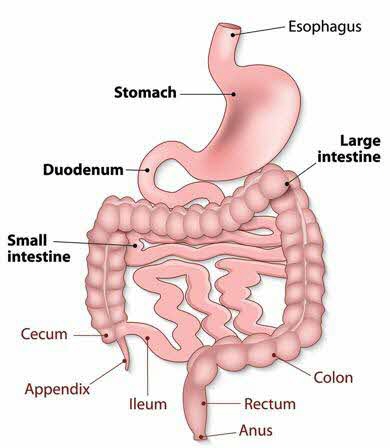
The level of bleeding can range from mild to severe and can be life-threatening.
Causes
Bleeding from the GI tract can be caused by different conditions. Some of these conditions may be life threatening if bleeding is profuse.
The table below summarises some of the possible causes of gastrointestinal bleed:
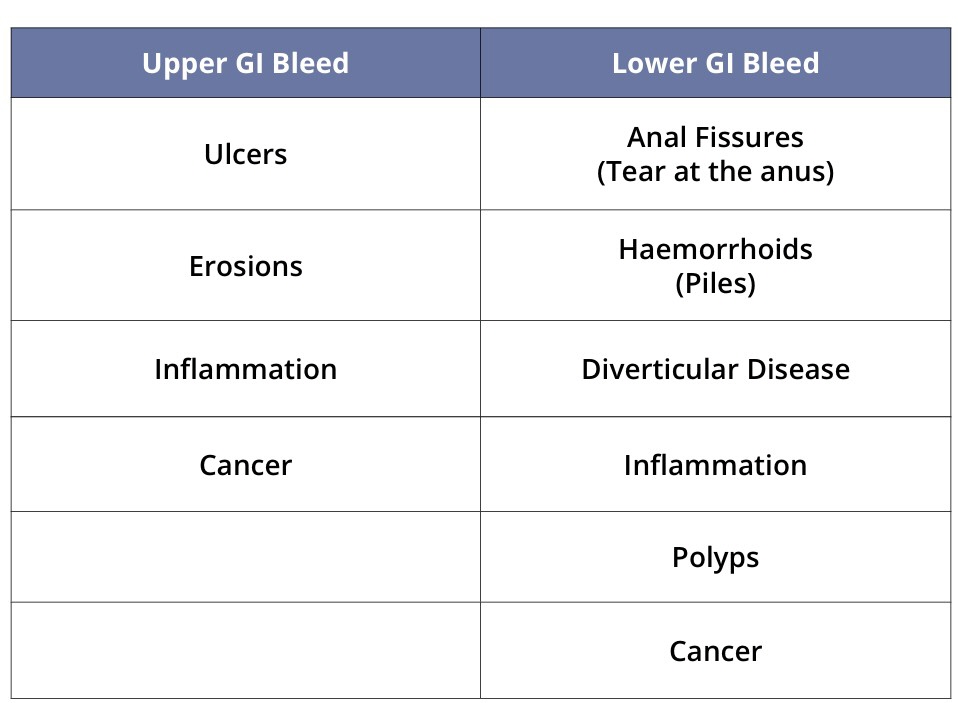
The colour of faeces may determine the site and extent of bleed. The following nature of faeces may suggest GI bleed:

Other signs of bleeding will include:
- Vomiting of fresh blood or something that looks like coffee grounds.
- Giddiness.
- Chest discomfort.
- Tiredness.
- Increased heart rate.
- Difficulty in breathing may be symptoms related to an active or ongoing bleed. This is due to decreased oxygen capacity in the body from blood loss.
If any of the above symptom(s) is/are present, please proceed to the nearest emergency department for medical attention.
Detection & Treatment
Treatment Approach

Management plan depends on the severity of bleeding and your overall condition, and it may include:
- Blood transfusions.
- Administration of fluid and medication through your veins.
- A tube may be inserted into the urinary tract for monitoring of fluid status.
- In upper GI bleed, a tube may be inserted through your nostril into the stomach if ongoing bleed is suspected. This is to drain and monitor the amount of blood loss and to prevent blood from entering the lungs (aspiration) when vomiting occurs.
- Investigations including blood tests, radiological and/or endoscopic evaluation may be done to determine the source of bleed for treatment to be rendered.
- If bleeding is unstable, you will be admitted to the hospital, and if need be, monitored in the high dependency unit.
Care Management
You may wish to proceed to your own attending hospital, nearest polyclinic or family doctor for medical attention and advice.

