Overview
What is Inflammatory Myopathy?
Inflammatory Myopathy is an autoimmune disease that causes muscle inflammation, leading to weakness.
There are many types of myositis. Common ones are:
- Polymyositis: Muscle inflammation without rash.
- Dermatomyositis: Muscle inflammation with rash, usually around the eyelids.
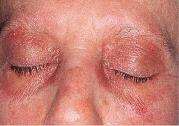
Left: Heliotrope Rash, Right: Shawl Sign
Photos retrieved from Myositis Support and Understanding
Causes
Who are at Risk of Inflammatory Myopathies?
Inflammatory Myopathies are rare diseases that affect every five to ten people in a million worldwide.
It can affect people of any age but the two main clusters are:
- Children: Between 5 to 15 years old.
- Adults: Between 30 to 65 years old.
Women are twice more likely to be affected compared to men.
In adults, Dermatomyositis may be related to underlying cancer. Therefore, all adult patients with these disorders should receive appropriate testing to rule out cancer.
1. Muscle Weakness/Pain:
One of the main symptoms. Usually affects muscles located at the centre of the body (e.g. neck, shoulders, hips and thighs).
Patients may experience:
- Difficulty in climbing stairs.
- Difficulty in standing up from a seated position.
- Difficulty in grooming (e.g. Combing hair/dressing).
- Difficulty in swallowing (may result in choking or accidental inhalation of food into the lungs when eating).
- Coughing and shortness of breath due to lung Inflammation.
- General symptoms like lethargy, fatigue, weight loss and poor appetite.
2. Rashes
- Patients with Dermatomyositis develop rash in addition to muscle symptoms. It can appear as a purple or red discoloration that affects the face, area around the eyes, knuckles, elbows or knees.
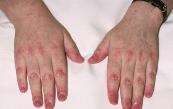
Left: Gottron's Papules, Right: Mechanic's Hands
Photos retrieved from Kelly and Firestein's Textbook on Rheumatology
Detection & Treatment
Can This Disease Be Cured?
The extent of recovery depends on the type of myositis. Most patients with Dermatomyositis and Polymyositis are able to regain most of their muscle strength with early treatment.
The control of myositis in patients with concurrent cancer usually depends on the control of the cancer. This means that the myositis symptoms tend to resolve when the cancer responds to treatment.
How is Inflammatory Myopathy Treated?
-
Adjunct Therapy and Diet Modification:
Physical therapy involves participating in specially-designed physiotherapy programs to regain muscle strength. Those with swallowing difficulties may require a modified diet or temporary use of feeding tube and subsequent follow-up(s) with the speech therapist.
-
Medications:
Corticosteroid and immunosuppressant are commonly used treatments. In severe cases, intravenous immunoglobulins (antibody drips through the veins) or rituximab (a biologic) may be used.
Care Management
General Dermatomyositis:
For patients with Dermatomyositis, sun protection is important as ultraviolet (UV) light exposure can worsen the rash.
Cancer-Associated Dermatomyositis:
In this group of patients, treatment of cancer should take place concurrently. This may include surgery, chemotherapy, radiotherapy sequentially or in combination.
What Can I Do Now That I Have This Condition?
- Stay Active: Work with the physiotherapist to regain muscle strength.
- Pace Yourself: You may feel more tired than usual. Overdoing things will only set you back.
- Know Your Disease: Read about your disease, talk to our nurse clinicians and do not be afraid to ask your doctor questions about your disease.
- Be Part of the Team: It is important to follow the treatment plan that both you and your doctor agreed upon.
IF YOU HAVE ANY PROBLEMS WITH YOUR TREATMENT PLEASE CONTACT YOUR OWN DOCTOR.
Specialties & Services

