Overview
What is COPD?
Chronic Obstructive Pulmonary Diseases (COPD) is a group of airway (passageways for air to go in and out of the lungs) diseases that:
- Blocks air from going in and out of the lungs.
- Causes breathing-related problems (e.g. breathlessness, cough, excessive mucus production).
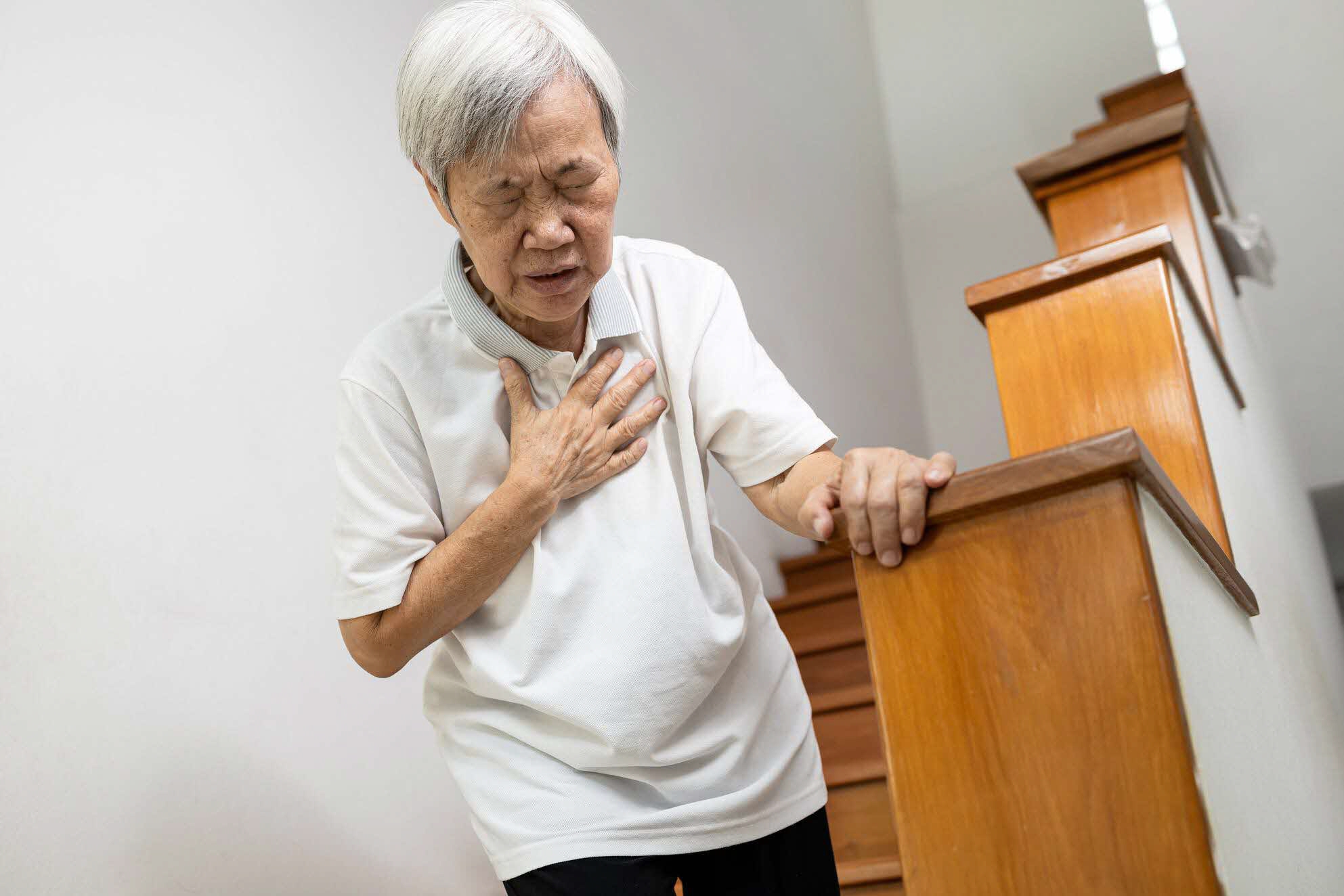
What happens when you have COPD?
When you have COPD, your airways become smaller which makes it hard to breathe.
This happens because:
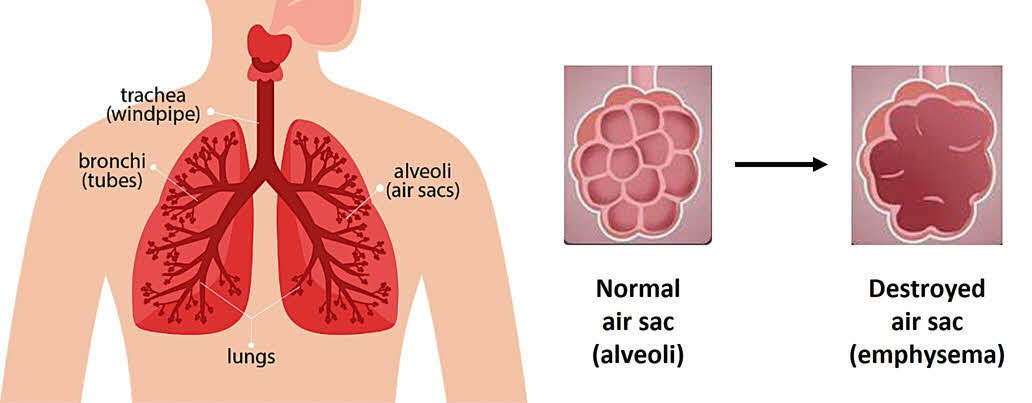
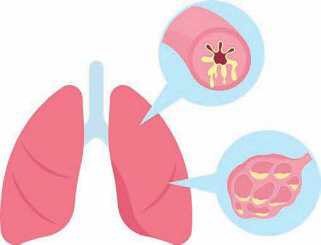
- The airways and air sacs (alveoli) in the lungs get destroyed, a condition known as emphysema.
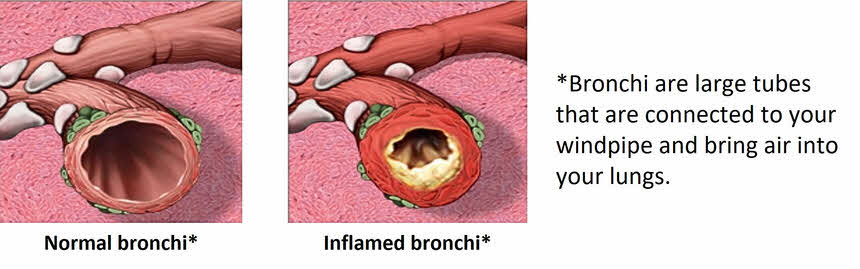
- The walls of the airways become swollen (inflamed) with excess mucus and may become blocked, a condition known as chronic bronchitis.
Causes

- Smoking is the most common cause of COPD.
- Second-hand smoke can also cause COPD in non-smokers.
- Genetic conditions can cause lung damage.
- Patient who are 40 years old and above are at a higher risk of developing COPD.

- Air pollution/bad air quality/ occupational exposure may increase the risk of developing COPD.
Signs and Symptoms of COPD
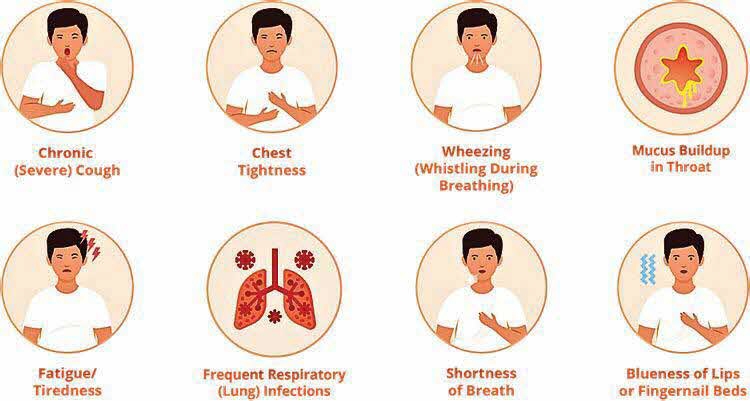
Effects of COPD
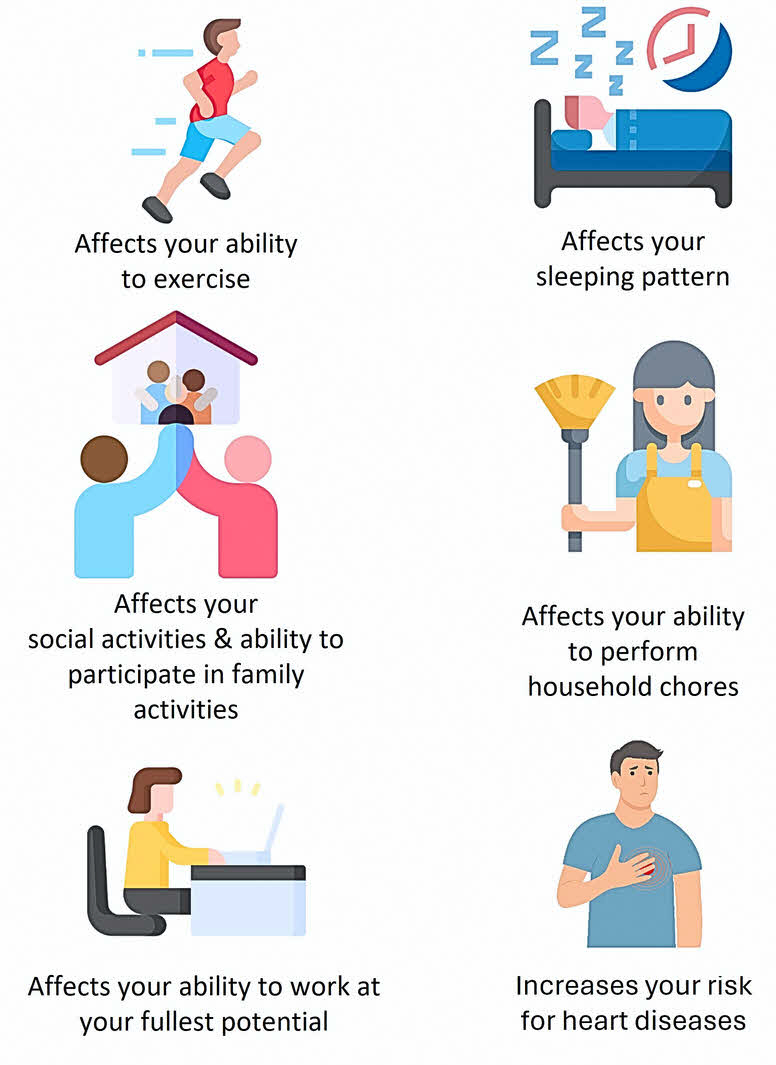
Detection & Treatment
How is COPD diagnosed?
Your doctor will:
- Check you for symptoms/signs of COPD.
- Discuss your family and medical history with you.
- Check your exposure to lung irritants (things that may worsen the condition) such as cigarette smoke.
Your doctor may also order some tests to diagnose your condition.
These may include:
Lung Function Test

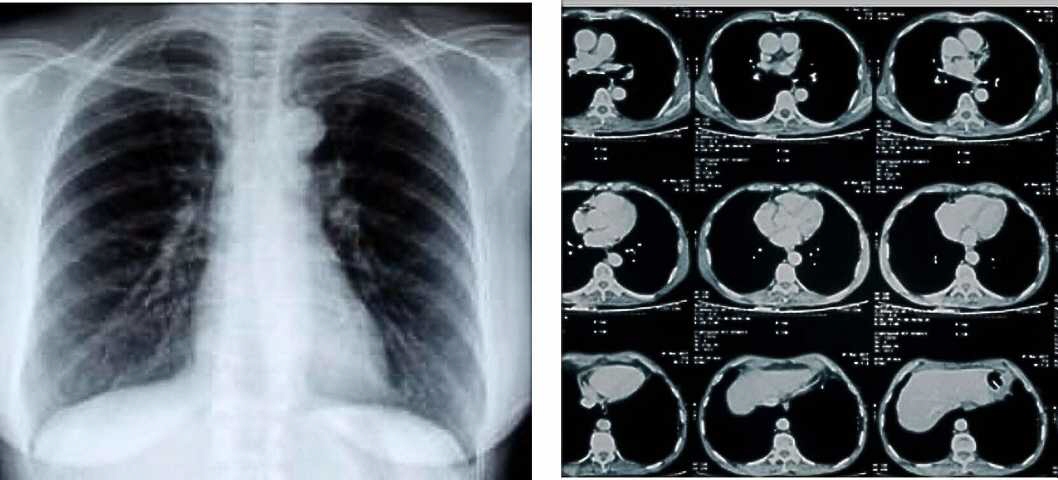
Chest X-ray / CT Scan
How Can You Manage COPD?
Even though COPD is not curable, medication can help to treat symptoms and prevent complications/problems.
Changes to your lifestyle can also significantly delay the worsening of the condition.
1. MEDICATION
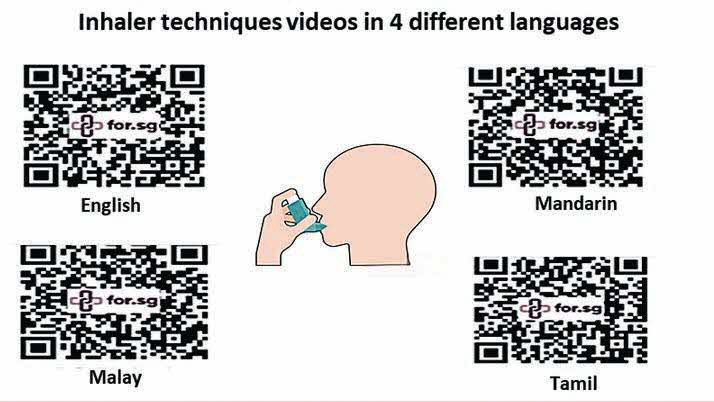
- Bronchodilators (inhalers or pills)
- Helps to relax the airway muscles and keep it open, which can improve the flow of air into the lungs.
- Anti-inflammatories (inhalers or pills)
- Commonly known as steroids
- Reduces airway swelling (inflammation) and decreases mucus production.

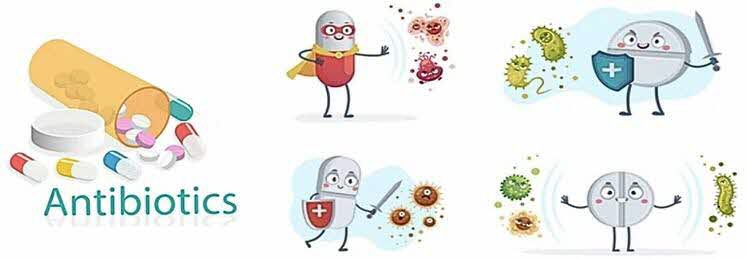
- Antibiotics (injections or pills)
- Treatment used during acute attacks to treat any underlying infections if present.
Care Management
QUIT SMOKING
Although damage to the airway cannot be reversed, quitting smoking helps to prevent worsening of the condition.
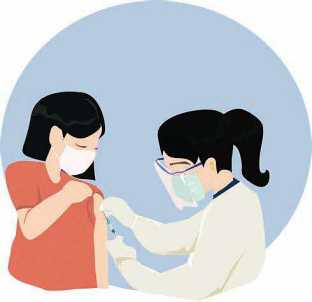
VACCINATIONS
Infections can cause swelling of the airways, resulting in:
- the airways becoming smaller due to the muscles tightening
- the airways becoming filled with mucus
Vaccines allow your body to produce its own antibodies (proteins) that protect you against bacteria and viruses that cause infections.
Some vaccines include:
- Influenza vaccination, which protects your body against influenza (flu) virus.
- Pneumococcal vaccination, which protects your body against infections caused by a bacteria pneumococcus).
OXYGEN THERAPY
- Long term oxygen therapy may be given if the oxygen level in your body is constantly low. Your doctor will assess if this is suitable for you.

EATING WELL
Having a diet with good nutrients helps to prevent:
- Losing muscle mass, which can weaken the muscles used for breathing.
- Developing a weakened immune system, which will make you more likely to experience lung infections.

* Please speak to our dietitians to find out how you can eat well.
EXERCISE / PULMONARY REHABILITATION PROGRAMME
Exercising regularly (three to five times a week) may help improve your:
- Breathlessness
- Stamina
- General well-being
- Quality of life
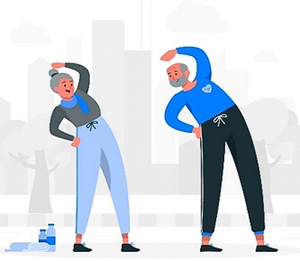
*Please speak to physiotherapists to find out what exercises / Pulmonary Rehabilitation programmes are suitable for you.

