Overview
What is Carpal Tunnel Syndrome?
Carpal Tunnel Syndrome (CTS) occurs when there is compression of the median nerve within the carpal tunnel of the wrist.
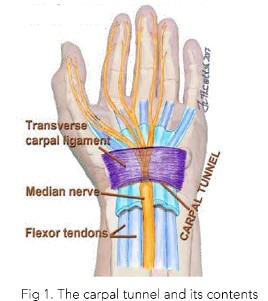
Fig 1. The carpal tunnel and its contents
In the wrist, structures such as tendons and synovium (connective tissues in the joint) may swell due to age and overuse. They may squeeze the median nerve, causing it to suffer damage. If compression is not relieved, the nerve damage may become irreversible.
Causes
What are the Risk Factors of Carpal Tunnel Syndrome?
- Obesity
- Hormonal causes: Pregnancy, Menopause
- Chronic medical conditions: Diabetes mellitus, Thyroid disease, Rheumatoid arthritis, Gout
- Trauma to the wrist
- Occupations involving repetitive movements of the wrist
- Numbness over thumb, index, middle and ring fingers.
- Numbness at night affecting sleep.
- Numbness that is worsened with prolonged usage of the hand.
- Weakness of the hand.
- Less commonly, hypersensitivity of the affected fingers with 'pins and needles' sensation.
Detection & Treatment
How is CTS Diagnosed?
Hand Specialists will perform a clinical examination to diagnose the condition.
Next, a nerve conduction study will be carried out to determine the severity of the condition. This involves attaching electrode pads to your skin to test how fast an electrical impulse travels along the nerve.

Fig 2. Nerve conduction study
Treatment type depends on the severity of the CTS.
There are three degrees of severity: Mild, Moderate and Severe.
1. Mild CTS
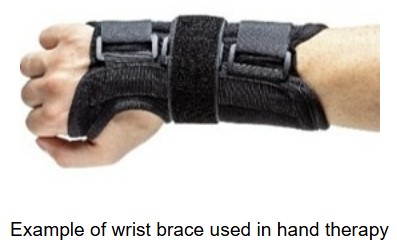
Non-surgical management is the most common treatment. This involves hand therapy, modification of activities of daily living, night splinting and medication.
Majority of patients experienced an improvement in symptoms whilst some no longer experienced them.
2. Moderate & Severe CTS
Carpal tunnel release (CTR) surgery should be considered if non-surgical treatment methods fail to improve symptoms.
The aim of surgery is to prevent the median nerve from further damage cause by the continuous compression.
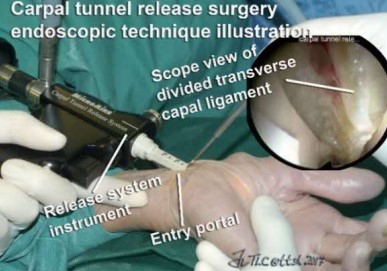
- Carpal Tunnel Release (CTR) Surgery: CTR is a day surgery procedure that is done under local anaesthesia. Your doctor will discuss with you the option of an open or endoscopic surgery depending on your condition. After surgery, your hand will be bandaged. It will be replaced with a small dressing during your next appointment. Pain, swelling, bruising and reduced function is expected after the surgery and may last over six weeks.
- Endoscopic Carpal Tunnel Release (ECTR): A small incision is made in your wrist crease. The carpal tunnel release is directly visualised and performed using a scope. Since the incision is smaller than an open CTR, ECTR surgery allows faster recovery with less pain, allowing your hand to regain function earlier.
Are There Surgical Complications?
All surgeries have risks. There is a 5% risk of surgical complications in all carpal tunnel release surgeries. These include:
- Local anaesthesia complications (e.g. pain, allergic reactions)
- Bleeding and bruising
- Wound infection
- Tendon/ nerve/ vascular injury
- Conversion of ECTR to open CTR
- In the instance of severe chronic CTS, your recovery may be slower with poorer recovery of symptoms. Some patients may experience a transient increase in sensitivity and pain.
Specialties & Services

