Overview
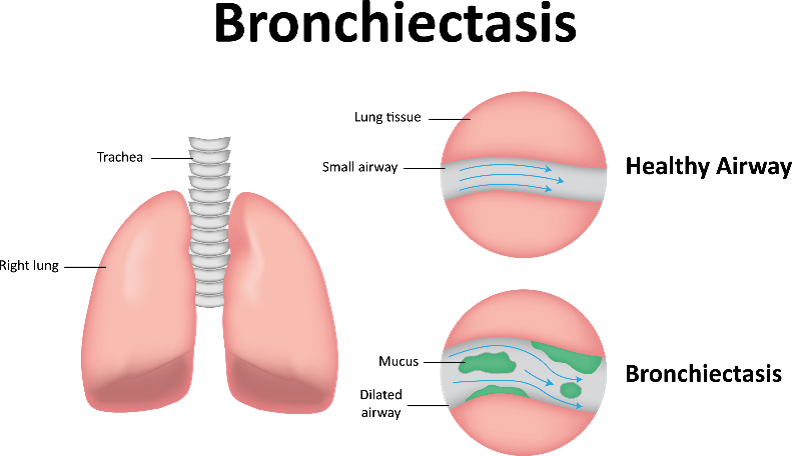
Bronchiectasis is a long-term lung condition where the airways become damaged and inflamed, causing them to become wider than normal. this results in excessive production and accumulation of sputum (phlegm) in the airways. The build-up of sputum can cause infections and further damage to the airways.
Causes
For half of the patients with bronchiectasis, the underlying cause of the disease is unknown. However, some known causes include:
- History of infection or inflammation in the lungs such as tuberculosis lung infection, childhood pneumonia and frequent chest infections
- Allergic reactions to fungus
- Genetic diseases such as cystic fibrosis
- A weak immunity system
- Severe gastric reflux
Patients with bronchiectasis may experience reoccurring chest infections with periods of feeling well in between. Symptoms include:
- Chronic cough
- Sputum of variable amounts and colour
- Tiredness
- Shortness of breath
- Unintended weight loss
- Coughing of blood (due to inflammation and infection of the lungs)
A small number of patients (<10%) may show no symptoms.
Prevention
How Can I Reduce the Risk of Lung Infection in Bronchiectasis?
The risk of chest infections can be reduced in several ways:
- Pneumococcal and flu vaccinations
- Adequate hydration and caloric intake
- Regular exercise
- Stop smoking
- Daily chest physiotherapy
- Timely and appropriate treatment
- Monitor your symptoms and seek early treatment if you are not feeling well
Detection & Treatment
How Can I Diagnose Bronchiectasis and is it Important to Diagnose Early?
- The conventional chest X-Ray may not be able to show the changes of small airways.
- The best way to diagnose bronchiectasis is to conduct a computed tomography (CT) scan of your chest.
- It is important to make the diagnosis early so that your doctors, nurses and physiotherapists will be able to start appropriate and timely treatment (such as chest physiotherapy, antibiotics) to prevent any chest infections.
Why is Daily Chest Physiotherapy Important?
There is no cure for bronchiectasis and any damages to the airways cannot be reversed. However, daily chest physiotherapy can help to prevent further damage.
Benefits of daily chest physiotherapy include:
- Decreased Sputum production, Decreased Breathlessness, Decreased Risk of getting chest infections, Decreased Hospital admissions
- Increased Lung function and Quality of life
Care Management
How to Improve the Effectiveness of Chest Physiotherapy?
- A successful chest physiotherapy depends on the proper techniques and sufficient duration of the therapy.
- Chest physiotherapy is usually performed twice daily (morning and evening sessions) with a duration of 15 to 20 minutes for each session. It is important to follow the instructions given by your physiotherapist.
- Occasionally, you may find the sputum too thick to spit out. This may be due to dehydration. You should increase your water intake to resolve this problem. Doctors may also start a specific treatment to 'thin' the sputum for you to clear it more easily.
Specialties & Services

