Overview
What is Blepharitis?
Blepharitis refers to inflammation of the eyelids. Such inflammation can be due to bacterial infections (e.g. staphylococcus), parasites (mites) infestations or can be related to other causes such as acne rosacea or seborrheic dermatitis (dandruff). It can also be a result of a combination of the factors mentioned above.
There are two main types of blepharitis:
1. Anterior Blepharitis - this involves the external portion of the eyelid, where the eyelashes grow.
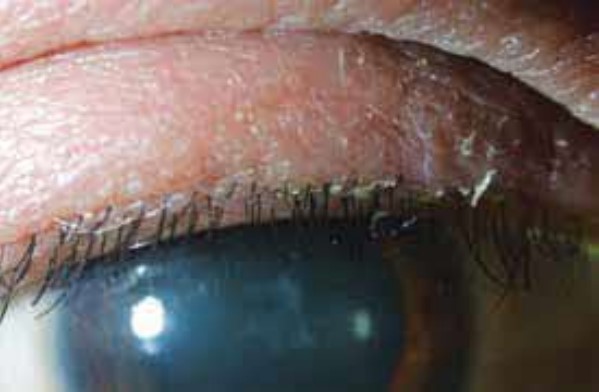
Debris and crustings of eyelashes.
2. Posterior Blepharitis - this involves the inner eyelid, the part which is in close contact with the eyeball. Meibomian glands that produce the oily layer of the tears are located here. This oily secretion helps to prevent excessive tear evaporation from the eye. Inflammation of this area will result in blockage or dysfunction of the meibomian glands, often resulting in some irritating eye symptoms as mentioned below.
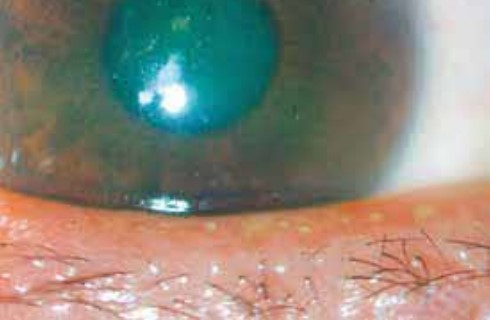
Inflamed eyelid margin with blocked meibomian glands.
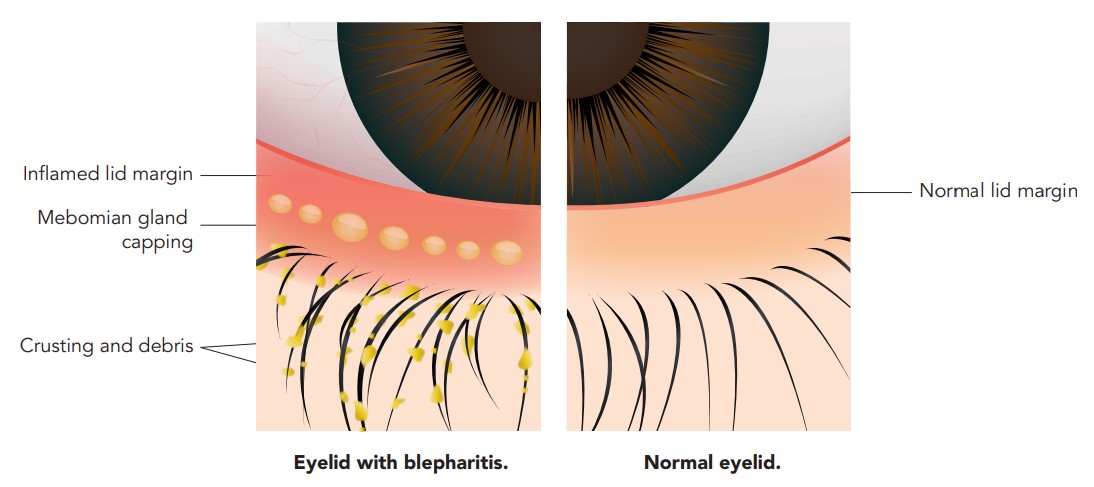
Blepharitis frequently involves both eyes, and may become chronic with delay in treatment.
Common symptoms include:
- Sore eyelids
- Burning sensation
- Flaking or crusting of eyelashes
- Itching
- Eye or eyelid redness and swelling
- Irritation or foreign body sensation
- Tearing
- Dry eyes
- Sensitivity to light
- Blurring or fluctuating vision
Complications
Blepharitis is more often irritating than sight-threatening. But if left untreated, blepharitis may lead on to some other complications such as:
- Formation of chalazion or stye
- Loss or abnormal growth of eye lashes
- Conjunctivitis
- Corneal ulcers and/or scarring
- Ocular surface diseases such as limbal stem cell deficiency, resulting in an unhealthy eye as the physiological process of cell renewal of the cornea is disrupted
Detection & Treatment
Treatment
The main aim of treatment is to reduce symptoms and avoid complications. Maintaining good eyelid hygiene by regularly cleaning the eyelids with eyelid wipes or using mild baby shampoo, is the mainstay of treatment.
Care Management
Maintaining Lid Hygiene
Steps to proper eyelid cleansing include:
- Application of warm compresses over both eyelids to soften the accumulated crusts and stale oily secretions.
- Gentle cleaning of the lid margins with eyelid wipes or by using a clean washcloth or cotton bud, which has been infused with cleansing solution such as a mild baby shampoo. Special care is to be taken to remove the debris/ crusts from the eyelashes' base of both upper and lower eyelids.
(Please refer to pictorial demonstration below – steps 2a, 2b, 2c)
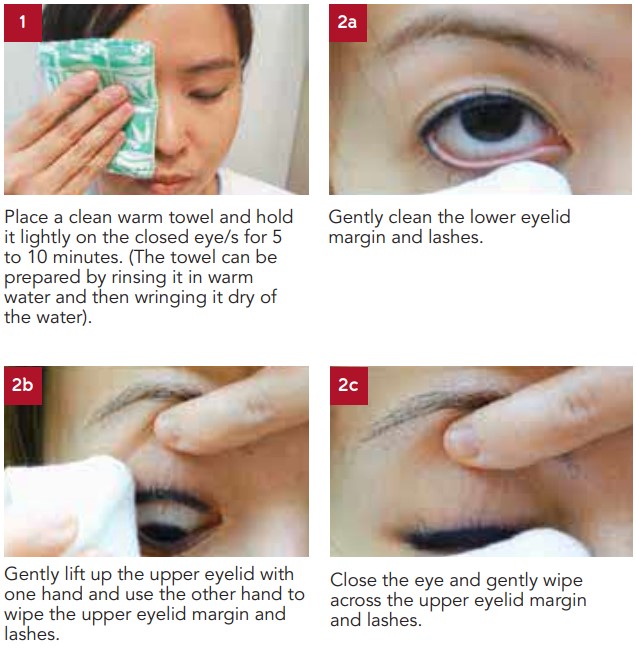
With regular cleansing and keeping good eyelid hygiene, precipitants of eyelid inflammation can be removed.
Depending on the severity of the blepharitis, your doctor may prescribe some medications such as eye lubricants and/or antibiotic eye drops, eye ointments, oral antibiotics or oral supplements e.g. omega 3 capsules.
Complete resolution of blepharitis may be difficult.
Treatment often takes prolonged periods of time.
Following the advice and guidance from your doctor, symptoms of blepharitis can be controlled leading to improvement in eye comfort and better eye health.
Specialties & Services

