Overview
Autism Spectrum Disorder (ASD) is a form of developmental disorder, characterized by impairment in social interaction, verbal and non-verbal communication, and repetitive or restrictive behaviours and interests.
Autism is considered a spectrum because the impairments affect different people in different ways. For instance, some may have normal language abilities, and others may have little verbal language. Their intellectual abilities can also vary. ASD is typically diagnosed between the ages of 4 and 5.
Causes
Several factors are thought to contribute to ASD, including genetic influence, brain abnormalities and birth events. A family history of autism increases the likelihood of your child having symptoms of ASD.
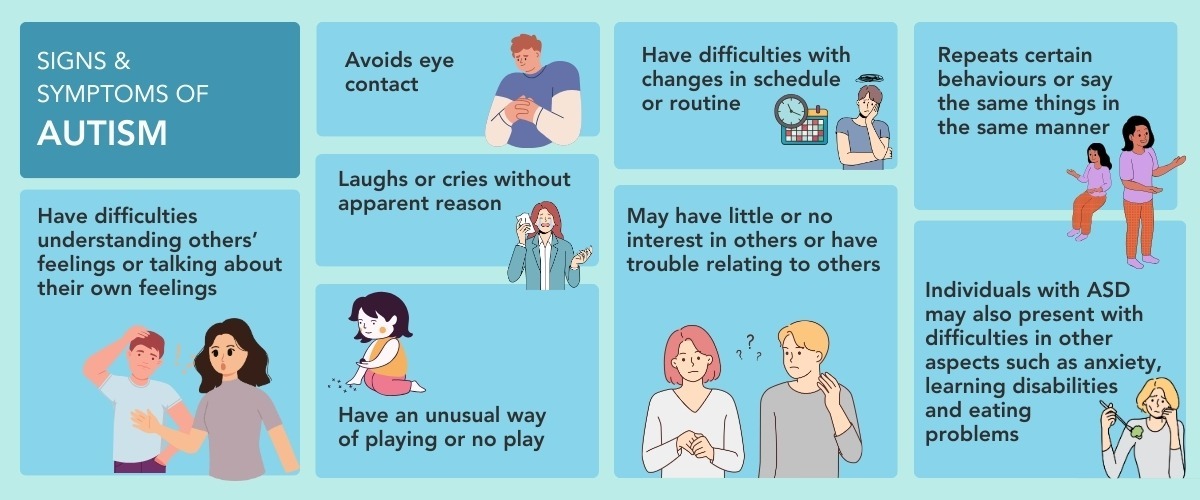
An individual with ASD typically struggles with social interaction and communication in some of the following ways:
- Has difficulty starting or responding to social conversation.
- Lacks initiative to approach or share enjoyment with others.
- Has difficulty understanding emotions.
- Often misinterprets social cues.
- May be slow in speech development.
- May have speech impediments, e.g. echoed or repetitive speech patterns, difficulties using pronouns.
- Has difficulty using and interpreting non-verbal communication, e.g. gestures, facial expressions and body language.
In addition, an individual with ASD often has rigid preferences and restricted interests, which may include:
- Complex routines with objects or toys.
- Inflexibility about these routines, e.g. becoming upset with changes in the routine.
- Unusually strong attachment to certain objects.
- Intense liking or dislike of certain textures (e.g. sand, furry surfaces, glue), sounds (e.g. road-drilling, motorised sounds) or visual stimuli (e.g. shiny objects, bright lights).
- Intense interest in topics (e.g. maps, dinosaurs, transportation systems and routes) that may exceed the amount of general knowledge typical for someone that age.
Detection & Treatment
Intervention of children or adolescents with ASD involves a combination of methods and ways:
Educational and Behavioural Intervention
Appropriate education placement is an important consideration, as certain intervention centers and schools offer structured activities which will likely benefit individuals with ASD. Behavioral intervention is often used in managing behaviors in individuals with ASD who present difficulties in regulating their social and emotional responses.
Specific Therapies
Some children or adolescents with ASD might require speech and language therapy, occupational therapy or sensory integration therapy to help them cope with some of the difficulties that they may have to deal with in their day-to-day activities. The intensity and need for these therapies vary from person to person.
Medication may be prescribed to help manage other difficulties such as aggression, irritability, tics, anxiety or hyperactivity. Talk to your child's doctor if you have any queries or concerns about medication. Medication should be used in conjunction with and not in place of behavior management techniques.
Care Management
Family support
Having a child with ASD can be challenging. Family members or support groups can provide emotional help, as well as new information, skills or practical strategies in managing ASD.
You can also help your child by being patient, understanding and supportive. Be encouraging and empathise with his or her challenges. Celebrate all small successes and be positive.
If your child has not yet seen a doctor and you suspect that he is showing signs of ASD, you may raise your concerns with your child's school counselors.
School counselors are connected to our community mental health service, REACH (Response, Early intervention, Assessment in Community mental Health), which can provide further advice and assistance.
If your child is seeking help at our clinic, please raise your concerns with your child's doctor, nurse, or allied health professional.

