
Specimens-Transport
Specimens Transport
It is the responsibility of the collector to ensure that the specimen reaches the laboratory in a suitable condition for testing.
Acceptable temperature for specimens sent at room temperature is 18 ℃ to 22℃, refrigerated temperature is 2℃ to 8℃ and frozen temperature is ≤−20 °C.
As soon as the specimen has been collected, the correctly labelled, leak-proofed container must be placed in the integral transparent plastic transport bag. The transport bag must be sealed by means of an integral sealing strip. Bags must not be sealed with pins, staples, or metal clips, etc.
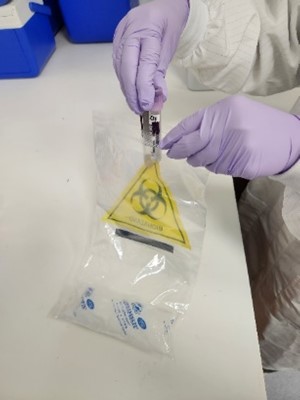
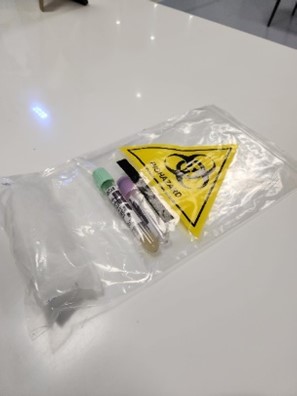
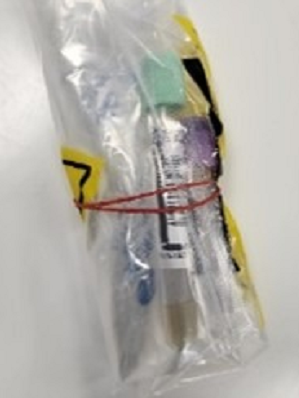
For specimens requiring delivery with ice, follow the steps below:
-
Pack crushed ice or ice pack in separate biohazard bag.
-
Place bag of ice into another biohazard bag with specimen and seal.
-
If form is required, place form in outer compartment of biohazard bag.
-
Roll and tie biohazard bag, keeping the specimen chilled.
Pack crushed ice or ice pack in separate biohazard bag.
Place bag of ice into another biohazard bag with specimen and seal.
If form is required, place form in outer compartment of biohazard bag.
Roll and tie biohazard bag, keeping the specimen chilled.
When receiving specimens from external locations e.g. from community outreach or house visit, check temperature of specimens.
Specimens sent via pneumatic tube system (PTS)
Blood specimen tubes are loaded into E-PRO carriers and sent to the laboratory via PTS. Refer to video on how specimen should be handled when sending via PTS.
For specimens that do not fit into E-PRO carriers, such as urine, stool and blood culture bottles place them in a specimen bag and load into manual or auto-unloading PTS carriers.v
Ensure that each specimen bag contains only one patient's specimen(s). If you need to send a request form with the specimen, ensure that the patient’s details on the form matches the patient's identifiers on the specimen labels.
Ensure that the carrier is sent to the correct location and leave the PTS station only when the PTS panel indicates the status as Sent.
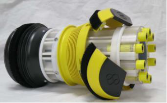
APA with E-PRO insert carrier
APA without E-PRO insert carrier:
Specimens sent via porter
Bulky, potentially infective or non-recollectable specimens (e.g. 24-hour urine collection bottles, histopathology specimens, cytopathology specimens, pandemic specimens, VIP specimens and CSF specimens) must be transported to the laboratory via porter only. Do not send via pneumatic tube system (PTS)
Anatomic Pathology (histopathology and cytopathology) specimens must be transported in rigid plastic containers with a screw-top cap or in thick HDPE plastic bags.
All Anatomic Pathology specimens must be accompanied by hard-copy specimen request forms.
During office hours, all Anatomic Pathology specimens are sent to the Anatomic Pathology section. Porter enters laboratory via back door nearest to Anatomic Pathology.
After office hours, porter sends Anatomic Pathology and Cytopathology specimens to the Specimen Reception window.
High-risk specimens
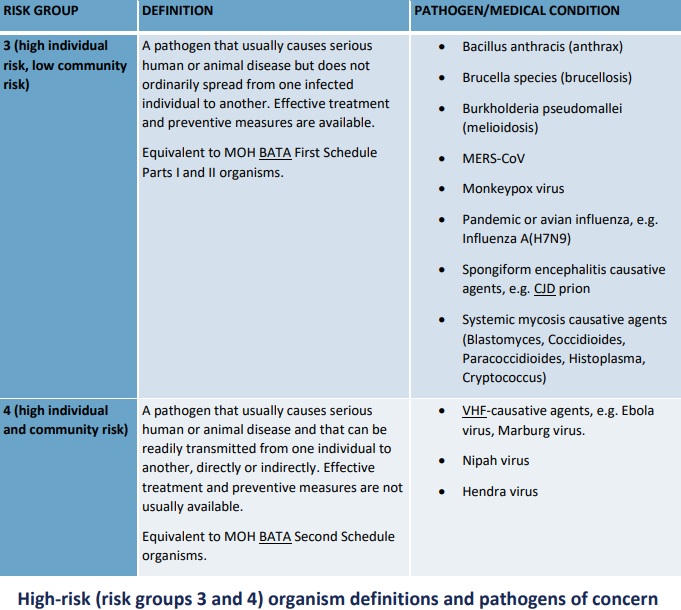
All specimens should be regarded as potentially infectious, however the following specimens are classified as high-risk:
-
Specimens from patient known or suspected to have serious/potentially lethal infections or dangerous and exotic infections such as those that require Biosafety Level 3 and 4 practices (e.g., anthrax, brucellosis, melioidosis, systemic mycosis)
-
Specimens (e.g. cerebrospinal fluid) from patient known or suspected to have Creutzfeldt-Jakob disease or any other slow viral infection.
-
Specimens from patients known and suspected to have pandemic or avian influenza or MERS-CoV.
Specimens from patient known or suspected to have serious/potentially lethal infections or dangerous and exotic infections such as those that require Biosafety Level 3 and 4 practices (e.g., anthrax, brucellosis, melioidosis, systemic mycosis)
Specimens (e.g. cerebrospinal fluid) from patient known or suspected to have Creutzfeldt-Jakob disease or any other slow viral infection.
Specimens from patients known and suspected to have pandemic or avian influenza or MERS-CoV.
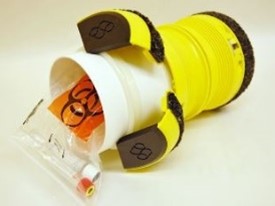
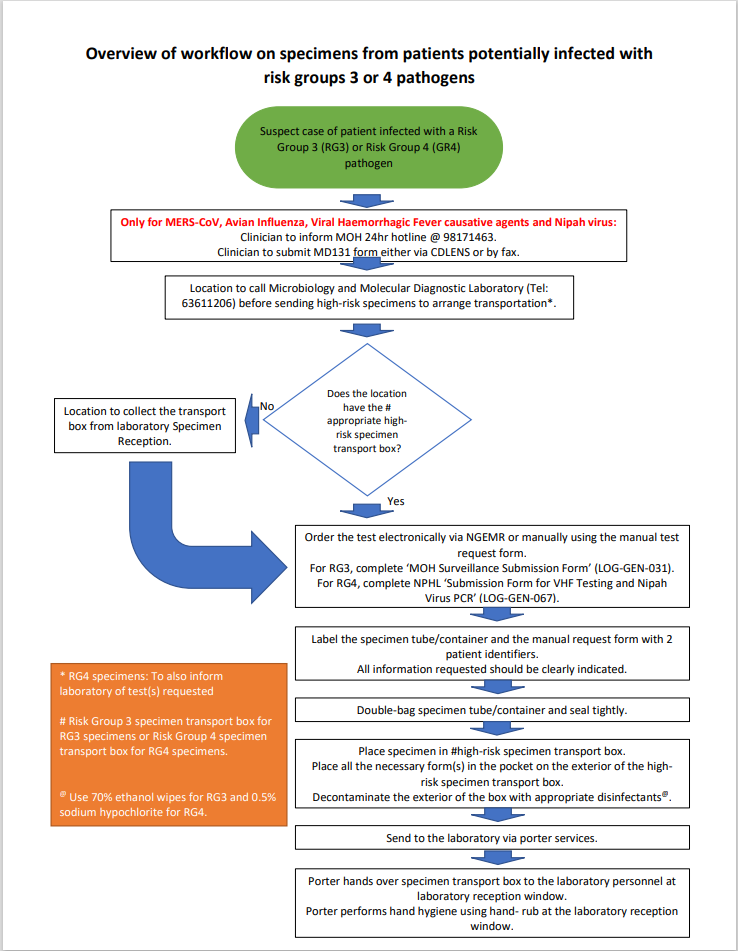
Collectors must call Microbiology and Molecular Diagnostic section to arrange the delivery. These specimens must be “double-bagged”, i.e. two properly sealed specimen bags are used and transported inside a high-risk specimen transport container by porters to the laboratory
High-Risk Specimen Workflow
Specimens from external locations

