
What is Vasculitis?
Vasculitis refers to the inflammation of blood vessels. It affects blood vessels of different types, sizes and location, ranging from the small blood vessels (capillaries) in the skin to large vessels like the aorta. As a result of inflammation, blood vessel walls may become weakened, leading to further narrowing and scarring. These changes can reduce blood flow, resulting in organ and tissue damage.
What are the Types of Vasculitis?
The types of vasculitis are categorised by the size of blood vessels involved.
Large Vessels
- Takayasu's arteritis – affects large arteries, particularly the aorta; mainly affects people below 40 years old
- Giant cell arteritis (GCA) – affects large vessels that supply to the head and neck; mainly affects people above 50 years old
Medium-sized Vessels
- Polyarteritis nodosa (PAN) – affects medium-sized arteries, particularly those supplying blood to the gut and kidneys
Medium to Small-sized Vessels
- Granulomatosis with polyangiitis (GPA) – affects small and medium-sized vessels; associated with certain types of antibodies
- Eosinophilic granulomatosis with polyangiitis (eGPA) – affects small and medium-sized vessels; associated with adult-onset asthma and certain types of antibodies
- Behcet's syndrome – causes oral / genital ulcers and eye inflammation; may affect small and medium-sized vessels in some cases
Small Vessels
- Microscopic polyangiitis (MPA) – affects mainly small-sized vessels, particularly in the kidneys and lungs; associated with certain types of antibodies
- Cryoglobulin-associated vasculitis – affects small-sized blood vessels; mainly affects the skin, kidneys and nerves
- Henoch-Schonlein Purpura (HSP) / IgA Vasculitis – affects small-sized vessels, particularly in the skin, gut and kidneys; associated with IgA antibody deposits in the blood vessels
Who are at Risk of Vasculitis?
Vasculitis is uncommon. It is estimated that 100 to 300 in every million are affected worldwide. The onset of symptoms varies across different age groups and genders depending on the type of vasculitis.
Factors that increase the risk of vasculitis include smoking, chronic hepatitis B or C and having underlying autoimmune diseases (e.g. systemic lupus erythematosus, rheumatoid arthritis).

[Affected artery in the head (located at the temple) due to Giant cell arteritis (GCA), a type of vasculitis.]
Photo retrieved from Nature.
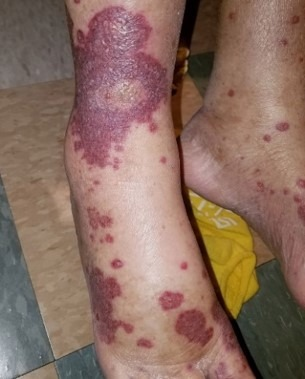
[Leg rash caused by vasculitis.]
Photo retrieved from British Medical Journal.
Additional Resources
You're more likely to get VRE if you:
- Have taken long-term antibiotics
- Have been in hospital
- Had surgery
- Have medical devices inserted
- Have a weak immune system
It spreads through:
- Person-to-person contact
- Touching contaminated surfaces
- Not through air/coughing/sneezing
Most people carry VRE without any symptoms (colonisers)
How is Vasculitis Diagnosed?
Diagnosis can be challenging as the symptoms and signs may be similar to other conditions (e.g. infection). Diagnosis is based on assessment of symptom, laboratory tests and imaging studies.
Tests include:
- Blood tests, including full blood count
- Renal & liver function tests
- Inflammatory marker tests
- Urine and protein tests
- Autoantibody tests
- Imaging tests: X-rays, CT-scan, MRI and angiography
Specialist referral may also be needed for further tests. Examples include biopsies of body tissues (e.g. skin, blood vessels, kidney, nerve) and examination of ear, nose and throat.
What Is the Treatment for Vasculitis?
Currently, there is no cure for vasculitis. Effective treatment is available to control inflammation, limit organ damage and prevent relapse. Individualised treatment is prescribed based on the type of vasculitis, age and disease severity. Treatment includes:
- Patient education
- Medication – corticosteroids, immunosuppressants, biologics
- Invasive treatment – plasma exchange and dialysis (temporary or permanent) for severe kidney damage
- Lifestyle changes – quit smoking, exercise regularly, have adequate rest, keep your fingers/toes warm
For more information and support, scan the QR code below or access https://www.vasculitis.org.uk to find out more.

Can the Condition be Cured?
Early diagnosis and treatment are critical in providing the best chances in controlling the inflammation and preventing permanent damage to organs and tissues.
Overall, the outcome depends on the type of vasculitis, disease severity and individual response to treatment. Symptoms often take about 6-12 months to achieve good control. Suppression of symptoms can be life-long but long term maintenance therapy is needed. Condition left untreated is associated with high risk of permanent organ damage and even death.

