
What are Urinary Stones?
The function of the kidneys is to filter waste chemical compounds from the body into the urine.
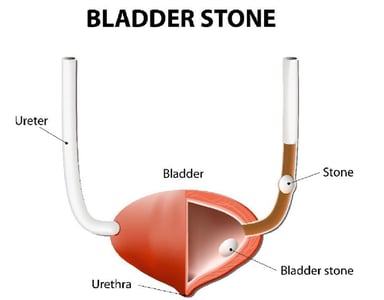
Under certain conditions, chemicals (such as calcium, oxalate, phosphate, uric acid and others) in the urine may crystallise and combine to form urinary stones.
Urinary stones may block urine flow and affect the function of the kidney.
Additional Resources
Why does Psoriasis happen?
Studies show that patients with psoriasis have a genetic predisposition to develop the disease, which is triggered off by environmental factors such as infection, or certain medications. As a result, there is an imbalance in the immune system which leads to the appearance of psoriasis.
What makes Psoriasis worse?
Physical and emotional stress are well known to aggravate psoriasis. Throat infections or flu may also aggravate the disease as well. Some drugs e.g. steroids and certain anti-hypertensives may provoke the appearance of psoriasis.
What's the natural history of Psoriasis?
Psoriasis usually starts in the 20s but has been described at birth and in old age. Like diabetes and other chronic diseases, psoriasis has a delayed onset and seldom remit permanently. However, unlike other chronic illnesses, it rarely shortens life expectancy.
Is Psoriasis contagious?
No
Will I pass Psoriasis to my children?
Not necessarily so. Psoriasis is a hereditary disorder but only about 10% of people with psoriasis have a family member affected by psoriasis. The causation of psoriasis is a multi-factorial and inherited genes do not always express disease without the appropriate environmental triggers.
Is Psoriasis a rare skin disease?
No, psoriasis is not an uncommon skin disease. It is estimated that 1-2% of the population have psoriasis.
Are there any foods to avoid, or supplements to help my Psoriasis?
No, but it is wise to consume a nutritious, well balanced diet containing more green vegetables and less meats. Excessive alcohol consumption is best avoided because of its association with malnutrition and liver disease.
How is psoriasis related to metabolic disorders?
In psoriasis, there is chronic inflammation of the skin and an imbalance in the skin's immune system. This can also contribute to heart disease, development of hypertension and diabetes.
- Consult your doctor for advice on screening for metabolic disorders. Check body mass index/waist circumference. Blood pressure measurement. Blood tests for cholesterol and glucose levels (Fasting of 8 hours is required for cholesterol and glucose tests).
- Stop smoking. Smoking cessation counselling is available in NSC. Please ask your doctor or pharmacist for more information.
- Avoid alcohol abuse.
- Maintain a healthy weight, diet and exercise regularly. Ensure metabolic disorders are well-controlled.
How do you know if you have Psoriasis?
Psoriasis usually presents with red scaly patches on the scalp, body and limbs. The scaly patches on the scalp are usually thicker and more extensive than ordinary dandruff. Common body sites affected include the elbows, knees and back.
Target fluid intake about 2 litres a day for those who are at risk of stone formation. A good way to gauge whether you are drinking enough is when your urine is colourless.
Depending on your condition, your doctor may request for you to reduce intake of particular types of food:
- Reduce salt intake
- Reduce High-Purine* Foods (e.g. Red meat, organ meats, shellfish)
- Reduce High-Oxalate^ Foods (e.g. Spinach, peanuts, chocolate, black tea, sweet potatoes)
- Reduce Medium-Oxalate^ Foods (e.g. Celery, green pepper, raspberries, strawberries, grapes, liver)
* A purine-rich diet can raise uric acid levels in the body, leading to conditions such as urinary stones.
^ Oxalate is naturally found in some foods and exits the body through urine. Too much oxalate can cause urinary stones.
Diagnosis
Imaging of the urinary tract could be done via:
- X-ray
- Ultrasound
- Intravenous Urogram (IVU)
- Computerised Tomography (CT) scan
- Additional urine and blood tests may also be done.
Treatment may vary depending on the stone location, size, number and patient factors such as age and fitness. Some of the treatment options include:
- Observation and Medical Therapy (Dissolution/Medical Expulsion Therapy)
- Extracorporeal Shock Wave Lithotripsy: Involves focused shock waves that passes through the body to hit the stones, breaking the stones into smaller pieces.
- Ureteroscopic Lithotripsy and Retrograde Intrarenal Surgery: Both involve minimal invasive surgery to treat stones in the ureter.
- Percutaneous Nephrolithotomy: This is done under general anaesthesia with a small incision in the back for insertion of a tube into the kidney. Through the tube a scope can be inserted to fragment and remove the stone.
- Cystolitholapaxy
- Laparoscopic/Open Surgery

