
What are Sinuses?
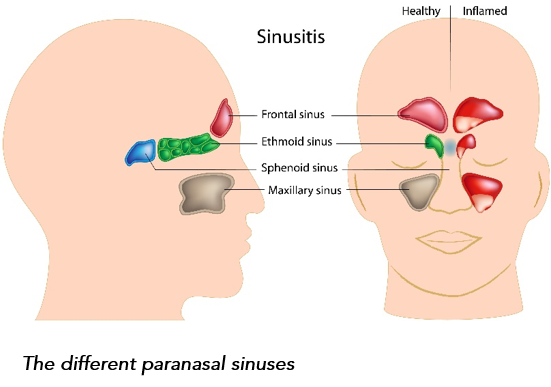
Sinuses, or more accurately, paranasal sinuses, are air-filled cavities surrounding the nasal cavity. Humans have four groups of sinuses within their face, on each side of their nasal cavity. They are located:
- Above the eyes (frontal sinus)
- In between the eyes (ethmoid sinus)
- Below the eyes (maxillary sinus)
- Behind the eyes (sphenoid sinus)
The lining of the nose produces mucous. This lining also has tiny hair-like structures that help move the mucous from the sinuses into the nose. The mucous in the nose can then be blown out, swallowed into the stomach or coughed out as part of phlegm.
What are the Functions of the Paranasal Sinuses?
As they are air-filled, they are thought to reduce the weight of the human head. The sinuses also produce mucous that:
- Traps inhaled bacteria and foreign objects
- Changes the temperature of inhaled air
- Enhances the sound of human voice.
What is Rhinosinusitis?
Rhinosinusitis, also known as sinusitis, is the inflammation of the lining of the nose and sinuses. Rhinosinusitis is further divided into:
- Acute: last less that three months
- Chronic: last more than three months
Additional Resources
How is Rhinosinusitis Diagnosed?
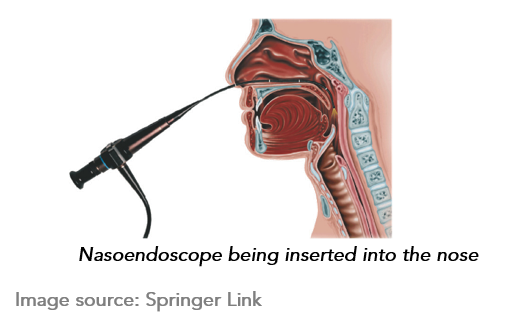
Your ENT surgeon will review your symptoms and perform a thorough physical examination which includes flexible nasoendoscopy.
A nasoendoscope is inserted into the nose and throat to look for signs of rhinosinusitis. This is done after the nose is numbed and decongested with a local anaesthetic spray.
The procedure takes less than two minutes and often, only mild discomfort is felt. Clinical findings of rhinosinusitis include mucopus, swelling of the lining of the nose and nasal polyps.
How is Rhinosinusitis Treated?
The treatment of rhinosinusitis include medical and surgical options. In most cases, rhinosinusitis can be treated with medications.
The following medications may be prescribed by your ENT surgeon:
- Antibiotics to treat the bacterial infection
- Nasal irrigation to wash out the mucous and pus
- Intranasal steroid spray to reduce inflammation of the sinuses
- Decongestants to relieve nasal congestion
- Painkillers to reduce headaches and facial pain

