
There are two types of haematuria: visible and non-visible.
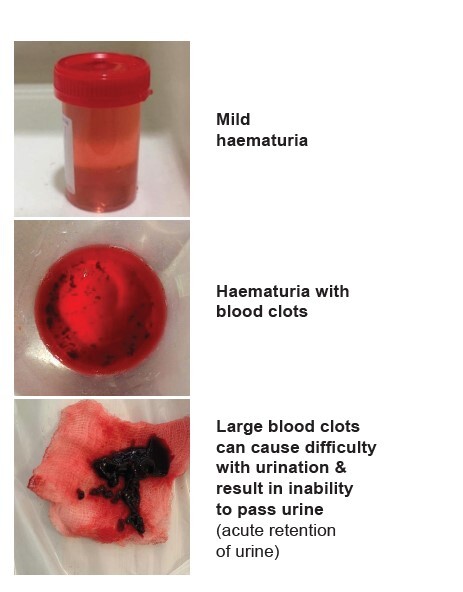
Visible (gross/frank) haematuria is when your urine appears red. This is a more worrisome condition than non-visible haematuria as there is an associated risk of cancer within the urinary tract in up to a third of those affected.
Visible haematuria warrants more detailed investigation due to the higher risk of detecting malignancy within the urinary tract.
Non-visible (microscopic) haematuria is when red blood cells are seen under a microscope in your urine. This is defined as ≥ 3 red blood cells per high power field in an appropriately collected urinary sample.
It is a relatively common condition, affecting 2-30% of the population, with higher rates in males aged > 60 years old and ex/current smokers. There is an estimated 3-5% risk of cancer within the urinary tract with microscopic haematuria.
However, do note that blood seen on a urine dipstick does not mean that it is haematuria and warrants microscopic examination of the urine for confirmation.
Additional Resources
- Urinary tract infection
- Urinary stones
- Prostate enlargement
- Benign Prostate Enlargement
- Cancers of the urinary tract including kidney, bladder, prostate, ureter
What tests are required?
Visible Haematuria
- A urine culture is required to check for the presence of a urinary infection.
- Detailed imaging in the form of Computed Tomography (CT) Urography or Magnetic Resonance Imaging (MRI) is required to look for the cause.
- A flexible cystoscopy is required for all, especially those aged 35 years and above, as imaging may not detect small bladder tumours.
Non-visible Haematuria
- Your doctor will discuss with you regarding suitable imaging options.
- These can include an ultrasound of the kidneys, ureters and bladder, an X-ray or a Computed Tomography (CT) scan.
- A flexible cystoscopy is highly recommended for all with risk factors for cancers of the urinary tract. These risks include smoking history, certain chemical exposures and previous radiation to the pelvis.

